
Quick Answer: To protect rugs from humidity in Sydney, maintain consistent airflow, control indoor moisture levels, and choose materials that resist damp conditions. Regular cleaning, proper placement, and timely drying help prevent mold, mildew, odors, and long-term fiber damage caused by coastal humidity.
Key Protection Strategies at a Glance
- Ensure proper ventilation and air circulation to reduce trapped moisture
- Use dehumidifiers or moisture control methods in enclosed spaces
- Choose breathable or moisture-resistant rug materials
- Keep rugs away from damp zones like entryways or poorly ventilated areas
- Rotate and air out rugs regularly to prevent moisture buildup
- Maintain consistent cleaning and drying routines
Tip: Even when rugs appear dry, humidity can remain trapped within fibers, so regular airflow is essential for prevention.
Important Note: Coastal humidity causes gradual damage, meaning issues like mold, odor, and fiber weakening often develop over time rather than immediately.
Living in Sydney comes with the advantage of a coastal lifestyle, but it also introduces a persistent challenge: humidity. Many homeowners notice that rugs start to feel slightly damp, develop musty odors, or lose their freshness over time, even without visible spills or stains. This happens because coastal air carries moisture that gradually settles into rug fibers, creating conditions that are difficult to detect early.
A common frustration is that regular cleaning does not fully solve the problem. Rugs may look clean on the surface, yet still hold trapped moisture deep within, leading to recurring odors or subtle texture changes. Over time, this hidden moisture can weaken fibers, affect color consistency, and create an environment where mold and mildew begin to develop.
Another challenge is understanding how placement and material choices impact moisture retention. Rugs placed near windows, entryways, or low-ventilation areas are more exposed to humid air, while certain materials absorb moisture more quickly than others. Without the right preventive approach, even high-quality rugs can deteriorate faster than expected.
Understanding how to protect rugs from humidity helps address these issues at their source. By managing airflow, choosing suitable materials, and maintaining proper care routines, it becomes possible to preserve both the appearance and longevity of rugs in coastal conditions.
Tip: If a rug feels slightly cool or heavy compared to normal, it may be retaining moisture even if it looks dry.
Important Note: Humidity-related damage develops gradually, so early prevention is far more effective than trying to fix advanced issues like mold or fiber breakdown.
Why Does Coastal Humidity Damage Rugs?
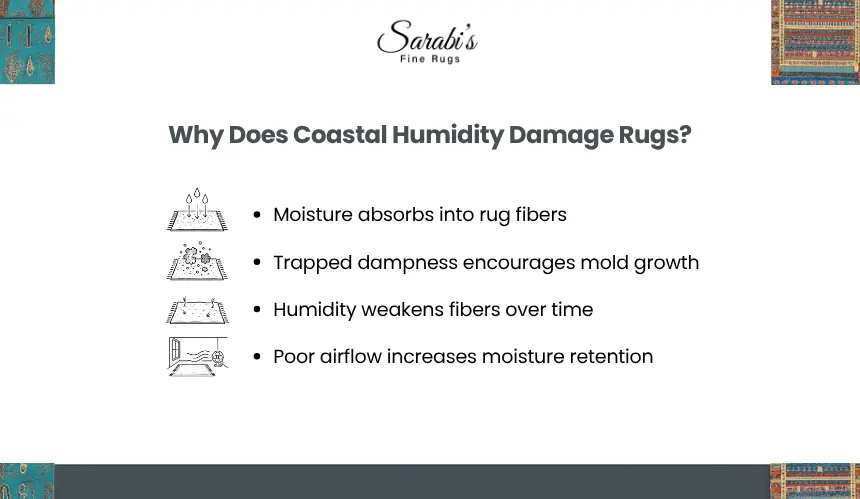
Coastal humidity affects rugs at a structural level, not just on the surface. In environments like Sydney, airborne moisture continuously interacts with rug fibers, gradually altering their condition. Understanding this mechanism helps explain why rugs develop odors, lose texture, or deteriorate over time even without visible spills.
How Moisture Absorption Occurs in Rug Fibers
Rug fibers, especially natural ones like wool, cotton, and jute, are highly absorbent. They pull moisture from the surrounding air and retain it within their structure. In humid conditions, this absorption becomes continuous, preventing the rug from fully drying.
This trapped moisture creates a damp environment within the rug layers, even when the surface appears normal.
Tip: Natural fiber rugs require more airflow and care in humid environments due to their higher absorption capacity.
Why Mold and Mildew Develop in Humid Conditions
When moisture remains trapped inside a rug, it creates ideal conditions for mold and mildew growth. These microorganisms thrive in warm, damp environments and often develop before any visible signs appear.
The first indicator is usually a musty odor, followed by discoloration or spotting if the issue progresses.
Important Note: Mold growth often begins beneath the surface, making early detection difficult without proper inspection.
How Humidity Leads to Long-Term Fiber Weakening
Continuous exposure to moisture gradually weakens the structural integrity of rug fibers. Over time, fibers can lose strength, become brittle, or break down, leading to thinning and reduced durability.
Humidity can also affect dyes, causing fading or uneven color distribution as moisture disrupts the stability of pigments.
Tip: Rugs exposed to long-term humidity may lose their original texture and softness, even if they appear visually intact.
Why Poor Air Circulation Makes the Problem Worse
Humidity-related damage is significantly amplified in areas with limited airflow. Without proper ventilation, moisture remains trapped within the rug and surrounding environment, accelerating deterioration.
Spaces like closed rooms, corners, or areas near walls are particularly vulnerable because air movement is restricted.
Important Note: Airflow is just as important as moisture control, as stagnant air allows humidity to settle and persist within rug fibers.
What Are the Signs of Humidity Damage in Rugs?
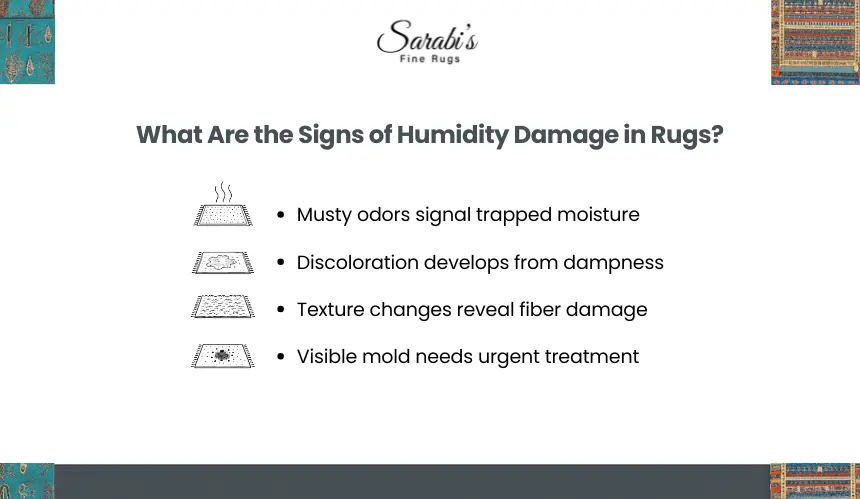
Humidity damage often develops gradually, making it difficult to identify in the early stages. In coastal environments like Sydney, rugs can retain moisture without obvious visual cues. Recognizing early warning signs helps prevent long-term issues such as mold growth, fiber breakdown, and permanent discoloration.
Why Musty Odors Indicate Trapped Moisture
One of the earliest and most noticeable signs of humidity damage is a persistent musty smell. This odor develops when moisture becomes trapped within the rug fibers, creating an environment where bacteria and mold begin to form.
Even if the rug looks clean, lingering odors often signal that deeper layers are retaining moisture.
Tip: If a rug smells fresh immediately after cleaning but develops an odor later, it may not have dried properly.
How Discoloration and Stains Develop Over Time
Humidity can cause uneven coloration, fading, or the appearance of dark patches. These changes occur when moisture affects the stability of dyes or encourages microbial growth beneath the surface.
In some cases, stains may appear without any direct spill, which can be confusing for homeowners.
Important Note: Discoloration caused by moisture often worsens gradually, making early detection essential for preventing permanent damage.
Why Texture Changes Signal Fiber Damage
Changes in texture, such as stiffness, roughness, or a slightly sticky feel, can indicate that fibers are being affected by moisture. Over time, rugs may lose their softness or develop uneven surfaces due to internal damage.
These changes are often subtle at first but become more noticeable as the condition progresses.
Tip: Compare the feel of different sections of the rug to identify inconsistencies that may indicate moisture retention.
How Mold Spots and Mildew Become Visible
In more advanced cases, mold or mildew may appear as small spots or patches on the rug. These can range in color and often spread if the underlying moisture issue is not addressed.
Visible growth is a clear sign that humidity has already caused significant damage and requires immediate attention.
Important Note: Once mold becomes visible, the problem has typically progressed beyond early stages, making professional treatment necessary.
How to Protect Rugs from Coastal Humidity
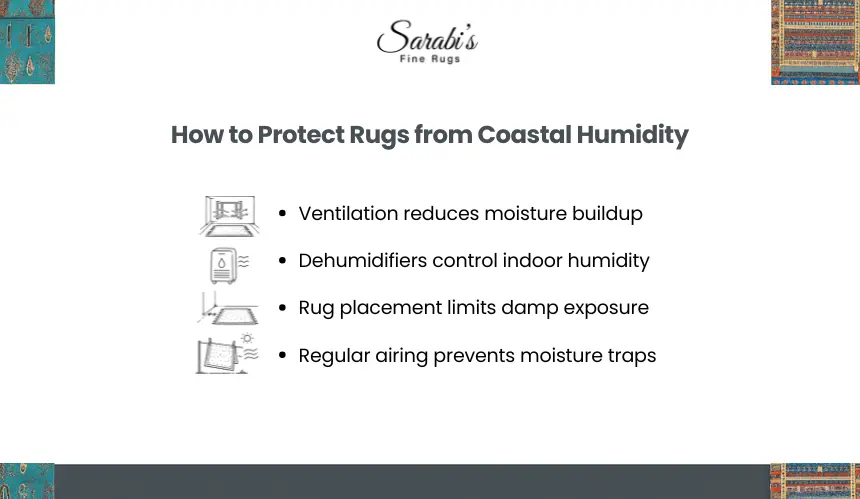
Protecting rugs from humidity requires a combination of airflow management, moisture control, and consistent maintenance. In coastal environments like Sydney, prevention is more effective than repair because humidity-related damage develops gradually within the fibers.
How Proper Ventilation and Airflow Reduce Moisture Build-Up
Air circulation is the most critical factor in preventing moisture from settling into rugs. Continuous airflow helps evaporate trapped humidity before it can penetrate deep into the fibers.
- Open windows regularly to allow cross-ventilation
- Use ceiling or floor fans to keep air moving
- Avoid placing rugs in enclosed or stagnant areas
Tip: Even a small increase in airflow can significantly reduce moisture retention over time.
Why Dehumidifiers Help Control Indoor Humidity Levels
Dehumidifiers actively remove excess moisture from indoor air, making them highly effective in coastal conditions. They are particularly useful in rooms with limited ventilation or high humidity exposure.
- Maintain indoor humidity levels between 40–60%
- Use dehumidifiers in bedrooms, living rooms, or storage areas
- Combine with ventilation for better results
Important Note: Consistent humidity control prevents long-term damage that may not be immediately visible.
How Rug Placement Affects Moisture Exposure
Where a rug is placed directly influences how much humidity it absorbs. Areas near windows, doors, or damp surfaces expose rugs to higher moisture levels.
- Keep rugs away from entryways where moisture is tracked in
- Avoid placing rugs directly against walls with limited airflow
- Use rug pads to create a barrier between the rug and the floor
Tip: Slightly elevating rugs with pads improves airflow underneath and reduces moisture buildup.
Why Regular Rotation and Airing Prevent Moisture Traps
Rugs can trap moisture unevenly depending on usage and exposure. Rotating and airing them out helps maintain consistent drying and prevents localized dampness.
- Rotate rugs every few months to balance exposure
- Hang rugs occasionally to allow full air circulation
- Air rugs outdoors in dry conditions when possible
Important Note: Regular airing helps release trapped moisture before it leads to odor or mold formation.
How Consistent Cleaning and Drying Maintain Rug Health
Dirt and debris can trap moisture within rug fibers, increasing the risk of humidity damage. Regular cleaning removes these particles and improves airflow through the rug structure.
- Vacuum regularly to prevent buildup
- Ensure rugs are completely dry after any cleaning
- Address spills immediately to avoid moisture retention
Tip: Proper drying after cleaning is just as important as the cleaning process itself to prevent long-term damage.
Which Rug Materials Perform Best in Humid Coastal Conditions?
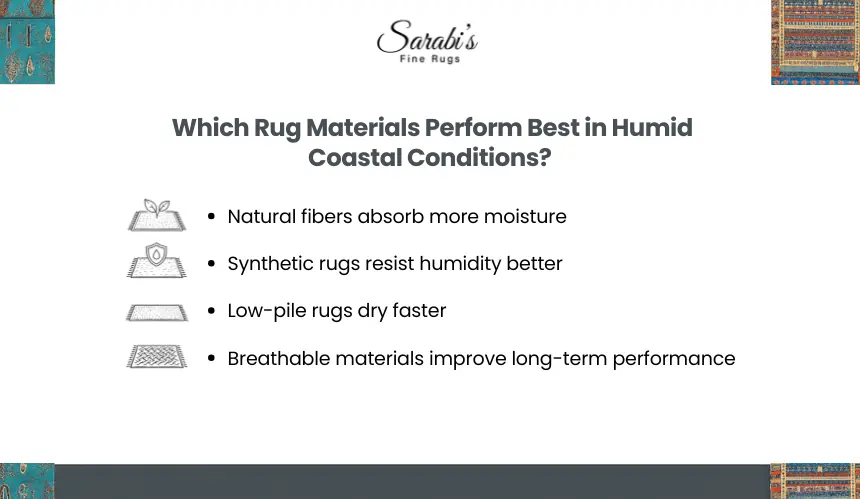
Material selection plays a critical role in how well a rug withstands humidity. In coastal environments like Sydney, some fibers absorb and retain moisture more than others, directly affecting durability, odor resistance, and long-term performance. Choosing the right material reduces the risk of mold, mildew, and fiber damage.
How Natural Fibers React to Humidity
Natural fibers such as wool, cotton, and jute are breathable but highly absorbent. They can regulate moisture to some extent, but in consistently humid conditions, they tend to retain dampness if not properly ventilated.
Wool performs better than other natural fibers because of its resilience and ability to release moisture gradually. However, materials like jute and cotton can become more vulnerable to prolonged damp exposure.
Tip: If using natural fiber rugs, ensure strong airflow and regular maintenance to prevent moisture buildup.
Why Synthetic Rugs Offer Better Moisture Resistance
Synthetic materials such as polypropylene, nylon, and polyester are less absorbent and more resistant to humidity. They do not retain moisture as easily, making them a practical choice for areas exposed to coastal air.
These rugs are also easier to clean and dry, reducing the risk of odor and microbial growth.
Important Note: While synthetic rugs resist moisture better, they may not provide the same texture or natural aesthetic as organic materials.
What Material Features Improve Humidity Performance
Beyond fiber type, certain structural features influence how a rug handles moisture. Rugs with tighter weaves and low-pile construction allow better airflow and faster drying compared to thick, high-pile rugs.
- Low-pile rugs dry faster and trap less moisture
- Flatweave rugs allow better air circulation
- Dense but breathable fibers maintain structure without excessive absorption
Tip: Choose rugs that balance breathability and durability rather than focusing only on appearance.
Which Materials Are Best for Long-Term Use in Coastal Homes
For long-term performance, materials that combine durability with moderate moisture resistance are ideal. Wool blends and certain synthetics offer a balanced solution, providing both comfort and resilience in humid conditions.
Natural materials can still be used effectively when paired with proper ventilation and care routines.
Important Note: No material is completely immune to humidity, so even moisture-resistant rugs require consistent airflow and maintenance to perform well over time.
How Regular Cleaning Helps Prevent Humidity Damage in Rugs
Regular cleaning is essential in humid environments because dirt and debris act as moisture traps within rug fibers. In coastal conditions like Sydney, even clean-looking rugs can hold fine particles that retain humidity, accelerating mold growth, odor buildup, and fiber deterioration.
Why Dirt and Debris Increase Moisture Retention
Dust, sand, and organic particles settle deep into the rug and absorb moisture from the air. This creates a damp internal environment that does not dry easily, even with normal ventilation.
Over time, this combination of dirt and humidity forms the ideal conditions for microbial growth and gradual fiber breakdown.
Tip: Frequent vacuuming reduces the amount of moisture-trapping debris and helps maintain airflow within the rug.
How Cleaning Prevents Odor and Mold Formation
Moisture combined with trapped contaminants leads to musty odors and eventually mold or mildew. Regular cleaning removes these contaminants before they can interact with humidity and cause damage.
Proper cleaning also ensures that residues from spills or daily use do not contribute to long-term moisture retention.
Important Note: Odor is often the first sign of deeper moisture issues, even if no visible damage is present.
Why Proper Drying Is Critical After Cleaning
Cleaning alone is not enough; drying plays an equally important role in preventing humidity damage. If a rug remains even slightly damp after cleaning, it can quickly develop odor or microbial growth in humid conditions.
Ensuring complete drying helps maintain the rug’s structure and prevents hidden moisture from accumulating.
Tip: Always allow rugs to dry in a well-ventilated area with good airflow to eliminate trapped moisture.
How Professional Cleaning Supports Long-Term Protection
Professional cleaning methods remove deeply embedded dirt and moisture more effectively than routine maintenance. This reduces the rug’s ability to trap humidity and helps restore its natural breathability.
It also ensures controlled drying, which is difficult to achieve with standard home cleaning methods.
Important Note: Periodic deep cleaning is essential in humid climates, as surface cleaning alone cannot fully prevent moisture-related damage over time.
How to Store Rugs Safely in Humid Coastal Environments
Proper storage is critical when rugs are not in use, as humidity can cause damage even without daily exposure. In coastal areas like Sydney, stored rugs can absorb moisture from the air, leading to mold, odors, and fiber deterioration if not protected correctly.
Why Proper Cleaning Before Storage Is Essential
Rugs should always be cleaned before being stored. Dirt, dust, and organic residues left in the fibers can trap moisture and accelerate mold or mildew growth during storage.
A clean rug reduces the risk of internal moisture retention and helps maintain its condition over time.
Tip: Never store a rug that has recently been exposed to spills or humidity without ensuring it is completely clean and dry.
How to Roll and Wrap Rugs to Prevent Moisture Exposure
Rugs should be rolled rather than folded to prevent creases and structural damage. Wrapping the rug in breathable materials, such as cotton or muslin, allows air circulation while protecting it from dust.
- Roll rugs tightly but without excessive pressure
- Use breathable covers instead of plastic wrapping
- Avoid sealing rugs in airtight materials
Important Note: Plastic coverings can trap humidity inside, increasing the risk of mold and mildew.
Where to Store Rugs to Minimize Humidity Risk
Storage location plays a major role in protecting rugs. Areas with stable temperature and low humidity are ideal, while basements, garages, or poorly ventilated spaces should be avoided.
- Choose elevated storage areas with good airflow
- Keep rugs away from walls or floors prone to dampness
- Use shelving or racks to improve air circulation
Tip: Storing rugs slightly off the ground helps prevent moisture transfer from floors.
Why Periodic Inspection Prevents Long-Term Damage
Even when properly stored, rugs should be checked periodically for signs of moisture, odor, or discoloration. Early detection allows for quick intervention before damage becomes severe.
Regular inspection also ensures that storage conditions remain stable over time.
Important Note: Long-term storage without inspection increases the risk of unnoticed humidity damage, which can become difficult to reverse.
Key Takeaways
- Coastal humidity in Sydney can cause moisture buildup, mold growth, and fiber damage if rugs are not properly maintained
- Airflow and ventilation are the most critical factors in preventing moisture from settling into rug fibers
- Choosing the right materials and construction improves resistance to humidity and reduces long-term risk
- Regular cleaning and complete drying help eliminate moisture-trapping debris and prevent odor formation
- Proper placement and rotation reduce exposure to damp areas and ensure even wear
- Safe storage techniques are essential to protect rugs when not in use
Frequently Asked Questions
How does humidity affect rugs in coastal homes?
Humidity allows moisture to settle deep within rug fibers, especially in coastal environments. Over time, this trapped moisture can lead to musty odors, mold growth, discoloration, and gradual fiber weakening, even if the rug appears clean on the surface.
Can rugs develop mold due to humidity?
Rugs can develop mold when moisture remains trapped inside the fibers without proper airflow or drying. Humid conditions create an ideal environment for mold and mildew, which often begin forming before visible signs appear.
What rug materials are best for humid climates?
Synthetic materials like polypropylene and nylon perform well because they resist moisture absorption. Wool can also work due to its resilience, but highly absorbent materials like jute and cotton require extra care in humid environments.
How can i remove moisture from rugs effectively?
Moisture can be reduced by improving airflow, using dehumidifiers, and ensuring rugs are completely dry after cleaning. Regular airing and proper placement also help prevent moisture from becoming trapped within the fibers.
Should rugs be avoided in coastal homes?
Rugs can still be used effectively in coastal homes with proper care. Choosing suitable materials, maintaining ventilation, and following regular cleaning routines allow rugs to perform well even in humid conditions.
How often should rugs be cleaned in humid areas?
Rugs in humid environments should be cleaned more frequently, typically every 6–12 months depending on usage. Regular maintenance helps remove moisture-trapping debris and prevents long-term damage.