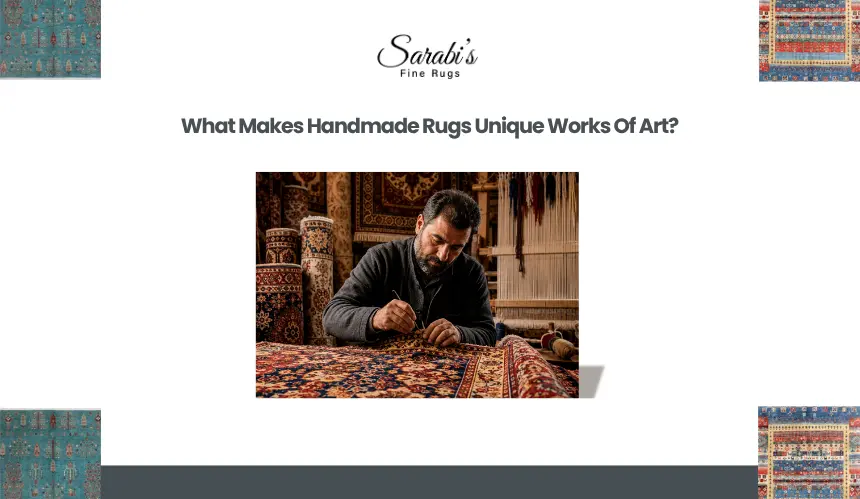
Quick Answer: Handmade rugs are considered unique works of art because they are individually crafted by skilled artisans using traditional techniques, natural materials, and intricate designs that cannot be replicated by machines.
What makes them unique includes:
- Hand-knotting or weaving that reflects artisan skill and time
- One-of-a-kind patterns with subtle variations
- Use of natural fibers like wool and silk
- Colors created from natural dyes that age beautifully
Important Insight: Unlike machine-made rugs, handmade rugs carry the imprint of human craftsmanship. Each piece tells a story through its design, materials, and cultural origin, making it both a functional item and a lasting artistic expression.
At first glance, a rug may seem like a simple decorative element, but handmade rugs represent something far more valuable. Behind every piece lie hours, sometimes months, of skilled craftsmanship, in which artisans carefully weave each knot to create patterns that reflect tradition, culture, and personal expression.
Many buyers struggle to understand why handmade rugs are priced higher than machine-made options or what truly sets them apart. The difference becomes clear over time. Machine-made rugs may look similar at first, but they lack the depth, durability, and uniqueness that define handmade creations.
Did you know that a single handmade rug can contain thousands or even millions of individual knots? Each of these knots contributes to the rug’s strength, detail, and artistic character.
Important Insight: Handmade rugs are not mass-produced products. They are carefully crafted works of art that combine skill, tradition, and creativity, making each piece unique and valuable in ways that go far beyond appearance.
The Craftsmanship Behind Handmade Rugs
The true value of handmade rugs lies in the craftsmanship that goes into creating them. Unlike machine-made products, these rugs are built knot by knot or weave by weave, requiring patience, precision, and years of skill developed by artisans.
What Is Hand-Knotting And Weaving?
Hand-knotting is a traditional technique where each knot is tied individually onto the rug’s foundation. Weaving involves interlacing threads to create the rug’s structure and design. Both methods require careful attention to detail and consistent technique.
Important Note: The density and quality of these knots directly influence the rug’s durability and level of detail.
How Long Does It Take To Create A Rug?
The time required to complete a handmade rug depends on its size, complexity, and knot density. Some rugs can take months to finish, while highly detailed pieces may take years.
Did you know? Larger rugs with intricate patterns require significantly more time because every section must be completed manually.
Why Does Craftsmanship Increase Value?
The level of skill and time invested in a handmade rug adds to its uniqueness and durability. Each rug reflects the artisan’s expertise, making it a one-of-a-kind piece rather than a mass-produced item.
Important Insight: Craftsmanship transforms a rug from a functional object into a work of art, giving it lasting value and character that machines cannot replicate.
Unique Designs And One-Of-A-Kind Patterns
One of the most defining features of handmade rugs is their uniqueness. Unlike machine-made rugs that follow identical templates, handmade rugs reflect individual artistry, resulting in patterns and details that are never exactly the same.
Why Are No Two Handmade Rugs Identical?
Each handmade rug is created by hand, meaning slight variations naturally occur during the weaving process. These differences may appear in pattern alignment, color shading, or knot placement.
Important Note: These variations are not flaws. They are proof of authenticity and craftsmanship.
How Do Patterns Reflect Artistic Expression?
Artisans often draw from cultural traditions, personal creativity, and regional influences when designing rugs. This results in patterns that carry meaning, symbolism, and artistic identity.
Did you know? Many traditional rug patterns represent stories, heritage, or beliefs passed down through generations.
What Makes Imperfections Valuable?
Small irregularities, often called “imperfections,” add character and uniqueness to each rug. They highlight the human element in the creation process and distinguish handmade pieces from machine-made ones.
Important Insight: The uniqueness of handmade rugs is what elevates them to works of art. Each piece carries its own identity, making it impossible to replicate and highly valued over time.
Use Of Natural Materials And Dyes
The materials used in handmade rugs play a major role in defining their beauty, durability, and artistic value. Unlike synthetic alternatives, these rugs are often made from natural fibers and dyes that enhance both their appearance and longevity.
Why Are Wool And Silk Commonly Used?
Wool and silk are preferred for their strength, texture, and ability to hold intricate designs. Wool provides durability and resilience, while silk adds softness and a subtle sheen that enhances visual detail.
Important Note: The quality of these materials directly affects how the rug feels, performs, and ages over time.
How Do Natural Dyes Enhance Beauty?
Natural dyes are derived from plants, minerals, and other organic sources. They produce rich, layered colors that develop depth and character as the rug ages.
Did you know? Natural dyes can create slight variations in tone, giving handmade rugs a more dynamic and authentic appearance.
Why Do Materials Affect Longevity?
Natural fibers are more adaptable and durable compared to synthetic materials. They can withstand wear while maintaining their structure, making them suitable for long-term use.
Important Insight: The use of natural materials and dyes not only enhances the rug’s visual appeal but also contributes to its durability and value, reinforcing its status as a lasting work of art.
Cultural and Historical Significance
Handmade rugs carry deep cultural and historical meaning that extends far beyond their physical appearance. Each piece reflects traditions, regional influences, and generations of knowledge passed down through skilled artisans.
How Do Rugs Represent Cultural Heritage?
Many handmade rugs are inspired by the traditions and lifestyles of the regions where they are created. Patterns, colors, and weaving styles often reflect cultural identity and local craftsmanship.
Important Note: These designs are not random. They often carry symbolic meaning tied to history and community values.
Why Are Traditional Techniques Preserved?
Artisans continue to use traditional weaving methods because they have been refined over centuries. These techniques ensure durability, authenticity, and artistic integrity in each rug.
Did you know? Some weaving methods used today are nearly identical to those practiced hundreds of years ago.
How Does History Influence Design?
Historical events, regional influences, and cultural narratives often shape the patterns found in handmade rugs. These elements give each rug a story that connects it to a specific time and place.
Important Insight: The cultural and historical significance of handmade rugs adds depth and meaning, transforming them from mere decorative items and reinforcing their value as true works of art.
Durability and Long-Term Value
Handmade rugs are valued not only for their beauty but also for their durability and ability to retain their value over time. Their construction methods and material quality make them far more resilient than many machine-made alternatives.
Why Do Handmade Rugs Last Longer?
The hand-knotting and weaving techniques used in handmade rugs create a dense and strong structure. This allows the rug to withstand regular use without losing its form or integrity.
Important Note: The tighter the knotting, the more durable the rug tends to be.
How Does Craftsmanship Affect Durability?
Skilled craftsmanship ensures that each knot and weave is placed with precision, distributing stress evenly across the rug. This reduces the likelihood of weak points or premature wear.
Did you know? High-quality handmade rugs can last for decades, and in some cases, even generations, with proper care.
Why Are They Considered Investments?
Because of their durability, uniqueness, and cultural significance, handmade rugs often retain, or even increase, their value over time. Their long lifespan makes them more than just a decorative purchase.
Important Insight: Handmade rugs combine artistic value with practical durability, making them long-term investments that offer both functional use and lasting worth.
Differences Between Handmade and Machine-Made Rugs
Understanding the difference between handmade and machine-made rugs helps explain why handmade pieces are considered works of art. While both may serve a functional purpose, their creation processes, quality, and long-term value differ fundamentally.
What Sets Handmade Rugs Apart?
Handmade rugs are created using traditional techniques such as hand-knotting or weaving, with each detail crafted by hand. This results in unique patterns, stronger construction, and greater attention to detail.
Important Note: The human element in handmade rugs ensures that each piece has its own character and identity.
Why Do Machine-Made Rugs Lack Uniqueness?
Machine-made rugs are produced using automated processes that replicate the same design repeatedly. While they may appear uniform, they lack the individuality and variation found in handmade pieces.
Did you know? Machine-made rugs are designed for consistency, whereas handmade rugs are valued for their uniqueness.
How Can You Identify Authentic Handmade Rugs?
Authentic handmade rugs often show subtle variations in pattern and knotting. The back of the rug typically reveals individual knots rather than a uniform backing seen in machine-made versions.
Important Insight: The differences in craftsmanship, design, and structure highlight why handmade rugs are considered artistic creations, while machine-made rugs are primarily functional products.
The Artistic Value Of Imperfections
One of the defining characteristics of handmade rugs is the presence of small imperfections. Unlike machine-made products that aim for uniform precision, handmade rugs embrace subtle variations that reflect the human touch behind their creation.
Why Do Slight Variations Add Character?
During the weaving process, artisans may introduce minor differences in knot placement, color shading, or pattern alignment. These variations create depth and individuality, giving each rug a distinct personality.
Important Note: These details are intentional outcomes of handcrafting, not flaws.
How Does Human Touch Define Authenticity?
Every handmade rug carries the mark of the artisan who created it. The slight irregularities in design and execution highlight the manual effort involved and confirm that the rug is not mass-produced.
Did you know? Many collectors value these variations because they demonstrate true craftsmanship and originality.
Why Is Perfection Not The Goal?
In handmade rugs, perfection is not measured by uniformity but by artistry and expression. The goal is to create a piece that reflects tradition, creativity, and skill rather than exact replication.
Important Insight: Imperfections are what make handmade rugs unique works of art. They capture the essence of human craftsmanship and distinguish each piece as a one-of-a-kind creation.
Why Handmade Rugs Are More Than Decor
Handmade rugs go beyond their functional role as floor coverings. They serve as artistic focal points that enhance spaces while carrying emotional, cultural, and aesthetic value that evolves over time.
How Do They Enhance Interior Spaces?
Handmade rugs add depth, texture, and character to interiors. Their intricate patterns and rich colors create visual interest, making them central elements in both traditional and modern designs.
Important Note: A well-placed handmade rug can define a space and influence the overall atmosphere of a room.
Why Do They Hold Emotional and Cultural Value?
Because handmade rugs are crafted through traditional methods, they often carry cultural meaning and personal significance. Owners may associate them with heritage, travel, or meaningful investments.
Did you know? Many handmade rugs are passed down through generations, becoming part of family history.
How Do They Become Heirloom Pieces?
Due to their durability and timeless design, handmade rugs often outlast trends and remain valuable over decades. With proper care, they can be preserved and handed down as heirlooms.
Important Insight: Handmade rugs combine function, artistry, and legacy. Their ability to hold both practical and emotional value is what truly elevates them beyond simple decor into lasting works of art.
Frequently Asked Questions
Why Are Handmade Rugs More Expensive?
Handmade rugs require skilled labor, time, and high-quality natural materials. The detailed craftsmanship and unique designs contribute to higher costs compared to machine-made rugs.
How Can You Tell If A Rug Is Handmade?
Handmade rugs typically show slight variations in pattern and knotting. The back of the rug reveals individual knots rather than a uniform, machine-stitched backing.
Do Handmade Rugs Last Longer Than Machine-Made Ones?
Yes, handmade rugs are generally more durable due to their dense knotting and high-quality materials. With proper care, they can last for decades or even generations.
Are Imperfections Normal In Handmade Rugs?
Yes, minor variations are expected and valued in handmade rugs. These imperfections reflect the human craftsmanship and make each rug unique.
Why Are Handmade Rugs Considered Valuable?
Their value comes from a combination of craftsmanship, cultural significance, durability, and uniqueness. Each rug is a one-of-a-kind piece that retains both artistic and functional worth.