
How Long Do Handmade Rugs Last and What Helps Extend Their Lifespan?
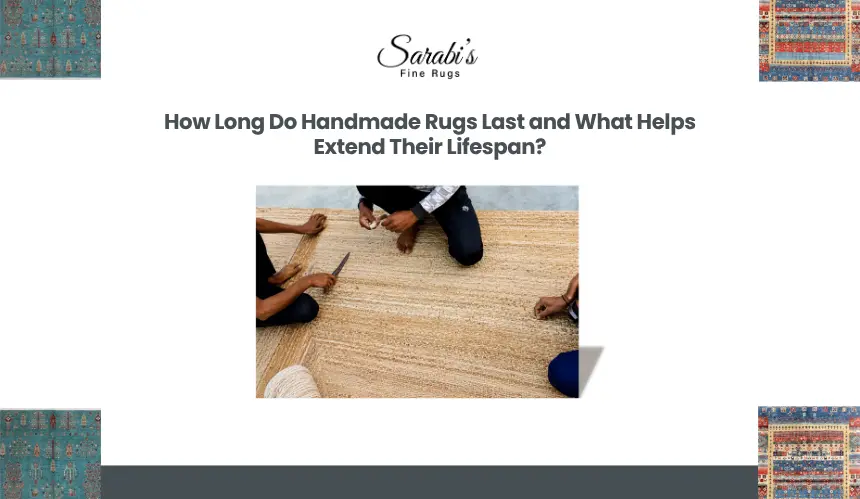
A high-quality handmade rug can last for several decades, and some well-preserved pieces remain usable for generations. Its lifespan depends on construction quality, fiber strength, foot traffic, moisture exposure, cleaning methods, and how consistently it receives preventive care.
Weaving Longevity: Historical textile archives confirm that hand-knotted wool rugs can easily endure for over 100 years of continuous use, outlasting standard machine-made variants by up to 10 times due to their unique, glueless structural engineering. |
Handmade rugs are often built differently from mass-produced rugs because their fibers are individually knotted or woven into a stronger foundation. Wool, cotton, and silk materials can age well when abrasive soil, sunlight damage, and excess humidity are controlled before they weaken the rug structure.
This blog explains how long handmade rugs usually last, which factors shorten their lifespan, how natural materials affect durability, and how professional maintenance and daily care habits help preserve long-term rug value.
How Long Do Handmade Rugs Usually Last?
High-quality handmade rugs can last anywhere from several decades to well over a hundred years when they are properly maintained. Their lifespan depends heavily on construction quality, material strength, environmental exposure, and how consistently the rug receives preventive care throughout its use.
Many antique Persian and Oriental rugs still exist today because handmade weaving techniques create stronger structural foundations than many modern machine-made alternatives. Hand-knotted rugs are especially valued for their durability because individual knots help distribute stress more evenly across the surface over long periods of use.
Knot Density Resilience: Engineering tests on historical textiles indicate that a high-density rug boasting 400 knots per square inch absorbs foot traffic impact up to 50% more effectively than lower-density weaves, drastically slowing down localized structural breakdown. |
- Hand-Knotted Construction Improves Long-Term Durability: Hand-knotted rugs are built by tying individual knots directly into the foundation, which creates a denser and more flexible structure. This construction method allows the rug to tolerate repeated foot traffic without the rapid backing separation often seen in machine-made rugs. The knot structure also helps the rug maintain its shape and surface stability even after years of regular use.
- Dense Weaving Helps Reduce Structural Wear: Higher knot density usually improves durability because tightly packed fibers resist movement, friction, and pile separation more effectively. Dense weaving distributes pressure more evenly across the rug surface, reducing localized stress in high-traffic areas. This tighter structure also helps the rug maintain clearer pattern definition as it ages.
- Handmade Foundations Resist Daily Stress More Effectively: Many handmade rugs use strong cotton or wool foundations that remain flexible under long-term pressure. These materials help absorb movement caused by walking, furniture weight, and routine handling without weakening the overall structure too quickly. The flexibility of handmade foundations also reduces the likelihood of cracking or stiffness developing over time.
- Machine-Made Rugs Usually Deteriorate Faster: Machine-made rugs often rely on glued backing systems and synthetic materials that weaken more quickly under repeated stress. Once the backing begins separating or the fibers flatten excessively, structural deterioration can accelerate rapidly. While machine-made rugs may cost less initially, they typically do not maintain the same long-term durability or restoration potential as high-quality handmade rugs.
What Factors Shorten the Lifespan of Handmade Rugs?
The lifespan of a handmade rug can shorten significantly when fibers are exposed to excessive friction, moisture, sunlight, or embedded debris over long periods. Even durable hand-knotted rugs gradually weaken when environmental stress and maintenance problems remain untreated.
The Deep Friction Factor: Microscopic evaluations reveal that embedded sand and grit trapped in a rug’s foundation can cut up to 15% of the base fibers annually if left unvacuumed, effectively sawing the rug apart from the inside out. |
Many forms of rug damage develop slowly rather than appearing immediately. Fiber deterioration, dye fading, and structural weakening often accumulate over years of repeated exposure before visible damage becomes obvious on the surface.
1. Heavy Foot Traffic Creates Uneven Wear Patterns
Repeated walking pressure compresses fibers and weakens pile density in frequently used sections of the rug. Hallways, entry points, and seating areas often experience faster wear because constant friction gradually breaks down the surface structure. Without rotation, these traffic patterns can become permanent and create uneven aging across the rug.
2. UV Exposure Weakens Fibers and Natural Dyes
Direct sunlight slowly damages natural fibers and causes gradual fading within dyed sections of the rug. UV exposure can weaken wool and silk fibers over time while also reducing the depth and balance of traditional Oriental rug colors. Areas exposed to concentrated sunlight often fade unevenly, which creates visible contrast between protected and exposed sections.
3. Moisture Damage Can Distort Rug Foundations
Excess moisture weakens cotton foundations and creates conditions where mold, mildew, and odor-causing bacteria develop more easily. Prolonged dampness can also distort the rug shape and increase fiber brittleness after drying. Moisture problems become especially dangerous when water penetrates beneath the visible surface and remains trapped inside the foundation layers.
4. Embedded Dirt Particles Increase Fiber Abrasion
Dust, sand, and microscopic debris trapped inside the rug act like abrasive particles during foot traffic. As pressure moves these particles against the fibers repeatedly, the rug experiences gradual internal wear that weakens the pile structure over time. This type of damage often develops beneath the visible surface long before major thinning becomes noticeable.
How Do Natural Materials Affect Rug Longevity?
Structural Elasticity: Premium natural wool fibers possess a remarkable cellular memory that allows them to be bent back on themselves over 20,000 times without breaking, whereas standard synthetic nylon fibers typically snap after just 2,000 bends. |
Natural materials play a major role in determining how long a handmade rug can maintain its structure, flexibility, and visual appearance. Wool, cotton, and silk fibers all respond differently to pressure, moisture, sunlight, and long-term use, which directly affects overall rug durability.
High-quality handmade rugs often last longer because natural fibers age more gradually than many synthetic alternatives. Their flexibility and structural resilience allow the rug to tolerate years of daily stress when environmental conditions and maintenance are properly controlled.
1. Wool Fibers Resist Compression and Surface Wear
Wool is widely used in handmade rugs because its fibers naturally recover from compression caused by foot traffic and furniture weight. This elasticity helps the rug maintain pile thickness and surface texture for longer periods. Wool fibers also tolerate bending and movement more effectively than many synthetic materials, reducing the likelihood of rapid cracking or flattening.
2. Natural Lanolin Helps Protect Wool Rugs
Wool contains lanolin, a natural protective substance that helps resist dirt absorption and limits fiber dryness over time. This protective quality reduces the amount of debris that penetrates deeply into the rug surface during regular use. Lanolin also helps wool fibers remain more flexible as the rug ages, which supports longer-term durability under changing indoor conditions.
3. Cotton Foundations Improve Structural Stability
Many handmade rugs use cotton foundations because cotton provides strength and flexibility beneath the visible pile surface. A stable foundation helps the rug maintain alignment and absorb daily stress more evenly across the structure. Strong cotton foundations also improve the rug’s ability to tolerate controlled washing and restoration work during long-term maintenance.
4. Silk Fibers Require More Controlled Conditions
Silk rugs can remain visually beautiful for decades, but silk fibers are more sensitive to abrasion, moisture, and sunlight exposure than wool. Excess friction and environmental stress can weaken silk more quickly if the rug is placed in high-traffic areas. Because of this sensitivity, silk handmade rugs often last longer in lower-traffic spaces where exposure to wear conditions remains more controlled.
What Care Habits Help Preserve Handmade Rugs Longer?
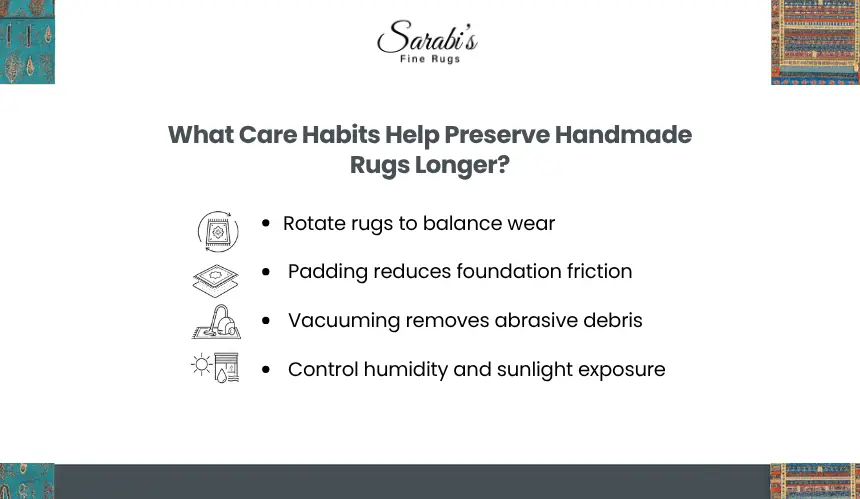
Consistent daily care habits help reduce long-term stress on handmade rugs and slow the gradual deterioration caused by friction, moisture, sunlight, and uneven pressure. Preventive maintenance is often one of the biggest factors separating rugs that last for decades from rugs that weaken prematurely.
Wear Distribution Metrics: Home maintenance data shows that executing a simple 180-degree rug rotation every 6 months can successfully extend the overall aesthetic and structural lifespan of the textile by up to 30%. |
Even high-quality handmade rugs can experience accelerated wear when traffic exposure, dirt accumulation, and environmental conditions remain unmanaged for long periods. Small maintenance routines performed consistently usually protect the rug structure more effectively than infrequent deep restoration.
- Rug Rotation Helps Balance Traffic Exposure: Rotating the rug periodically distributes foot traffic and sunlight exposure more evenly across the surface. This helps prevent concentrated wear patterns, uneven fading, and pile compression from developing in the same areas repeatedly.
- Rug Padding Reduces Foundation Friction: Padding beneath the rug absorbs movement and reduces friction between the rug foundation and floor surface. It also improves weight distribution beneath furniture while helping the rug maintain better structural stability during daily use.
- Proper Vacuuming Prevents Fiber Damage: Routine vacuuming removes abrasive dust and debris before particles settle deep into the rug foundation. Removing this buildup early reduces internal friction that gradually weakens fibers during foot traffic.
- Indoor Humidity Control Protects Natural Materials: Excess humidity can encourage mold growth and weaken natural fibers, while overly dry conditions may increase brittleness in wool, silk, and cotton materials. Stable indoor moisture conditions help handmade rugs age more gradually and maintain structural flexibility longer.
- Limiting Direct Sunlight Helps Reduce Uneven Fading: Continuous UV exposure slowly weakens natural dyes and causes color imbalance across exposed sections of the rug. Managing direct sunlight helps preserve pattern clarity and slows fiber deterioration caused by long-term heat and UV stress.
Frequently Asked Questions
Can a handmade rug still last long if it is used daily?
A high-quality handmade rug can still last for decades under daily use when traffic exposure, cleaning habits, and environmental conditions are managed properly. Dense hand-knotted construction and durable wool fibers often tolerate regular residential use more effectively than many machine-made alternatives.
Why do some antique handmade rugs survive longer than newer rugs?
Many older handmade rugs were woven using dense knot structures, strong natural fibers, and traditional weaving techniques designed for long-term durability. Some modern rugs prioritize faster production and lower costs, which can reduce structural strength and long-term restoration potential.
Does rug color affect how quickly a handmade rug appears worn?
Lighter-colored rugs often show visible dirt and traffic patterns more quickly, while darker tones may hide surface wear longer. However, actual durability depends more on fiber quality, knot density, and maintenance conditions than on color alone.
Can professional restoration increase the usable life of a handmade rug?
Professional restoration can significantly extend usable lifespan when structural damage is addressed early. Stabilizing weakened edges, repairing foundation stress, and correcting localized wear help prevent deterioration from spreading across larger sections of the rug.
Why do handmade rugs sometimes become softer as they age?
Natural wool fibers gradually relax under long-term use and controlled cleaning, which can create a softer texture over time. This aging process often occurs without major structural weakness when the rug remains properly maintained and protected from excessive environmental stress.
Can improper storage shorten the lifespan of a handmade rug?
Poor storage conditions can damage handmade rugs through trapped moisture, insect activity, folding stress, and restricted airflow. Rugs stored in humid or tightly compressed conditions may develop mold, fiber distortion, or permanent crease damage even without regular use.
Does knot density always guarantee a longer rug lifespan?
Higher knot density usually improves durability, but lifespan also depends on fiber quality, foundation strength, environmental exposure, and maintenance consistency. A dense rug can still deteriorate prematurely if moisture damage, embedded dirt, or heavy sunlight exposure remain unmanaged over time.
Recent posts