
What Traditional Oriental Rug Patterns Are Most Recognizable?
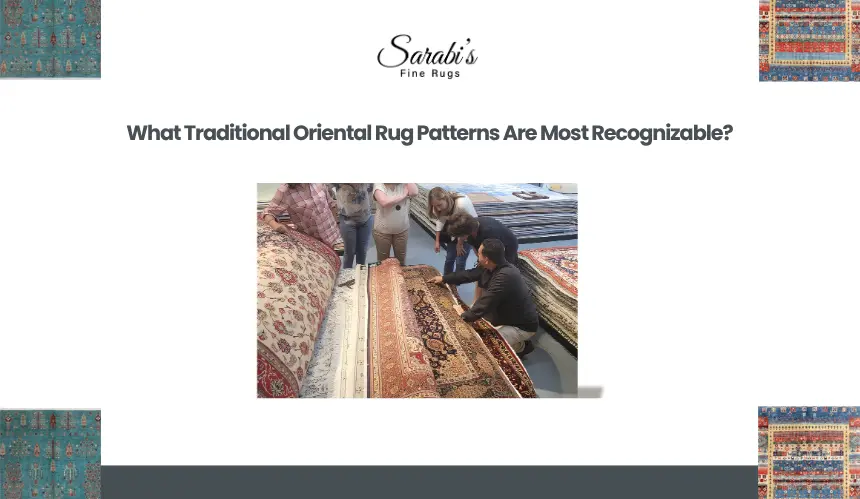
Traditional Oriental rugs are recognized for their structured patterns, repeating motifs, and symbolic layouts that reflect regional weaving traditions. Unlike modern decorative rugs that often prioritize abstract styling, Oriental rug patterns are usually built around symmetry, visual balance, and carefully organized design frameworks.
Weaving Heritage: Authentic hand-knotted Oriental rugs contain up to 230,000 knots per square meter, forming highly complex, mathematically precise symmetries where even a small 9×12 rug represents thousands of hours of intentional cultural storytelling. |
Many traditional Oriental rug designs originated from Persian, Turkish, Caucasian, and tribal weaving cultures, where patterns carried symbolic, decorative, or practical meaning. Certain motifs were associated with prosperity, protection, nature, or spiritual harmony, while others helped organize complex handwoven layouts across large rug surfaces.
This blog explores some of the most common traditional Oriental rug patterns, including medallion, floral, geometric, Herati, and border designs. It explains the unique visual qualities each pattern style contributes and how these motifs shape the overall character of handmade Oriental rugs.
1. Medallion Patterns: Create Strong Visual Balance
Medallion patterns are one of the most recognizable Oriental rug designs because they create a centered visual structure that organizes the entire layout. The medallion acts as an anchor within the rug surface, helping surrounding motifs appear more symmetrical and visually connected.
This pattern style became especially common in Persian weaving traditions where balance, symmetry, and decorative organization were central to handmade rug composition. Medallion rugs are often associated with formal interiors because their structured layouts create a more refined and grounded appearance.
The Sacred Axis: Traditional Persian layouts reserve exactly 30% to 35% of the central field area for the grand medallion, utilizing this strict ratio to instantly anchor the human eye and ground large room interiors. |
How Do Central Medallions Create Visual Focus?
The central medallion draws attention toward the middle of the rug and establishes a clear focal point within the design. This centered structure helps large Oriental rugs feel visually organized even when the surrounding layout contains dense decorative detail.
Larger medallions also increase pattern visibility across spacious interiors where intricate designs need stronger visual definition from a distance.
Why Does Layered Symmetry Improve Layout Balance?
Layered symmetry distributes decorative weight more evenly across the rug surface. Mirrored motifs surrounding the medallion help prevent the layout from appearing visually heavy on one side or overly fragmented between design sections. This balanced structure creates smoother visual flow between the center, corners, and borders of the rug.
How Do Corner Motifs Extend Pattern Continuity?
Corner motifs help connect the outer edges of the rug to the central medallion layout. These decorative sections continue the visual rhythm of the design and reduce abrupt transitions between the center field and border areas. Without corner motifs, the medallion structure can appear visually isolated from the rest of the composition.
Why Does Curved Detailing Add Decorative Softness?
Many Persian medallion rugs include curved floral detailing and flowing vine elements that soften the rigidity of symmetrical layouts. This combination of geometric organization and organic movement creates a more layered and refined visual appearance.
Curved detailing also increases the depth and intricacy of handmade Oriental rug patterns by blending floral motifs into the surrounding decorative framework.
2. Floral Patterns: Add Decorative Depth and Movement
Floral patterns are widely used in traditional Oriental rugs because they create flowing movement, decorative richness, and layered visual texture across the rug surface. Unlike geometric layouts that emphasize sharp structure, floral motifs create softer transitions between different sections of the design.
Many floral Oriental rugs were influenced by Persian garden imagery, nature symbolism, and palace-style weaving traditions. These patterns often contain vines, blossoms, leaves, and curved detailing that make the rug appear more intricate and visually dynamic.
Knot Density Demands: Recreating organic curved vines and fluid blossoms requires a minimum high-tier threshold of 300 to 400 Knots Per Square Inch (KPSI), forcing weavers to use finer yarns to achieve fluid, lifelike movement. |
How Do Vine Structures Create Continuous Pattern Movement?
Vine structures connect different motifs throughout the rug and guide the eye continuously across the surface. This flowing movement prevents the layout from feeling visually static and helps create smoother transitions between medallions, borders, and background elements. The interconnected design also allows floral motifs to appear more layered within dense handmade compositions.
Why Do Lotus and Palmette Motifs Increase Decorative Complexity?
Lotus flowers and palmette motifs introduce additional layers of ornamentation that make floral rugs appear more elaborate. These motifs are often repeated at varying scales throughout the rug to increase visual richness without disrupting overall symmetry. Their curved shapes also help soften rigid layout structures and create more organic movement within the design.
How Do Dense Floral Layouts Add Visual Texture?
Dense floral layouts reduce open background space and create a more detailed surface appearance. Repeating blossoms, leaves, and vine elements generate visual texture that makes the rug feel fuller and more intricate from both close and distant viewing angles. This dense arrangement is especially common in high-knot Persian rugs where detailed craftsmanship is emphasized heavily.
Why Do Handwoven Floral Details Reflect Craftsmanship?
Floral patterns often require highly detailed weaving techniques because curved motifs and layered ornamentation are more difficult to reproduce consistently by hand. Fine floral detailing usually reflects stronger weaving precision and higher knot density within traditional Oriental rugs.
The complexity of these patterns also allows artisans to demonstrate regional weaving styles and decorative artistry more clearly through handmade construction.
3. Geometric Patterns: Create Bold Tribal Contrast
Geometric patterns are common in tribal Oriental rugs because they create strong visual contrast, structured repetition, and clearer motif definition across the rug surface. These designs rely on angular shapes and repeating forms that are easier to weave consistently by hand while still producing visually striking layouts.
Many tribal weaving traditions from regions such as the Caucasus, Anatolia, and Central Asia favored geometric structures because they combined symbolic meaning with practical weaving efficiency. The bold contrast within these rugs often makes the patterns appear more dramatic and visually defined than softer floral layouts.
Angular Vision: Tribal geometric rugs intentionally use sharp 90-degree and 45-degree angles in their motifs, generating maximum visual contrast and high definition that can be clearly read from across a room. |
How Do Angular Shapes Improve Pattern Clarity?
Angular shapes create sharper visual separation between motifs, making geometric rugs easier to read from a distance. Straight lines, stepped forms, and pointed edges generate stronger definition throughout the rug surface compared to curved floral detailing. This clarity also helps repetitive tribal motifs remain visually organized even within densely patterned layouts.
Why Do Repeating Diamond Motifs Create Layout Consistency?
Diamond motifs are commonly repeated across tribal Oriental rugs because they help maintain balanced spacing and rhythmic visual repetition. Their symmetrical shape allows weavers to extend patterns evenly across the rug without disrupting the overall structure. The repeated arrangement also creates a stronger sense of continuity between different sections of the design.
How Do Bold Contrasts Increase Visual Definition?
Geometric rugs often use strong color contrast between the background and motifs to make patterns stand out more clearly. Deep reds, dark blues, ivory tones, and black accents are frequently combined to increase visibility and emphasize the rug’s structural layout. This contrast gives tribal rugs a more graphic and visually assertive appearance within both traditional and modern interiors.
Why Do Tribal Symbols Add Cultural Identity?
Many geometric motifs originated from tribal symbolism connected to protection, prosperity, fertility, or regional identity. Repeated symbols often carried cultural meaning while also functioning as decorative design elements within the rug composition. These symbolic motifs help distinguish tribal Oriental rugs from more formal palace-style Persian designs that emphasize floral ornamentation and curvilinear detail.
4. Herati Patterns: Create Continuous Visual Rhythm
Herati patterns are recognized for their repeating structure that creates continuous visual rhythm across the entire rug surface. Unlike medallion layouts that focus attention toward the center, Herati designs distribute motifs evenly throughout the field to create a more uniform and uninterrupted appearance.
This pattern style became especially common in Persian weaving traditions where dense repetition and balanced spacing were used to create visually cohesive handmade rugs. Herati rugs often appear highly detailed because the repeating motifs cover large portions of the surface without leaving significant empty space.
Unbroken Field Repetition: The standard Herati layout utilizes a precise 4-part repeating fish-and-leaf motif that fills up to 95% of the open background, successfully creating an uninterrupted, all-over visual rhythm. |
How Do Repeating Motifs Build Structured Continuity?
Repeating motifs create a connected layout where individual design elements flow consistently across the rug without abrupt visual interruption. This repetition helps the rug appear more balanced and organized even when the surface contains dense decorative detail. The continuous structure also allows the eye to move naturally across the entire rug instead of focusing on a single dominant section.
Why Do Fish and Leaf Elements Reflect Persian Influence?
Traditional Herati patterns commonly contain leaf forms and fish-like motifs arranged around floral centers. These elements became strongly associated with Persian weaving traditions where natural symbolism and decorative repetition played a major role in rug design. The recurring arrangement of these motifs creates a recognizable structure that distinguishes Herati rugs from tribal geometric layouts or large medallion compositions.
How Does Dense Repetition Reduce Empty Surface Space?
Herati layouts use closely repeated motifs to fill the rug field with continuous decorative detail. This dense arrangement minimizes open background areas and creates a richer visual texture throughout the surface. The repetitive coverage also increases the perception of intricacy, especially in finely hand-knotted rugs where smaller motifs can be woven with greater precision.
Why Do Uniform Layouts Improve Decorative Balance?
Uniform pattern distribution helps maintain consistent visual weight across the rug surface. Since motifs repeat evenly from one section to another, the design appears more stable and less dependent on a single focal point. This balanced structure allows Herati rugs to work effectively in both traditional and modern interiors where evenly distributed detail creates a more harmonious decorative presence.
5. Border Patterns: Create Structured Design Framing
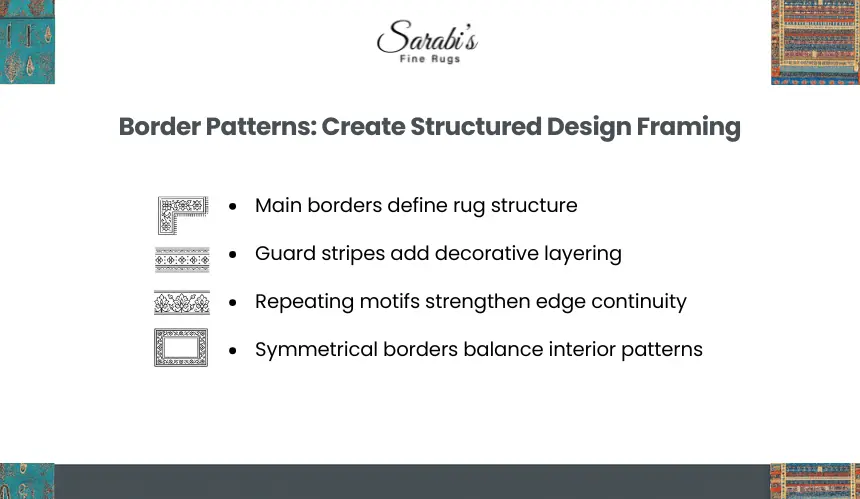
Border patterns are an essential part of traditional Oriental rug design because they frame the interior layout and create separation between different decorative sections. Without borders, dense central patterns can appear visually uncontained or disconnected from the edges of the rug.
Many Oriental rugs use multiple border layers to organize the composition more clearly and reinforce overall symmetry. These framing elements also help balance highly detailed interiors by creating visual boundaries around the main field design.
Framing Proportions: Classic Oriental rug blueprints dictate that the main frame and guard stripes must consume exactly 25% to 33% of the rug’s total footprint to perfectly contain the interior pattern density. |
How Do Main Borders Define Overall Rug Structure?
The main border acts as the primary frame surrounding the interior pattern field. Its placement creates a clear visual boundary that helps organize the rug layout and contain decorative complexity within a structured perimeter. Wider borders are often used in larger Oriental rugs to increase visual balance between the outer frame and the heavily detailed interior surface.
Why Do Guard Stripes Add Decorative Layering?
Guard stripes are smaller secondary borders placed beside the main border to add additional pattern variation and visual layering. These narrow sections create smoother transitions between the outer edge and the central field of the rug. The layered arrangement also prevents the border structure from appearing overly heavy or visually flat.
How Do Repeating Edge Motifs Strengthen Visual Framing?
Repeating motifs along the border create rhythmic continuity around the edges of the rug. These repeated elements reinforce the framing effect and help connect all sides of the composition into a more unified structure. Consistent edge repetition also increases symmetry throughout the overall design layout.
Why Does Border Symmetry Balance Interior Pattern Density?
Oriental rugs often contain highly detailed central patterns that can feel visually crowded without structured framing. Symmetrical borders help stabilize the composition by distributing decorative weight more evenly around the rug surface. This balance allows intricate interior motifs to appear more organized while preventing the overall design from feeling visually overwhelming.
Frequently Asked Questions
Can Oriental rug patterns help identify where a rug was made?
Certain patterns can provide clues about a rug’s regional weaving origin because Persian, Turkish, Caucasian, and Central Asian traditions often favor different motif structures and layout styles. However, accurate identification usually depends on multiple factors including knot type, dye usage, border design, and weaving technique rather than pattern alone.
Why do some Oriental rugs combine floral and geometric patterns together?
Many traditional Oriental rugs blend floral and geometric motifs to create stronger visual contrast and more layered decorative composition. Geometric structures help organize the layout, while floral detailing softens the design and increases visual complexity across the rug surface.
Are highly detailed Oriental rug patterns harder to weave by hand?
Dense and intricate patterns usually require greater weaving precision because smaller motifs demand tighter knot placement and stronger layout consistency. Rugs with fine floral detailing or highly repetitive field patterns often reflect higher knot density and longer production times during handmade weaving.
Do Oriental rug patterns affect how large or small a room feels?
Pattern structure can influence visual perception inside a space. Large medallion layouts often create stronger focal emphasis in open rooms, while smaller repeating motifs may make compact areas feel busier or more textured depending on the rug’s color contrast and layout density.
Why do tribal Oriental rugs usually look bolder than Persian floral rugs?
Tribal rugs commonly use angular geometric motifs and stronger color contrast, which creates sharper visual definition across the surface. Persian floral rugs rely more on curved detailing and layered ornamentation, producing a softer and more decorative visual effect.
Recent posts