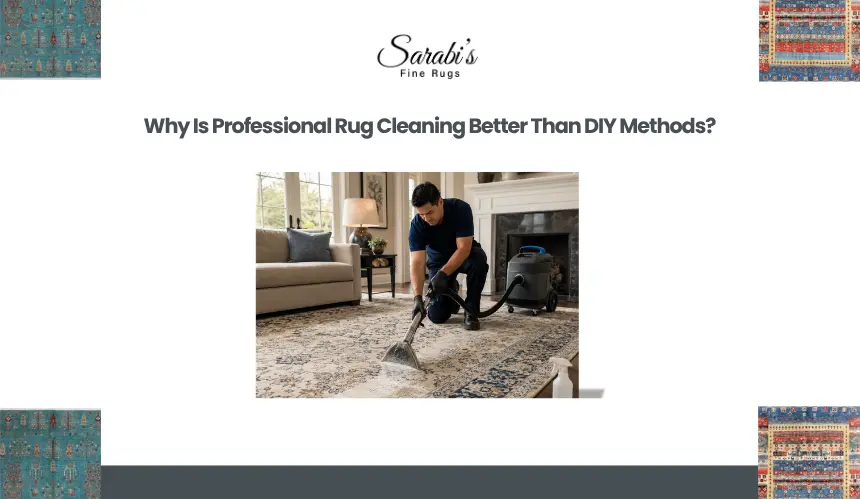
Quick Answer: Professional rug cleaning is more effective than DIY methods because it uses specialized equipment, fiber-specific techniques, and controlled cleaning solutions to remove deep-seated dirt, allergens, and stains without damaging the rug. This process not only restores appearance but also extends the rug’s lifespan and preserves its structural integrity.
Key Reasons Professional Cleaning Outperforms DIY
- Deep dirt extraction: Industrial-grade equipment removes embedded soil, dust, and allergens that household tools cannot reach
- Material-specific care: Different fibers like wool, silk, and synthetics require tailored cleaning methods to prevent damage
- Controlled moisture management: Proper water use and drying techniques reduce the risk of mold, mildew, and fiber distortion
- Advanced stain and odor removal: Professional solutions break down stains at a molecular level rather than masking them
- Fiber protection and longevity: Correct cleaning preserves texture, color, and structure over time
Tip: Rugs often trap more contaminants beneath the surface than visible, so surface-level DIY cleaning rarely addresses the root issue.
Important Note: The biggest risk with DIY methods is not ineffective cleaning alone, but the potential for permanent fiber damage caused by incorrect products, over-wetting, or aggressive scrubbing.
Rugs often look clean on the surface, but many homeowners underestimate how much dirt, allergens, and residue are trapped deep within the fibers. Over time, this buildup not only dulls the appearance but can also affect indoor air quality and overall hygiene. The challenge is that standard at-home cleaning methods rarely reach beyond the surface, leaving the root problem unresolved.
A common frustration comes from trying multiple DIY solutions that either fail to remove stains completely or create new issues. Over-wetting, using the wrong cleaning products, or applying excessive scrubbing can lead to fiber damage, color fading, or even unpleasant odors caused by trapped moisture. What seems like a cost-saving approach can sometimes reduce the lifespan of the rug significantly.
There is also confusion around different rug materials. Not all rugs respond the same way to cleaning methods, and without proper knowledge, it becomes difficult to determine what is safe and effective. Delicate fibers like wool or silk require controlled techniques, while synthetic materials demand different handling altogether.
Understanding why professional rug cleaning delivers better results helps clarify these challenges. It highlights the difference between surface-level cleaning and deep restoration, allowing homeowners to make informed decisions that protect both the appearance and longevity of their rugs.
Tip: If a rug still feels heavy, dull, or has lingering odors after cleaning, it usually indicates that contaminants remain embedded beneath the surface.
Important Note: Many DIY cleaning issues are not immediately visible but can weaken fibers over time, leading to premature wear and irreversible damage.
What Does Professional Rug Cleaning Involve?
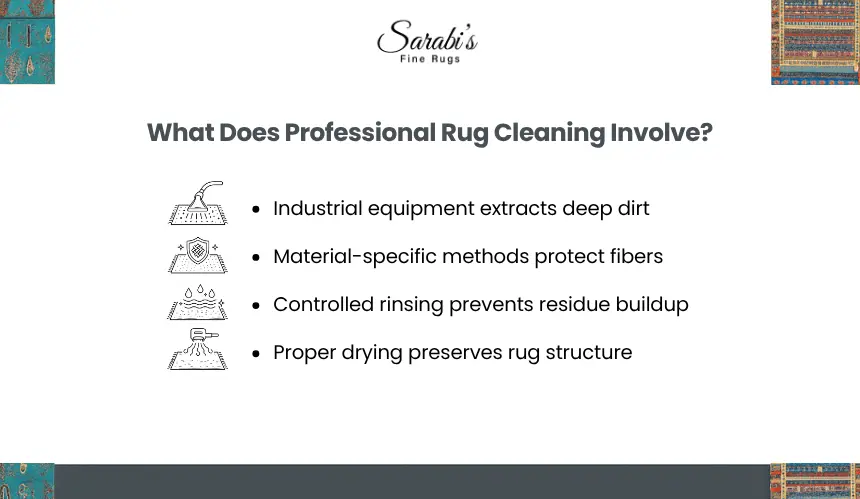
Professional rug cleaning is a multi-step process designed to remove deep contaminants while preserving the rug’s fibers, dyes, and structure. Unlike surface-level DIY methods, professionals follow a controlled system that combines inspection, specialized equipment, material-specific treatments, and precise drying to achieve long-term results.
How Industrial Equipment Enables Deep Dirt Extraction
Professional cleaning begins with high-powered dusting and extraction equipment that removes dry soil embedded deep within the rug. This step is critical because a large portion of debris in rugs is dry particulate matter that regular vacuuming cannot fully eliminate.
Advanced extraction systems then flush out fine particles, allergens, and residues without leaving buildup behind. This process reaches the foundation of the rug, where most contaminants accumulate over time.
Tip: Deep dust removal before washing is essential, as skipping this step can turn dry soil into muddy residue during cleaning.
Why Material-Specific Cleaning Methods Are Essential
Different rug materials respond differently to moisture, agitation, and cleaning agents. Wool, silk, cotton, and synthetic fibers each require tailored approaches to avoid shrinkage, color bleeding, or fiber distortion.
Professionals assess fiber type, dye stability, and construction before selecting appropriate pH-balanced solutions and cleaning techniques. This ensures that the rug is cleaned effectively without compromising its integrity.
Important Note: Using a one-size-fits-all cleaning method on different rug types is one of the most common causes of damage in DIY cleaning.
How Controlled Washing and Rinsing Prevent Residue Build-Up
Professional cleaning involves controlled washing processes that evenly distribute cleaning solutions and thoroughly rinse them out. This prevents residue buildup, which can attract more dirt and cause the rug to become soiled again quickly.
Balanced water pressure and solution control ensure that contaminants are removed without oversaturating the rug.
Tip: Residue left behind after cleaning is a major reason rugs appear dirty again shortly after DIY attempts.
Why Proper Drying Techniques Protect the Rug Structure
Drying is one of the most critical steps in professional rug cleaning. Controlled drying environments with proper airflow and humidity management prevent mold, mildew, and fiber weakening.
Unlike DIY methods that rely on air drying, professionals use techniques that ensure moisture is removed evenly and efficiently, preserving the rug’s shape and texture.
Important Note: Improper drying can cause long-term damage such as odor retention, fiber breakdown, and structural warping, even if the rug initially appears clean.
Why DIY Rug Cleaning Methods Often Fall Short
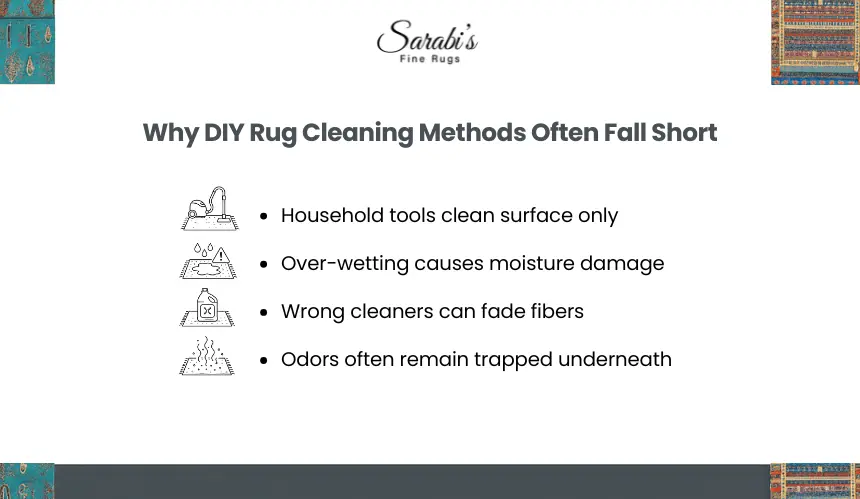
DIY rug cleaning methods may seem convenient, but they are typically limited in both effectiveness and safety. While they can improve surface appearance, they rarely address the deeper issues that affect rug hygiene and longevity. Without proper tools, knowledge of materials, and controlled processes, DIY cleaning often leads to incomplete results or unintended damage.
Why Household Tools Cannot Achieve Deep Cleaning
Standard home equipment, such as vacuum cleaners or basic carpet machines, is designed for surface maintenance rather than deep extraction. These tools lack the power to remove embedded dirt, allergens, and fine particles that settle deep within the rug’s foundation.
As a result, contaminants remain trapped even after cleaning, which can lead to gradual fiber wear and persistent dullness.
Tip: If a rug quickly looks dirty again after cleaning, it often indicates that deeper layers were not properly cleaned.
How Over-Wetting Creates Long-Term Damage Risks
One of the most common DIY mistakes is using excessive water during cleaning. Without proper extraction and drying systems, moisture becomes trapped within the rug layers, creating conditions for mold, mildew, and odor development.
Over-wetting can also weaken the rug’s backing and distort its shape, especially in delicate or handwoven pieces.
Important Note: Moisture trapped beneath the surface can cause damage that becomes visible only after several days or weeks.
Why Incorrect Cleaning Products Damage Fibers
Many household cleaning solutions are not designed for rugs and may contain harsh chemicals or improper pH levels. These products can strip natural oils from fibers, cause color fading, or leave residues that attract more dirt over time.
Different materials require specific cleaning agents, and using the wrong product can permanently alter the rug’s texture and appearance.
Tip: Avoid using generic cleaners on rugs, especially those made from natural or delicate fibers.
How DIY Methods Struggle with Stains and Odors
DIY approaches often focus on surface stain removal, which may temporarily improve appearance but does not eliminate the underlying cause. Stains that penetrate deep into fibers require specialized treatments that break down contaminants at a molecular level.
Similarly, odors caused by moisture, pets, or spills tend to persist if not properly extracted and neutralized.
Important Note: Masking odors with fragrances does not solve the problem and can make the issue worse over time.
Why Lack of Expertise Leads to Inconsistent Results
Effective rug cleaning requires understanding fiber types, dye stability, and construction techniques. Without this knowledge, it is difficult to apply the correct method for each rug.
DIY cleaning often involves guesswork, leading to inconsistent results and increased risk of damage.
Tip: Rugs made from materials like wool or silk should be handled with extra care, as improper cleaning can cause irreversible changes.
What Are the Key Benefits of Professional Rug Cleaning?
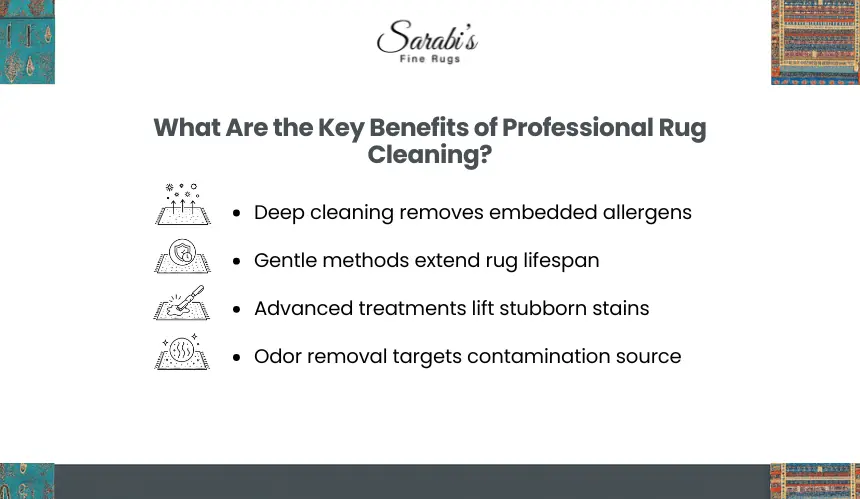
Professional rug cleaning provides measurable advantages beyond basic appearance improvement. It targets deep contaminants, protects fiber integrity, and restores the rug’s performance over time. These benefits are especially important for maintaining both hygiene and long-term value.
How Deep Cleaning Removes Embedded Dirt and Allergens
Professional processes remove contaminants that settle deep within the rug’s pile and foundation, dust, grit, pollen, and microscopic allergens. High-powered extraction combined with controlled rinsing lifts particles that standard home methods leave behind.
This deeper removal improves indoor hygiene and prevents abrasive debris from wearing down fibers with daily use.
Tip: Deep cleaning is most noticeable when the rug regains softness and color clarity, indicating that embedded residue has been removed.
Why Professional Methods Protect Fiber Structure and Extend Lifespan
Rug fibers, whether wool, silk, or synthetic, respond differently to moisture, agitation, and chemistry. Professional cleaners tailor methods to the fiber type, using pH-balanced solutions and controlled handling to avoid shrinkage, color bleed, or distortion.
By removing abrasive soil and avoiding harsh treatment, professional care slows fiber degradation and extends the rug’s usable life.
Important Note: Dirt acts like sandpaper within fibers; removing it properly reduces long-term wear and preserves texture.
How Advanced Stain Removal Works at a Deeper Level
Professional stain treatment goes beyond surface cleaning by breaking down stain compounds within the fibers. Techniques vary based on stain type, organic, oil-based, or dye-based, and often involve targeted agents and dwell time to lift residues without damaging the rug.
This approach improves stain removal success and minimizes the risk of discoloration.
Tip: Early professional treatment increases the chances of complete stain removal, especially for spills that have penetrated deeply.
Why Odor Removal Is More Effective Than DIY Methods
Odors are typically caused by contaminants trapped below the surface, such as pet residues or moisture. Professional cleaning addresses the source by flushing and neutralizing odor-causing compounds, rather than masking them with fragrance.
Controlled drying further ensures that no residual moisture remains to recreate odor issues.
Important Note: Persistent odors usually indicate deep contamination; surface treatments alone rarely resolve them.
How Proper Drying Preserves Shape, Texture, and Finish
After cleaning, professional drying systems regulate airflow and humidity to remove moisture evenly. This prevents issues like mildew, fiber stiffness, and warping of the rug’s backing or edges.
Consistent drying helps maintain the rug’s original feel and structure.
Tip: Even drying is critical for thicker rugs; uneven moisture removal can lead to localized damage over time.
Professional vs DIY Rug Cleaning: What Is the Real Difference?
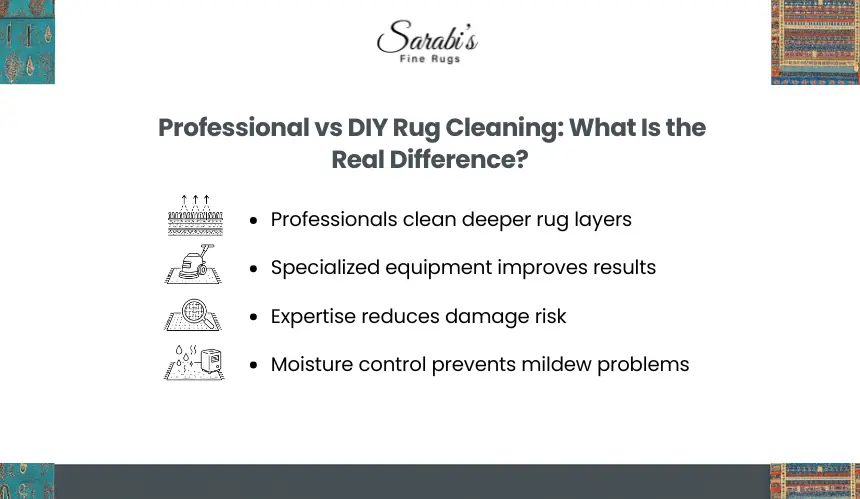
The difference between professional rug cleaning and DIY methods goes beyond convenience. It involves how deeply the rug is cleaned, how safely the fibers are handled, and how long the results last. While DIY cleaning focuses on surface-level improvement, professional methods address the root causes of dirt buildup, stains, and fiber wear.
How Cleaning Depth Impacts Long-Term Results
DIY cleaning typically removes visible dirt from the surface but leaves deeper layers untouched. Over time, this trapped debris continues to break down fibers and dull the rug’s appearance.
Professional cleaning, on the other hand, uses high-powered extraction to remove contaminants from the foundation of the rug, restoring both cleanliness and texture.
Tip: A rug that feels stiff or looks dull after cleaning usually still contains embedded residue.
Why Equipment and Technology Make a Significant Difference
Household cleaning tools are limited in power and precision, which restricts their ability to perform deep cleaning. Professional services use advanced equipment designed specifically for rugs, including controlled washing systems, extraction tools, and drying setups.
This difference in technology allows for more thorough cleaning without causing damage.
Important Note: Equipment designed for carpets is not always suitable for rugs, especially delicate or handwoven types.
How Expertise Reduces Risk of Damage
DIY cleaning relies on trial and error, which increases the risk of using incorrect methods or products. Without knowledge of fiber types and dye stability, it becomes easy to cause shrinkage, fading, or structural damage.
Professionals assess each rug before cleaning, selecting techniques based on material, construction, and condition.
Tip: Rugs made from natural fibers or intricate weaves should always be evaluated carefully before any cleaning method is applied.
Why Moisture Control and Drying Are Critical Factors
One of the biggest differences lies in how moisture is managed. DIY cleaning often leaves excess water trapped within the rug, leading to mold, mildew, or odor issues.
Professional cleaning includes controlled drying processes that remove moisture evenly, protecting the rug’s structure and preventing long-term damage.
Important Note: Moisture-related damage may not appear immediately but can significantly reduce the rug’s lifespan over time.
How Results Differ in Terms of Appearance and Longevity
DIY cleaning may provide short-term visual improvement, but results often fade quickly as residue and dirt re-emerge. In contrast, professional cleaning delivers longer-lasting results by addressing both surface and deep layers.
This leads to improved appearance, better hygiene, and extended usability.
Tip: Long-lasting cleanliness is a key indicator of effective cleaning, not just immediate visual improvement.
Is Professional Rug Cleaning Worth the Cost?
The cost of professional rug cleaning is often compared directly to DIY methods, but the real value lies in long-term performance, reduced risk, and preservation of the rug. What appears to be a higher upfront expense can prevent costly damage, frequent replacements, and ongoing maintenance issues.
How Professional Cleaning Reduces Long-Term Expenses
DIY cleaning may seem economical initially, but repeated attempts, product purchases, and potential damage can increase overall costs. Improper cleaning can weaken fibers, fade colors, or cause structural issues that require repair or early replacement.
Professional cleaning, when done correctly, maintains the rug’s condition and reduces the need for frequent interventions.
Tip: Consider the total cost over time rather than a single cleaning expense when comparing options.
Why Extending Rug Lifespan Improves Value
Rugs, especially high-quality or handmade pieces, are long-term investments. Deep cleaning removes abrasive dirt and contaminants that gradually break down fibers, helping preserve the rug’s structure and appearance.
By extending the lifespan, professional cleaning ensures that the rug retains its value and usability for a longer period.
Important Note: Premature wear caused by improper cleaning often leads to replacement costs that exceed professional cleaning expenses.
How Professional Cleaning Improves Indoor Hygiene
Beyond appearance, professional cleaning contributes to a healthier indoor environment. Removing allergens, dust, and bacteria from deep within the rug reduces the risk of poor air quality and related health concerns.
This is particularly important in households with pets, children, or individuals sensitive to allergens.
Tip: Regular deep cleaning helps maintain both visual cleanliness and a healthier living space.
Consistent Results Provide Better Reliability
DIY cleaning results can vary depending on methods, tools, and experience. Inconsistent outcomes may require repeated efforts without achieving desired results.
Professional services offer consistent and predictable outcomes, ensuring that the rug is cleaned effectively without trial and error.
Important Note: Reliable cleaning results reduce the need for repeated treatments, saving both time and effort over the long term.
When Should You Choose Professional Rug Cleaning?
| Situation | Why Professional Cleaning Is Needed | What Happens If Ignored | Pro Tip |
| High-traffic rugs | Deep-seated dirt and abrasive particles accumulate quickly and require powerful extraction to fully remove | Fibers wear down faster, causing dullness and reduced lifespan | Clean high-traffic rugs periodically even if they look clean on the surface |
| Delicate or valuable rugs | Materials like wool, silk, or handwoven fibers need controlled cleaning methods and pH-balanced solutions | Risk of shrinkage, color bleeding, or permanent structural damage | Always assess material type before choosing any cleaning method |
| Persistent stains and odors | Deep contamination beneath the surface requires specialized stain breakdown and odor neutralization | Stains reappear and odors worsen over time due to trapped residue | If stains or smells return after cleaning, deeper extraction is required |
| Seasonal or periodic maintenance | Hidden dust, allergens, and residues build up even without visible dirt | Gradual fiber damage and reduced indoor air quality | Schedule professional cleaning at regular intervals to maintain performance |
Important Note: Professional rug cleaning is most effective when used proactively rather than reactively, as early intervention prevents long-term damage and preserves the rug’s condition.
Frequently Asked Questions
Is professional rug cleaning really better than diy methods?
Professional rug cleaning is more effective because it removes deep-seated dirt, allergens, and stains using specialized equipment and controlled techniques. DIY methods typically clean only the surface and may leave residue or cause damage if not done correctly.
Can diy rug cleaning damage rugs?
DIY cleaning can damage rugs if incorrect products, excessive water, or aggressive scrubbing are used. These mistakes can lead to fiber weakening, color fading, shrinkage, or trapped moisture that causes mold and odors over time.
How often should rugs be professionally cleaned?
Rugs in high-traffic areas should typically be cleaned every 12–18 months, while less-used rugs may require cleaning every 2–3 years. Homes with pets, children, or allergies may benefit from more frequent professional cleaning.
What types of rugs need professional cleaning the most?
Delicate rugs such as wool, silk, antique, or handwoven pieces require professional cleaning due to their sensitivity to moisture and chemicals. High-value or heavily used rugs also benefit from expert care to maintain their condition.
Is steam cleaning safe for all rugs?
Steam cleaning is not suitable for all rugs, especially delicate or natural fiber rugs like wool or silk. These materials require controlled methods, as excessive heat and moisture can damage fibers and cause shrinkage.
Does professional cleaning remove pet stains and odors completely?
Professional cleaning can effectively remove pet stains and odors by targeting the source of contamination deep within the rug. Unlike DIY methods, it breaks down and extracts odor-causing substances rather than masking them.
Need a handmade rug cleaned or repaired? See our rug cleaning and repairs service, with pickup and delivery available depending on your location.