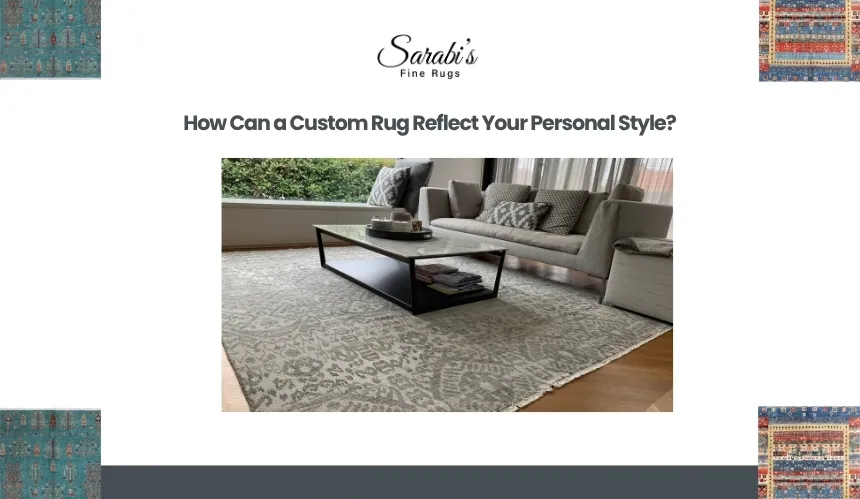
Quick Answer: A custom rug reflects your personal style by allowing you to control design elements such as color palette, pattern, texture, material, and size. Instead of adapting your space to a pre-made rug, you create a piece that aligns with your interior, lifestyle, and visual identity.
Shopping for one? See our custom rugs in Sydney at our North Willoughby showroom.
How a Custom Rug Expresses Personal Style
- Color choices reflect mood, tone, and overall interior palette
- Patterns and motifs showcase personality, whether minimal, bold, or traditional
- Material and texture influence comfort, depth, and tactile experience
- Size and shape adapt to your exact room layout and functional needs
- Design flexibility allows you to create a unique focal point or subtle foundation
Tip: Start by identifying the mood you want the space to convey, then align rug colors and textures accordingly.
Important Note: A custom rug works best when it complements the overall interior rather than trying to dominate every design element in the room.
Many interiors feel incomplete not because of a lack of décor, but because the elements within the space do not fully reflect the homeowner’s personality. Rugs, in particular, are often chosen as afterthoughts, limited to what is available in stores rather than what truly fits the vision of the space. This leads to rooms that may look styled but lack a clear identity or emotional connection.
A common challenge is trying to match a pre-made rug with existing furniture, color schemes, and layout. Homeowners often settle for options that are “close enough,” resulting in mismatched tones, incorrect sizing, or patterns that do not align with the overall design. Over time, this disconnect becomes more noticeable, especially in spaces meant to feel cohesive and intentional.
Another issue is balancing creativity with practicality. While bold designs may reflect personal taste, they can sometimes overwhelm the space if not integrated thoughtfully. On the other hand, playing it too safe can make the room feel generic and uninspired. Finding the right balance between expression and functionality is where most design decisions become challenging.
Understanding how a custom rug can reflect your personal style helps solve these problems at their core. It allows every design choice, color, texture, pattern, and size, to work together intentionally, creating a space that feels both visually cohesive and uniquely personal.
Tip: Think of the rug as a foundation for the room’s identity rather than just an accessory.
Important Note: The most effective designs come from aligning personal preferences with the overall space, not from following trends alone.
What Is a Custom Rug and How Is It Different?
A custom rug is a made-to-order piece designed specifically to match your space, preferences, and functional needs. Unlike ready-made rugs, which are produced in standard sizes and designs, custom rugs are created with full control over elements like color, pattern, material, and dimensions. This makes them more adaptable and aligned with personal style.
How Made-to-Order Design Creates Personalization
Custom rugs are designed from the ground up, allowing you to define every detail rather than selecting from limited options. This includes choosing specific color palettes, design motifs, and proportions that match your interior.
This level of control ensures the rug integrates seamlessly into the space rather than feeling like an added element.
Tip: Start with your room’s existing color palette and build the rug design around it for better cohesion.
What Personalization Options Are Available in Custom Rugs
Customization goes beyond just color and pattern. It includes structural and functional aspects that influence how the rug performs in daily use.
- Material selection (wool, silk, synthetic blends)
- Texture variations (flatweave, high-pile, hand-knotted)
- Shape and size adjustments for non-standard layouts
- Pattern scale and design complexity
Important Note: More customization options mean more design flexibility, but also require clear decision-making to avoid overcomplicating the final result.
Why Custom Rugs Offer Unique Craftsmanship
Many custom rugs are handcrafted or produced using specialized techniques, resulting in higher attention to detail. This craftsmanship allows for greater precision in design and better overall quality compared to mass-produced alternatives.
Each piece is often unique, reflecting both the design choices and the production method used.
Tip: Discuss production techniques with the maker to understand how craftsmanship will influence durability and appearance.
How Custom Rugs Differ from Ready-Made Options in Functionality
Ready-made rugs are designed for general use, while custom rugs are tailored to specific spaces and purposes. This means better alignment with furniture placement, traffic patterns, and room layout.
A custom rug not only fits visually but also performs more effectively within the environment it is designed for.
Important Note: The biggest difference lies in adaptability, custom rugs are built around your space, while ready-made rugs require your space to adapt to them.
How Do Design Elements Reflect Personal Style in a Custom Rug?
A custom rug reflects personal style through deliberate design choices that influence how a space looks and feels. Elements such as color, pattern, and texture are not just decorative; they shape the mood, visual identity, and overall cohesion of the interior. Understanding how each element works helps create a rug that feels intentional rather than random.
How Color Choices Define Mood and Atmosphere
Color is one of the most powerful tools in rug design. It sets the tone of the space and influences how other elements are perceived. Soft neutrals create a calm and balanced environment, while deeper tones add richness and contrast.
A well-chosen color palette can either blend seamlessly with the room or act as a focal point, depending on the desired outcome.
Tip: Use colors already present in the room to maintain harmony, or introduce one contrasting tone to create visual interest.
Why Patterns Express Visual Identity
Patterns play a key role in defining the personality of a space. Minimal patterns create a clean and modern look, while intricate or traditional motifs add character and depth. The scale of the pattern also matters, as larger designs suit open spaces, while smaller patterns work better in compact areas.
Pattern selection should align with the overall interior theme to avoid visual conflict.
Important Note: Overly complex patterns can dominate the space if not balanced with simpler surrounding elements.
How Texture and Material Influence Feel and Depth
Texture adds a tactile dimension to the rug, affecting both comfort and visual layering. Materials like wool provide softness and durability, while silk adds a refined finish. The choice of pile height and weave also contributes to how the rug interacts with light and movement.
Texture helps create depth, especially in interiors with limited decorative elements.
Tip: Combine subtle textures with neutral tones to enhance depth without overwhelming the design.
How Design Elements Work Together to Create Cohesion
A custom rug is most effective when all design elements work together rather than competing. Color, pattern, and texture should support a unified vision that aligns with the room’s layout and purpose.
When these elements are balanced correctly, the rug becomes an integral part of the space rather than a separate feature.
Important Note: Personal style is best expressed through consistency across design elements, not through isolated or conflicting choices.
How Can Size and Shape Be Customized for Your Space?
A custom rug allows precise control over size and shape, which is essential for creating a balanced and functional interior. Standard rug sizes often fail to align with real room layouts, especially in modern homes with open plans or unconventional dimensions. Custom sizing ensures the rug fits the space rather than forcing the space to adapt.
How Custom Sizing Improves Room Layout and Balance
Correct sizing helps anchor furniture and define areas within a room. A rug that is too small can make the layout feel disconnected, while an oversized rug can overwhelm the space.
Custom rugs allow you to match exact dimensions to your layout, ensuring that seating areas, dining setups, or walkways are properly framed.
Tip: Plan rug dimensions based on furniture placement rather than room size alone for better visual structure.
Why Non-Standard Shapes Enhance Design Flexibility
Custom rugs are not limited to rectangular or standard shapes. Circular, oval, or irregular shapes can be designed to suit unique layouts or highlight specific areas.
This flexibility is particularly useful in spaces with architectural features such as curved walls or unconventional floor plans.
Important Note: Unusual shapes should complement the room’s layout rather than disrupt flow or symmetry.
How Custom Rugs Support Functional Zoning in Open Spaces
In open-plan interiors, rugs are often used to define different zones without physical barriers. Custom sizing allows each zone to be clearly identified while maintaining a cohesive overall layout.
For example, a larger rug can anchor a living area, while a differently shaped rug can define a dining or reading space.
Tip: Use consistent color or texture elements across different rugs to maintain visual continuity between zones.
Why Proportion and Placement Matter in Custom Design
Even with customization, proportion remains critical. The rug should relate to the scale of the room and furniture to create a balanced composition. Proper placement ensures the rug enhances movement and usability rather than obstructing it.
Important Note: Customization does not eliminate the need for design principles. Size and shape must still align with proportion, flow, and function to achieve the desired result.
Why Custom Rugs Offer Better Design Control Than Ready-Made Options
A custom rug provides a level of control that ready-made options cannot match. Instead of adjusting your space to fit a pre-designed product, you can align every detail of the rug with your interior layout, style preferences, and functional needs. This results in a more cohesive and intentional design outcome.
How Design Flexibility Enhances Personal Expression
Custom rugs allow complete control over design elements, including color palette, pattern scale, and texture. This flexibility makes it possible to create a rug that reflects your personal aesthetic rather than adapting to what is available in stores.
It also enables subtle adjustments, such as matching tones with existing décor or refining pattern intensity to suit the space.
Tip: Use custom design to solve specific challenges, such as matching unique color schemes or balancing complex interiors.
Why Custom Rugs Fit Spaces More Precisely
Standard rugs are produced in fixed sizes, which may not align with real-world layouts. Custom rugs eliminate this limitation by being tailored to exact dimensions, ensuring better integration with furniture placement and room proportions.
This precise fit improves both visual balance and functionality within the space.
Important Note: A well-fitted rug enhances the structure of a room, while an ill-fitting one can disrupt the entire layout.
How Customization Improves Long-Term Satisfaction
Because custom rugs are designed with specific needs in mind, they tend to remain relevant over time. Instead of being replaced due to poor fit or mismatched design, a well-planned custom rug continues to complement the space as it evolves.
This reduces the need for frequent changes and supports long-term usability.
Tip: Consider both current and future design plans when finalizing a custom rug to ensure lasting compatibility.
Why Custom Rugs Balance Function and Aesthetics More Effectively
Custom rugs are designed to meet both visual and practical requirements. They can be tailored for high-traffic durability, comfort in living areas, or specific functional zones, while still maintaining a strong design presence.
This balance ensures that the rug performs well in daily use without compromising on style.
Important Note: The advantage of custom rugs lies in their ability to integrate design and function seamlessly, rather than prioritizing one over the other.
What Mistakes Should You Avoid When Designing a Custom Rug?
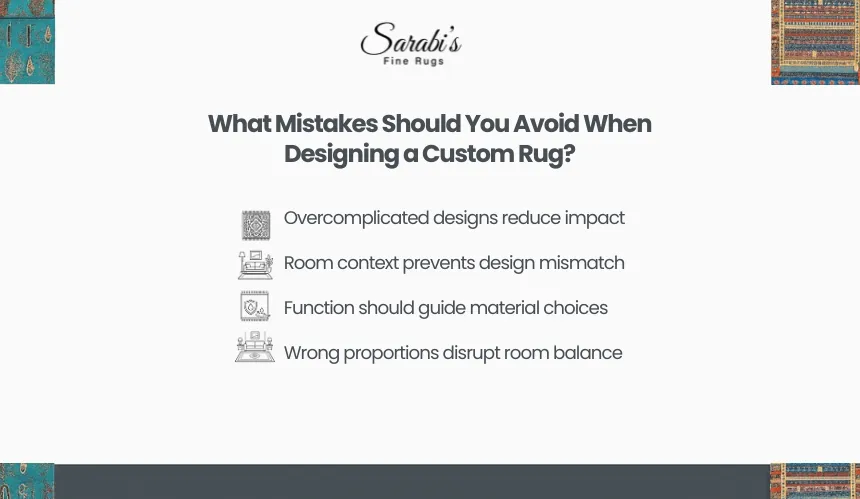
Designing a custom rug offers creative freedom, but without a clear approach, it can lead to choices that disrupt the space rather than enhance it. Avoiding common design mistakes ensures the rug reflects personal style while maintaining balance, usability, and long-term relevance.
Why Overcomplicating the Design Reduces Visual Impact
One of the most common mistakes is trying to include too many elements in a single rug. Combining multiple bold colors, complex patterns, and varied textures can make the design feel cluttered and overwhelming.
A focused design with controlled variation often creates a stronger and more refined visual effect.
Tip: Limit dominant elements to one or two key features, such as a pattern or color contrast, to maintain clarity.
How Ignoring the Room Context Creates Mismatch
A rug designed in isolation may not align with the rest of the interior. Without considering furniture, lighting, and layout, even a well-designed rug can feel out of place once installed.
The rug should support the overall design theme and integrate seamlessly with existing elements.
Important Note: Always evaluate the rug design within the context of the room, not as a standalone piece.
Why Choosing Style Over Function Leads to Practical Issues
Focusing only on aesthetics can result in a rug that does not perform well in everyday use. For example, delicate materials may not be suitable for high-traffic areas, and certain textures may be difficult to maintain.
Functionality should guide design decisions to ensure long-term usability.
Tip: Match material and construction to how the space is used, not just how it looks.
How Misjudging Size and Proportion Affects the Final Result
Even with customization, incorrect sizing can disrupt the balance of a room. A rug that is too small may fail to anchor the space, while one that is too large can dominate it.
Proper proportion ensures that the rug enhances the layout rather than competing with it.
Important Note: Always base size decisions on furniture placement and room dimensions to achieve a cohesive design.
Frequently Asked Questions
What is a custom rug?
A custom rug is a made-to-order piece designed based on specific preferences such as size, color, pattern, and material. Unlike ready-made rugs, it is created to match a particular space and style, ensuring better fit and design alignment.
Are custom rugs worth the investment?
Custom rugs are often worth the investment because they are tailored to fit both the design and functional needs of a space. They tend to offer better long-term satisfaction since they eliminate compromises related to size, style, or material.
How do you design a custom rug for your home?
Designing a custom rug involves selecting a color palette, pattern style, material, and size that align with the room’s layout and interior theme. It is important to balance personal style with practical considerations like durability and placement.
What materials are best for custom rugs?
Wool is widely preferred for its durability and softness, while silk offers a more refined finish. Synthetic blends are also used for high-traffic areas due to their resistance to wear and ease of maintenance.
Can a custom rug match existing décor?
A custom rug can be designed to match existing décor by aligning colors, textures, and patterns with furniture and interior elements. This ensures a cohesive and well-balanced overall design.
How long does it take to make a custom rug?
The production time for a custom rug depends on its size, complexity, and craftsmanship. Handmade rugs may take several weeks to months, while simpler designs or machine-assisted production can be completed more quickly.
Looking for the real thing? Browse our custom made rugs, see them at our North Willoughby showroom, or book an in-home viewing.