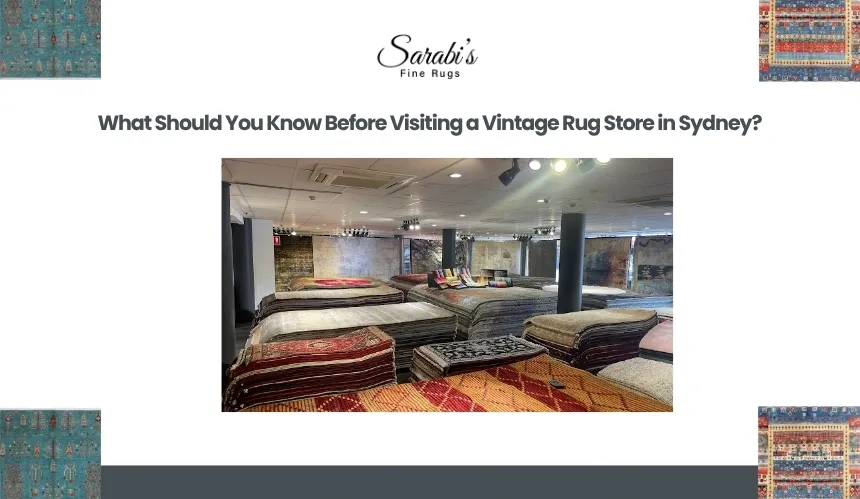
Quick Answer: Before visiting a vintage rug store in Sydney, understand key quality factors like material, knot density, and dye type. Inspect condition, verify authenticity, set a realistic budget, and consider how the rug will fit your space to make a confident, long-term investment.
Shopping for one? See our vintage rugs in Sydney at our North Willoughby showroom.
Key Things to Know Before You Visit
- Check material quality (wool, silk, or blends) for durability and feel
- Look at knot density and construction to assess craftsmanship
- Understand natural vs synthetic dyes and how they affect aging
- Inspect for wear, repairs, or structural damage
- Set a budget range based on size, origin, and condition
- Plan where the rug will fit in your home (size, layout, style)
Tip: Take room measurements and reference photos before visiting to avoid guesswork when comparing rug options.
Important Note: Vintage rugs vary widely in quality and value, so informed evaluation is essential to avoid overpaying or choosing a rug that does not suit your needs.
Walking into a vintage rug store can feel overwhelming, especially in a design-focused market like Sydney where options range from rare hand-knotted pieces to heavily restored rugs. Many buyers are drawn to the character and history of vintage rugs but struggle to confidently evaluate what they are actually looking at. Without the right knowledge, it becomes easy to confuse aesthetic appeal with true quality.
One of the biggest challenges is understanding value. Two rugs may look similar at first glance but differ significantly in craftsmanship, material, and longevity. Pricing can vary widely based on origin, age, and condition, making it difficult to determine whether a rug is worth the investment. This often leads to hesitation or impulse decisions that may not align with long-term use.
Another common issue is overlooking practical factors. Buyers often focus on design and color while ignoring aspects like durability, maintenance, and how the rug fits within their space. A rug that looks perfect in-store may not perform well in a high-traffic area or may not complement the existing interior once placed at home.
Understanding what to check before visiting a vintage rug store helps remove this uncertainty. It allows buyers to approach the experience with clarity, ask the right questions, and make informed decisions that balance aesthetics, quality, and long-term value.
Tip: Go into the store with a clear purpose, whether it is finding a statement piece, a functional rug, or an investment item.
Important Note: The biggest mistakes often happen when decisions are based purely on appearance rather than construction, condition, and suitability for the space.
What Makes Vintage Rugs Different from Modern Rugs?
Vintage rugs stand apart from modern rugs due to their craftsmanship, materials, and the way they age over time. In markets like Sydney, understanding these differences is essential because it directly impacts quality, durability, and long-term value. What may appear similar visually can differ significantly in construction and performance.
How Handmade Craftsmanship Defines Vintage Rugs
Most vintage rugs are hand-knotted or handwoven, meaning each piece is created manually rather than produced by machines. This process results in slight variations that add character and uniqueness, making no two rugs exactly alike.
Handmade construction also tends to be more durable, as the knots are individually tied, creating a stronger and more flexible structure compared to machine-made alternatives.
Tip: Look at the back of the rug, irregularities in the weave often indicate handmade craftsmanship.
Why Natural Materials and Dyes Matter
Vintage rugs are typically made from natural fibers such as wool, silk, or cotton. These materials are more breathable and age differently compared to synthetic alternatives. Natural dyes are often used, which develop a softer, more muted appearance over time.
This aging process contributes to the rug’s overall aesthetic, creating depth and variation in color that cannot be replicated in newer rugs.
Important Note: Synthetic dyes tend to maintain uniform color, while natural dyes show subtle variations that enhance authenticity.
How Aging and Patina Add Character
One of the defining features of vintage rugs is patina, which refers to the natural wear and aging that occurs over time. This includes slight fading, softened textures, and a lived-in appearance that adds depth to the design.
Unlike damage, patina is considered desirable because it reflects the rug’s history and authenticity.
Tip: Learn to distinguish between natural patina and actual damage, as both can appear similar at first glance but have very different implications for value.
Why Vintage Rugs Offer Long-Term Value
Due to their craftsmanship and materials, vintage rugs often last longer than modern machine-made rugs when properly maintained. They are also less likely to go out of style, as their designs tend to be timeless rather than trend-driven.
This combination of durability and aesthetic longevity makes them a practical and often worthwhile investment.
Important Note: Value is not determined by age alone; construction quality, material, and condition all play a critical role in a rug’s overall worth.
How to Evaluate the Quality of a Vintage Rug
Evaluating quality is the most important step before buying from a vintage rug store in Sydney. A rug’s appearance alone does not reflect its durability or value. Understanding construction, materials, and dye quality helps distinguish a well-made piece from one that may not last over time.
Why Knot Density and Construction Matter
Knot density refers to how many knots are tied per unit area, and it directly affects the rug’s durability and detail. Higher knot density usually indicates finer craftsmanship, tighter construction, and longer lifespan.
Hand-knotted rugs with consistent knotting tend to be more resilient and maintain their structure even with regular use.
Tip: Turn the rug over and inspect the back, clear, tight, and consistent knots are a strong indicator of quality.
How Material Type Impacts Durability and Feel
The type of material used determines how the rug performs in everyday use. Wool is the most common material in vintage rugs due to its durability, softness, and natural resilience. Silk rugs offer a smoother, more refined appearance but require more delicate care.
Cotton is often used in the foundation, providing structure and flexibility.
Important Note: Rugs made from high-quality natural fibers tend to age better and maintain their texture over time compared to synthetic alternatives.
Why Dye Quality Affects Longevity and Appearance
Dye quality plays a major role in how a rug looks and ages. Natural dyes tend to age gracefully, creating subtle variations and depth in color. In contrast, synthetic dyes may appear more uniform but can fade unevenly or lose vibrancy over time.
Testing dye stability, such as gently rubbing a damp cloth on the surface, can reveal whether colors are likely to bleed.
Tip: Slight color variation is often a positive sign of natural dye use and authentic aging.
How Weave Tightness and Structure Influence Performance
Beyond knot density, the overall weave structure determines how well the rug holds its shape and resists wear. A tightly woven rug distributes pressure more evenly, reducing the risk of thinning or distortion in high-use areas.
Loose or uneven weaving may indicate lower quality or previous wear.
Important Note: Structural integrity is just as important as visual appeal, as it determines how the rug will perform over time.
What Should You Check Before Buying a Vintage Rug?
Before purchasing from a vintage rug store in Sydney, a detailed inspection is essential. Even high-quality rugs can vary significantly in condition, and overlooking small issues can lead to long-term problems. A careful evaluation helps ensure that the rug is both authentic and suitable for your intended use.
How to Assess Overall Condition and Wear Patterns
Wear is expected in vintage rugs, but it should be consistent and not compromise the structure. Even wear across the surface often indicates natural aging, while uneven wear may suggest heavy use in specific areas.
Check for thinning spots, exposed foundation threads, or areas where the pile has worn down significantly.
Tip: Run your hand across different sections to feel for inconsistencies in thickness and texture.
Why Identifying Repairs and Damage Is Critical
Many vintage rugs undergo restoration, which can range from minor edge repairs to more extensive reweaving. While some repairs are acceptable, poor-quality restoration can affect durability and value.
Look for:
- Replaced sections that differ in color or texture
- Uneven edges or altered fringes
- Signs of patchwork or reweaving
Important Note: Not all repairs reduce value, but they should be clearly identified and factored into the price.
How to Verify Authenticity and Origin
Authenticity plays a major role in determining a rug’s value. Factors such as weaving technique, material, and design patterns can indicate origin, whether Persian, Turkish, Afghan, or from other regions.
Ask the seller about:
- The rug’s origin and approximate age
- Whether it is hand-knotted or machine-made
- Any documentation or history available
Tip: Handmade rugs often have slight irregularities, which are a sign of authenticity rather than a flaw.
Why Size, Shape, and Practical Fit Matter
A rug may look appealing in-store but may not suit your space if size and proportions are not considered. Vintage rugs can have unique dimensions, so planning ahead is important.
- Ensure the rug fits your intended area
- Consider furniture placement and layout
- Check if the shape aligns with the room design
Important Note: A high-quality rug loses its impact if it does not fit the space properly, making practical fit just as important as design.
How Pricing Works for Vintage Rugs
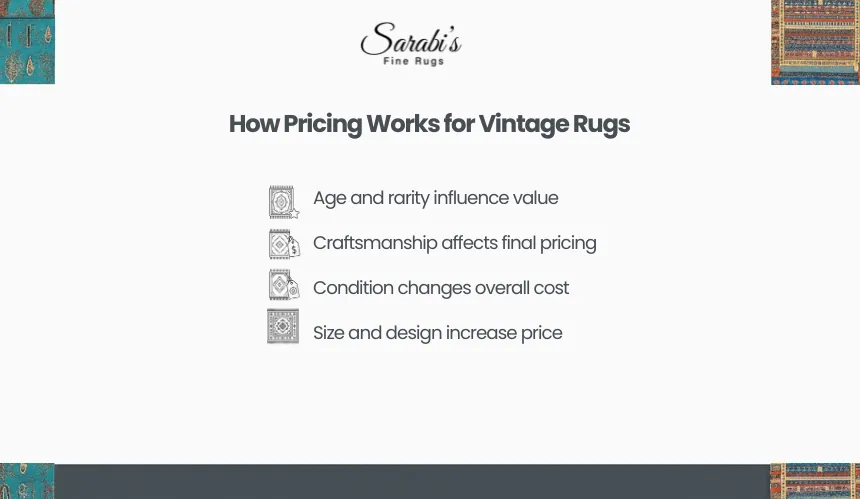
Pricing in a vintage rug store is influenced by multiple factors beyond just size or appearance. In markets like Sydney, prices can vary significantly because each rug is unique in origin, craftsmanship, and condition. Understanding what drives pricing helps buyers evaluate whether a rug offers fair value.
How Age and Rarity Influence Value
Older rugs, especially those that are well-preserved, often carry higher value due to their rarity. Rugs that are no longer produced or come from specific historical periods tend to be more sought after.
However, age alone does not guarantee higher price. A newer vintage rug in excellent condition may be more valuable than an older one with significant wear.
Tip: Focus on overall condition and craftsmanship rather than relying on age as the main value indicator.
Why Craftsmanship and Origin Affect Pricing
The level of craftsmanship, including knot density and weaving technique, plays a major role in determining price. Hand-knotted rugs from regions known for high-quality weaving, such as Persian or Turkish origins, are often priced higher due to their detail and durability.
Origin also reflects design heritage, which can influence both aesthetic appeal and market demand.
Important Note: Rugs from well-known weaving regions typically command higher prices, but quality should always be assessed individually.
How Condition and Restoration Impact Cost
Condition is one of the most important pricing factors. Rugs with minimal wear and no major damage are generally more valuable. On the other hand, rugs that have undergone restoration may be priced lower, depending on the quality of repairs.
Well-executed restoration can preserve usability, but poor repairs can reduce both durability and visual appeal.
Tip: Always compare the price with the condition to determine if the rug offers good value.
Why Size and Design Complexity Matter
Larger rugs typically cost more due to the materials and labor involved in their creation. Additionally, intricate designs with higher detail require more time and skill to produce, which increases their value.
Unique or rare patterns can also influence pricing, especially if they are in demand.
Important Note: Price should reflect a combination of size, craftsmanship, condition, and design rather than a single factor.
How to Choose the Right Vintage Rug for Your Space
Choosing the right rug is not just about finding a visually appealing piece. In Sydney homes, the rug must align with layout, lifestyle, and interior style to deliver long-term value. A well-selected vintage rug enhances the space, while a poorly matched one can feel disconnected despite its quality.
How Rug Size and Placement Affect Room Balance
Size is one of the most critical factors when selecting a vintage rug. A rug that is too small can make the space feel fragmented, while an oversized rug may overwhelm the layout.
The rug should anchor the furniture and define the area clearly. In living spaces, it is ideal for at least the front legs of seating furniture to rest on the rug to create a cohesive arrangement.
Tip: Always measure your space before visiting the store to avoid selecting a rug that does not fit properly.
Why Color Coordination Matters for Interior Harmony
Color plays a key role in how well the rug integrates with the rest of the interior. Vintage rugs often feature rich, layered tones that can either complement or contrast with existing décor.
Neutral interiors can benefit from rugs that introduce subtle color variation, while more vibrant spaces may require rugs with balanced tones to avoid visual overload.
Important Note: Lighting conditions can affect how colors appear, so consider how the rug will look in your home environment rather than relying solely on in-store lighting.
How to Match Rug Style with Interior Design Themes
Vintage rugs can adapt to various interior styles, including modern, traditional, and eclectic designs. The key is to ensure that the rug supports the overall theme rather than conflicting with it.
For example, a vintage Persian rug can add warmth to a minimalist space, while a more subtle design may suit a contemporary interior.
Tip: Think of the rug as a connecting element that ties together furniture, flooring, and décor rather than a standalone feature.
Why Functionality Should Guide Your Final Choice
Beyond aesthetics, the rug must suit the practical needs of the space. High-traffic areas require durable materials, while low-use spaces can accommodate more delicate pieces.
Consider how the rug will be used daily, including foot traffic, exposure to sunlight, and maintenance requirements.
Important Note: A rug that fits both the design and functional needs of the space will provide better long-term satisfaction than one chosen purely for appearance.
What Mistakes Should You Avoid When Buying Vintage Rugs?
Buying from a vintage rug store requires more than choosing a design you like. Many buyers in Sydney make avoidable mistakes that affect long-term value, usability, and satisfaction. Understanding these pitfalls helps ensure that the rug performs well both aesthetically and functionally.
Why Ignoring Structural Condition Leads to Poor Investment
Focusing only on appearance while overlooking structural integrity is one of the most common mistakes. A rug may look visually appealing but have underlying issues such as weak foundation threads, thinning pile, or compromised edges.
These problems can worsen over time, reducing durability and increasing maintenance needs.
Tip: Always inspect both the front and back of the rug to evaluate its overall condition.
How Choosing Style Over Function Creates Practical Issues
While design is important, selecting a rug that does not suit the intended space can lead to long-term inconvenience. Delicate rugs placed in high-traffic areas may wear out quickly, while overly bold designs can disrupt the visual balance of a room.
Functionality should guide the decision just as much as aesthetics.
Important Note: A rug that fits the space’s usage will maintain its value longer than one chosen purely for style.
Why Not Asking the Right Questions Limits Decision Clarity
Many buyers hesitate to ask detailed questions about a rug’s origin, material, age, or restoration history. Without this information, it becomes difficult to assess authenticity and value.
Key questions to ask include:
- Where was the rug made and how old is it?
- Is it hand-knotted or machine-made?
- Has it undergone any repairs or restoration?
Tip: Clear answers from the seller often indicate transparency and reliability.
How Misjudging Size and Scale Affects Interior Balance
Selecting the wrong size is another frequent mistake. A rug that does not align with the room’s dimensions or furniture layout can make the space feel disconnected or unbalanced.
Even high-quality rugs lose their impact if they are not proportioned correctly within the room.
Important Note: Always plan placement and measurements before purchasing to ensure the rug fits seamlessly into the space.
Key Takeaways
- Visiting a vintage rug store in Sydney requires understanding quality indicators like material, knot density, and dye type
- Handmade craftsmanship and natural materials are key factors that distinguish vintage rugs from modern alternatives
- Always inspect condition, wear patterns, and any repairs before making a purchase decision
- Pricing depends on origin, age, craftsmanship, size, and overall condition, not just appearance
- Choosing the right rug involves balancing size, color, style, and functionality with your interior space
- Avoid common mistakes such as ignoring structure, misjudging size, or buying based only on visual appeal
Important Note: A well-informed approach ensures that a vintage rug is not just a decorative purchase but a long-term investment that maintains both aesthetic and functional value.
Frequently Asked Questions
How can you tell if a vintage rug is authentic?
Authenticity can be checked by examining the back of the rug for hand-knotted construction, irregular weave patterns, and natural variations in design. Authentic vintage rugs often use natural fibers and dyes, and sellers should be able to provide origin and history details.
Are vintage rugs worth the investment?
Vintage rugs can be a strong long-term investment due to their durability, craftsmanship, and timeless design. High-quality pieces often maintain value over time and can even appreciate, especially when well preserved and sourced from reputable origins.
What should i look for when buying a vintage rug?
Focus on material quality, knot density, dye type, and overall condition. Check for signs of wear, repairs, or damage, and ensure the rug suits your intended space in terms of size, durability, and style.
How do i choose the right rug size for my space?
Rug size should align with furniture layout and room dimensions. In most cases, the rug should anchor the main furniture pieces, creating a cohesive and balanced look rather than appearing too small or disconnected.
Do vintage rugs require special care?
Vintage rugs often require careful maintenance, including gentle cleaning, proper placement, and protection from excessive sunlight or moisture. Regular care helps preserve their texture, color, and overall condition over time.
How long do vintage rugs typically last?
High-quality vintage rugs can last for decades when properly maintained. Their longevity depends on material, construction, and usage, with hand-knotted wool rugs often offering the best durability.
Looking for the real thing? Browse our vintage rugs, see them at our North Willoughby showroom, or book an in-home viewing.