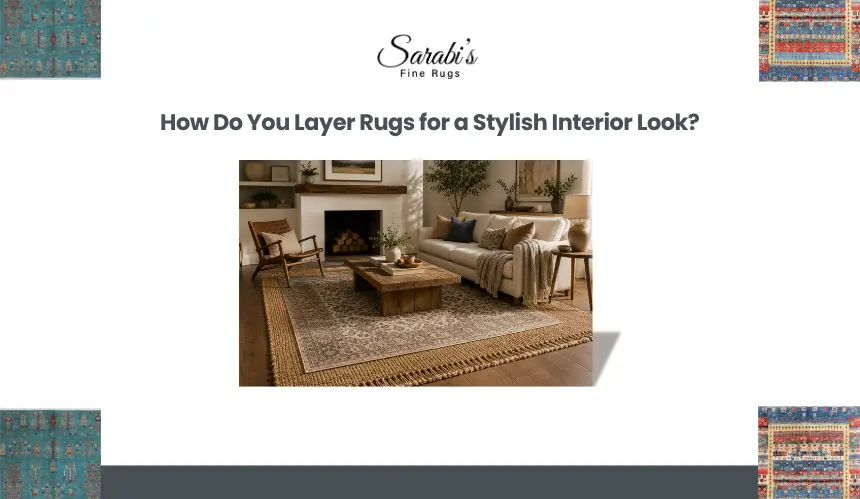
Quick Answer: Layering rugs involves placing a smaller, decorative rug over a larger base rug to create depth, texture, and visual balance within a space. This technique helps define areas, enhance style, and add warmth without changing the overall layout of a room.
Key Principles of Rug Layering
- Use a larger base rug to anchor the space and create structure
- Add a smaller accent rug to introduce pattern or contrast
- Maintain clear size difference between layers for balance
- Combine complementary textures and colors for cohesion
- Position rugs to align with furniture layout and room function
Tip: Start with a neutral base rug to make layering easier and more adaptable to different styles.
Important Note: Successful rug layering depends more on proportion and placement than on bold design choices, ensuring the space feels intentional rather than cluttered.
Creating a well-balanced interior often feels challenging when a space looks either too plain or visually overwhelming. Many homeowners struggle to add depth and personality without introducing clutter or completely redesigning the room. This is where rug layering becomes a practical yet often misunderstood solution. Without a clear approach, layered rugs can easily look mismatched, poorly placed, or out of proportion.
Another common issue is working with existing layouts that feel incomplete. Open-plan spaces may lack definition, while smaller rooms can appear flat or disconnected. Simply adding a single rug does not always solve the problem, especially when the goal is to create both structure and visual interest. Choosing the right combination of sizes, textures, and patterns requires more than guesswork.
At the same time, many people are unsure how to mix styles without creating conflict. Combining patterns, materials, and colors can feel risky, leading to hesitation or overly safe choices that lack impact. Understanding how to layer rugs correctly helps solve these challenges by introducing depth, defining spaces, and enhancing design without major changes.
Tip: Focus on the purpose of the space first, as rug layering works best when it supports how the room is used rather than just how it looks.
Important Note: Poorly planned layering often fails due to incorrect sizing and placement, not because the concept itself does not work.
What Does Layering Rugs Mean in Interior Design?
Layering rugs is a design technique where one rug is placed over another to create depth, contrast, and structure within a space. Instead of relying on a single rug to define the room, layering allows multiple textures, colors, and patterns to work together, enhancing both visual appeal and functionality.
How Rug Layering Works in Practice
At its core, rug layering follows a simple structure: a larger base rug anchors the space, while a smaller accent rug sits on top to introduce variation. The base rug typically provides neutrality and coverage, while the top layer adds character and detail.
This approach is especially useful in open layouts or rooms that feel visually flat, as it introduces dimension without adding furniture or structural changes.
Tip: Think of the base rug as the foundation and the top rug as the design statement to maintain clarity in styling decisions.
Why Layering Rugs Is More Than Just Decoration
Rug layering is not purely aesthetic; it also serves functional purposes. It can define zones within a room, protect high-traffic areas, and enhance comfort underfoot. In spaces where a single rug feels insufficient, layering provides both coverage and flexibility.
It also allows homeowners to update their interiors more easily by swapping out the top rug instead of replacing the entire setup.
Important Note: Functional layering ensures that the rugs not only look good together but also support how the space is used daily.
How Layering Rugs Enhances Visual Balance
A well-layered rug arrangement creates balance by combining different elements without overwhelming the space. The contrast between textures and patterns helps guide the eye, making the room feel more dynamic and intentional.
When done correctly, layering can make a space appear more cohesive by tying together furniture, colors, and layout.
Tip: Maintain visual hierarchy by ensuring one rug stands out while the other supports it, avoiding competition between layers.
Why Is Rug Layering a Popular Interior Design Trend?
Rug layering has become a widely adopted interior design technique because it solves multiple design challenges at once. It enhances visual depth, improves space functionality, and allows flexible styling without requiring major changes. By combining elements like texture layering, color coordination, and furniture placement, this approach aligns with modern interior design principles focused on adaptability and balance.
How Rug Layering Adds Depth and Texture to Interiors
Layering rugs introduces multiple surface textures, which prevents spaces from looking flat or overly uniform. A base rug, often made from natural fibers like jute or wool, provides structure, while an accent rug adds softness or visual contrast. This combination creates dimension that cannot be achieved with a single rug.
Texture layering is particularly effective in minimalist interiors, where fewer decorative elements are used. It allows subtle variation without disrupting the overall simplicity of the design.
Tip: Combine contrasting textures, such as a flatwoven base rug with a softer or patterned top rug, to create depth without adding clutter.
Why Rug Layering Helps Define Open-Plan Spaces
In open-plan living environments, defining different functional zones can be difficult without physical dividers. Rug layering works as a visual zoning tool by clearly separating areas such as living, dining, and workspaces while maintaining an open flow.
Placement plays a key role here. Aligning layered rugs with furniture placement ensures that each section of the room feels intentional and well-structured. This is especially important in spaces where multiple activities occur within the same area.
Important Note: Proper alignment with furniture is essential, as misaligned rugs can disrupt visual balance and make the layout feel unorganized.
How Layering Supports Flexible Interior Styling
One of the main advantages of rug layering is flexibility. Instead of replacing an entire rug, homeowners can update the accent layer to reflect changing styles or seasonal preferences. This makes it easier to adapt interiors without significant cost or effort.
Color coordination is a critical element in this process. A neutral base rug provides consistency, while the top rug can introduce patterns, colors, or trends. This approach supports evolving design preferences while maintaining a cohesive look.
Tip: Use a neutral base rug to anchor the space, allowing the top rug to carry the visual interest and style variation.
Why Layering Rugs Enhances Visual Balance and Composition
Layered rugs create a structured visual hierarchy by combining different elements in a controlled way. The base rug establishes scale and proportion, while the accent rug draws attention. This hierarchy helps guide the eye and connects various design components such as furniture, flooring, and décor.
By balancing pattern, texture, and size, rug layering contributes to a cohesive composition that feels intentional rather than random.
Important Note: Successful layering depends on maintaining clear contrast between layers in terms of size, texture, or pattern to avoid visual confusion.
How to Layer Rugs Step by Step for a Stylish Interior Look
Layering rugs effectively requires a structured approach that balances size, texture, color coordination, and placement. Instead of randomly combining rugs, each step should follow a clear design logic so the final arrangement enhances both aesthetics and functionality within the space.
Step 1: Choose the Right Base Rug to Anchor the Space
The base rug acts as the foundation of the entire setup. It should be large enough to define the area and align with furniture placement, especially in living rooms or open-plan layouts. Neutral rugs made from natural fibers like jute or wool are commonly used because they provide a stable visual base without overpowering the design.
The base rug also sets the tone for proportion, ensuring that the layered arrangement feels grounded rather than fragmented.
Tip: Select a base rug that extends beyond key furniture pieces to create a cohesive and well-defined layout.
Step 2: Select a Smaller Accent Rug for Contrast and Style
Once the base rug is in place, a smaller accent rug is layered on top to introduce pattern, color, or softness. This rug acts as the focal point, drawing attention and adding personality to the space.
The size difference between the base and accent rug is essential. The top rug should be noticeably smaller to create a clear visual hierarchy and avoid blending into the base layer.
Important Note: Using rugs of similar size reduces contrast and makes the layering appear unintentional.
Step 3: Balance Colors and Patterns for Visual Harmony
Color coordination plays a critical role in successful rug layering. The base rug typically remains neutral, while the accent rug introduces patterns or complementary tones. This balance ensures that the design feels cohesive rather than chaotic.
Pattern selection should align with the overall interior style. For example, geometric patterns suit modern interiors, while vintage designs complement more classic or eclectic spaces.
Tip: Limit strong patterns to one layer to maintain clarity and avoid overwhelming the room.
Step 4: Position the Rugs Based on Furniture Placement
Placement determines how well the layered rugs integrate with the room. The rugs should align with furniture layout, such as seating arrangements in living rooms or bed placement in bedrooms. This ensures that the layering supports the function of the space.
Proper positioning also helps define zones, especially in open-plan environments where rugs act as visual boundaries.
Important Note: Misaligned rugs can disrupt flow and make the entire arrangement feel disconnected, even if the styles are well chosen.
Step 5: Adjust Texture and Proportion for Final Balance
The final step involves refining the combination of textures and proportions. Mixing different materials, such as a flatwoven base with a softer accent rug, enhances depth and comfort. Proportion adjustments ensure that neither rug dominates the other excessively.
This step is where the overall composition is evaluated to ensure the layered setup feels intentional and balanced.
Tip: Step back and assess the full arrangement from different angles to confirm that size, texture, and placement work together cohesively.
What Rug Combinations Work Best for Layering?
Successful rug layering depends on combining materials, textures, and patterns that complement each other while maintaining clear contrast. Instead of mixing random styles, effective combinations follow interior design principles such as visual hierarchy, color coordination, and texture layering. The goal is to create depth without making the space feel cluttered or unbalanced.
Why a Neutral Base Rug with a Patterned Accent Works Best
One of the most reliable combinations is pairing a neutral base rug with a patterned accent rug. The neutral layer provides stability and allows the top rug to stand out without overwhelming the space. This approach supports visual balance and works well in both minimalist and contemporary interiors.
Patterned rugs, whether geometric or vintage-inspired, introduce character while the base rug keeps the overall look grounded.
Tip: Use subtle tones in the base rug to ensure the patterned accent remains the focal point.
How Natural Fiber Rugs Pair with Softer Textured Rugs
Combining a natural fiber rug, such as jute or sisal, with a softer material like wool or cotton creates a strong contrast in texture. The rough, structured base contrasts with the softer top layer, adding both comfort and dimension to the space.
This combination is particularly effective in living rooms and bedrooms where both durability and softness are important.
Important Note: Texture contrast should feel intentional, so avoid pairing materials that are too similar in surface feel.
Why Flatweave Rugs Work Well with Statement Rugs
Flatweave rugs are often used as base layers because they are lightweight, durable, and easy to position. When paired with a smaller statement rug, they provide a clean foundation that allows the top layer to stand out.
Statement rugs, including bold patterns or vibrant colors, benefit from this pairing because the flat base prevents visual competition.
Tip: Choose a flatweave base that complements the color palette of the statement rug for a cohesive look.
How Mixing Subtle Patterns with Bold Designs Creates Balance
Another effective approach is combining a lightly textured or subtle patterned base rug with a bold accent rug. This creates contrast while maintaining harmony, as one layer supports the other rather than competing for attention.
This method works well in interiors that aim to introduce visual interest without overwhelming the overall design.
Important Note: Ensure that only one rug carries strong visual weight, as competing bold patterns can disrupt balance and make the space feel chaotic.
What Mistakes Should You Avoid When Layering Rugs?
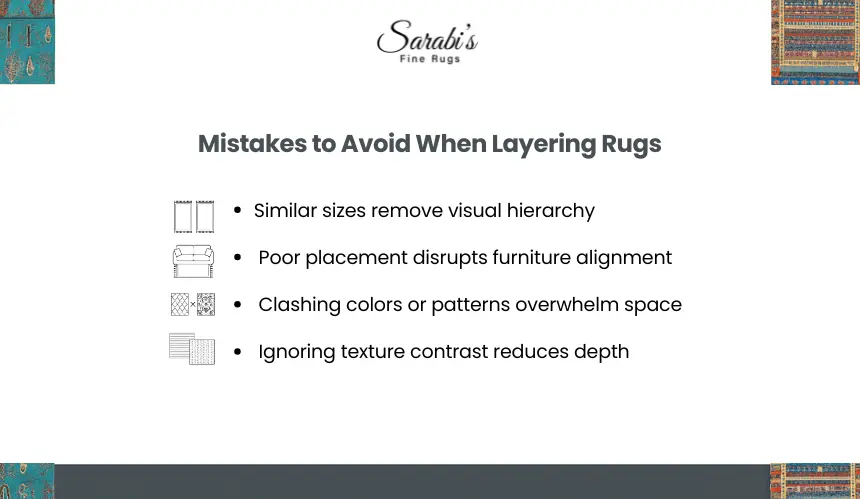
Rug layering can elevate a space when done correctly, but small missteps in proportion, placement, or styling can quickly make the arrangement look unbalanced. Understanding common mistakes helps ensure that the layered setup feels intentional, cohesive, and aligned with core interior design principles.
Why Using Similar Rug Sizes Disrupts Visual Hierarchy
One of the most common mistakes is layering rugs that are too similar in size. Without a clear size difference, the layers blend together rather than creating contrast, which removes the depth and structure that layering is meant to achieve.
A larger base rug should always anchor the space, while the smaller accent rug creates focus and variation.
Tip: Maintain a noticeable size gap between layers to establish a strong visual hierarchy.
How Poor Placement Affects Furniture Alignment
Incorrect placement can make even well-chosen rugs look disconnected. If rugs are not aligned with furniture placement, the space may feel disorganized and lacking structure. For example, a layered rug setup that does not align with a seating area can disrupt the overall layout.
Rugs should always support the function of the space by working in harmony with furniture positioning.
Important Note: Alignment with furniture is essential for both visual balance and functional zoning.
Why Clashing Colors and Patterns Create Visual Overload
Combining too many bold colors or patterns can overwhelm the room and reduce clarity in design. Instead of enhancing the space, the rugs compete for attention, leading to a chaotic appearance.
Effective layering relies on controlled contrast, where one rug stands out while the other provides support.
Tip: Limit strong patterns to one layer and keep the other more neutral or subtle.
How Ignoring Texture Contrast Reduces Depth
Using rugs with similar textures can flatten the overall look, making the layering effect less noticeable. Texture variation is what creates depth and tactile interest, especially in minimalist or neutral interiors.
Without contrast, the layered setup may appear unnecessary rather than intentional.
Important Note: Combine different materials, such as flatweave and plush textures, to enhance depth and comfort.
Why Overlapping Without Structure Looks Unintentional
Random or excessive overlapping can make the arrangement feel cluttered rather than styled. The placement of the top rug should follow a clear purpose, whether it is to highlight a seating area or add focus to a specific zone.
Structured layering ensures that each rug has a defined role within the layout.
Tip: Position the top rug slightly offset or centered within the base rug to create a clean and intentional look.
How to Layer Rugs in Different Rooms for the Best Effect
Rug layering should always adapt to the function and layout of each room. The same approach does not work everywhere because furniture placement, movement patterns, and comfort needs vary. Applying room-specific layering techniques ensures that the design feels both practical and visually balanced.
How to Layer Rugs in the Living Room
In living rooms, rug layering is primarily used to define the seating area and create a focal point. The base rug should be large enough to anchor key furniture pieces such as sofas and chairs, while the top rug adds contrast and visual interest.
The accent rug is often placed centrally or slightly offset under a coffee table to highlight the main gathering zone. This helps create a cohesive layout without making the space feel overcrowded.
Tip: Ensure at least the front legs of seating furniture rest on the base rug to maintain a connected and structured look.
How to Layer Rugs in the Bedroom
In bedrooms, layering focuses on comfort and softness. A larger base rug is typically placed under the bed, extending outward to provide coverage where people step on and off. A smaller accent rug can be added at the foot of the bed or partially under it to introduce texture and style.
This approach enhances the overall warmth of the room while maintaining a clean and relaxing aesthetic.
Important Note: Avoid placing small rugs too far from the bed, as they lose functionality and disrupt the flow of the space.
How to Layer Rugs in the Dining Area
Dining areas require careful consideration because furniture movement plays a key role. The base rug should be large enough to accommodate the dining table and chairs, even when the chairs are pulled out. Layering can be subtle, with a smaller rug used to add texture or reinforce the central area.
Durability and ease of cleaning are especially important in this space.
Tip: Choose low-pile or flatweave rugs in dining areas to prevent obstruction when moving chairs.
How to Layer Rugs in Smaller or Multi-Use Spaces
In smaller rooms or multi-functional areas, rug layering can help create visual separation without adding physical dividers. A base rug defines the overall space, while a smaller rug highlights a specific function, such as a reading corner or workspace.
This technique makes compact spaces feel more organized and intentional.
Important Note: Keep patterns and colors subtle in smaller spaces to avoid making the room feel visually crowded.
Key Takeaways
- Rug layering creates depth, texture, and visual structure by combining a base rug with a smaller accent rug
- A clear size difference between layers is essential to maintain balance and avoid a cluttered look
- Neutral base rugs make it easier to introduce patterns, colors, and seasonal changes through the top layer
- Proper alignment with furniture placement ensures the layered setup supports both design and functionality
- Mixing different textures and materials enhances visual interest without overwhelming the space
- Avoiding common mistakes like poor placement or clashing patterns keeps the design cohesive and intentional
Important Note: Effective rug layering is not about adding more elements but about arranging them with purpose, ensuring each layer contributes to both the look and usability of the space.
Frequently Asked Questions
How do you layer rugs properly?
Proper rug layering starts with a large base rug that anchors the space, followed by a smaller accent rug placed on top for contrast. The key is maintaining clear size difference, aligning with furniture placement, and balancing colors and textures to create a cohesive look.
Can you layer rugs on carpet?
Layering rugs on carpet works well when the top rug has a distinct texture or pattern that stands out. Low-pile or flatweave rugs are typically more stable on carpet, and using a rug pad can help prevent shifting and improve overall placement.
What size rugs work best for layering?
The base rug should be significantly larger to define the area, while the top rug should be smaller to create contrast. This size difference helps establish visual hierarchy and prevents the layered arrangement from looking flat or unstructured.
How many rugs should you layer in one space?
Most interiors benefit from layering two rugs, as this creates depth without overwhelming the space. Adding more layers can work in larger or more eclectic designs, but it requires careful control of size, color, and placement to maintain balance.
What rug styles go well together for layering?
Combinations that work well include neutral base rugs with patterned accents, natural fiber rugs with softer materials, and flatweave rugs paired with statement pieces. These combinations create contrast while maintaining visual harmony.
Is rug layering suitable for small spaces?
Rug layering can work in small spaces when done carefully. Using subtle patterns, lighter colors, and proper sizing helps maintain openness while still adding depth and structure to the room.