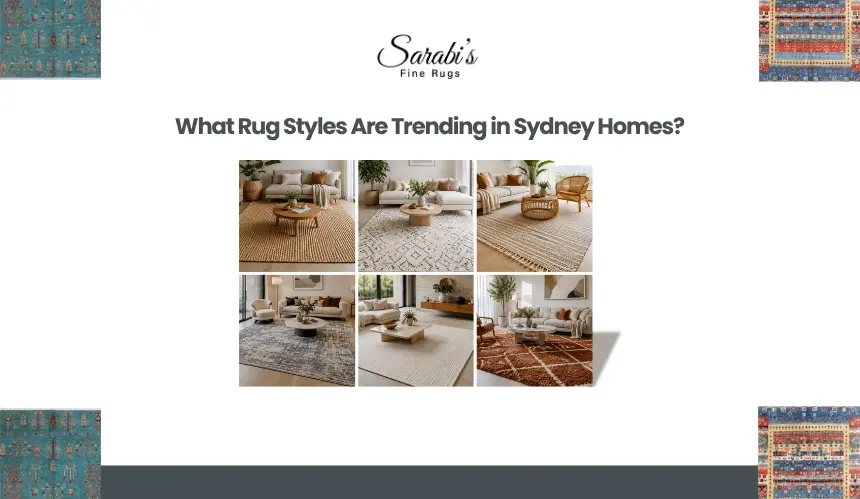
Quick Answer: Rug styles trending in Sydney homes focus on natural textures, neutral color palettes, and functional design that complements open-plan living. Popular choices include jute and wool rugs, abstract statement pieces, and vintage-inspired designs that balance aesthetics with durability and lifestyle needs.
Key Trends at a Glance
- Natural fiber rugs (jute, wool, sisal) for breathability and organic texture
- Neutral and earthy tones that create calm, adaptable interiors
- Abstract and artistic rugs used as focal points in modern spaces
- Vintage and Persian-style rugs adding depth and character
- Layered rug styling to define zones in open-plan layouts
- Sustainable materials gaining popularity among eco-conscious homeowners
Tip: Prioritize rugs that align with both design trends and daily usage patterns to ensure long-term value.
Important Note: Trends in Sydney often reflect lifestyle practicality, so durability and ease of maintenance are just as important as visual appeal.
Designing interiors that feel both stylish and functional can be challenging, especially in a dynamic city like Sydney where lifestyle, climate, and architecture all influence home décor choices. Many homeowners struggle to choose rugs that not only match current design trends but also perform well in open-plan layouts, high-traffic areas, and indoor-outdoor living environments. A rug that looks appealing in a showroom may not always suit the practical demands of daily life.
Another common issue is balancing aesthetics with longevity. With constant exposure to sunlight, movement between indoor and outdoor spaces, and evolving design preferences, selecting a rug that maintains its appearance over time becomes a complex decision. Homeowners often find themselves unsure whether to prioritize material, color, or style, leading to choices that may not fully complement their space.
At the same time, the growing shift toward minimalist and coastal-inspired interiors adds another layer of complexity. Rugs must now blend seamlessly into neutral palettes while still providing texture and visual interest. Understanding what rug styles are trending, and more importantly, why they are trending, helps simplify this process and ensures that each choice aligns with both design goals and lifestyle needs.
Tip: Before exploring styles, assess how the space is used daily, as this directly influences the type of rug that will perform best.
Important Note: In Sydney homes, environmental factors such as sunlight exposure and airflow play a significant role in how rugs age and maintain their appearance over time.
Why Rug Trends in Sydney Homes Are Evolving
Rug trends in Sydney homes are shaped by how people live, move, and use their spaces daily. Instead of purely decorative choices, rugs now serve functional roles such as zoning, comfort, and durability. This shift is driven by modern layouts, environmental exposure, and a preference for adaptable interiors that remain relevant over time.
How Open-Plan Living Is Changing Rug Usage
Open-plan layouts require rugs to define spaces without creating physical barriers. Living, dining, and work areas often exist within the same visual field, so rugs act as anchors that subtly separate functions while maintaining flow. This has increased demand for larger rugs, layered styling, and cohesive color schemes that connect multiple zones.
Tip: Choose rug sizes that align with furniture groupings to clearly define each functional area without breaking visual continuity.
How Indoor-Outdoor Living Impacts Material Choices
Sydney homes often feature strong indoor-outdoor connections, with natural light, airflow, and foot traffic moving between spaces. This environment requires rugs that can handle exposure to sunlight, dust, and frequent use. As a result, materials that are durable, breathable, and easy to clean are becoming more popular.
Important Note: Rugs placed near windows or outdoor access points should be fade-resistant and low-maintenance to preserve their appearance over time.
Why Minimalist and Coastal Aesthetics Are Driving Simpler Designs
Interior styles in Sydney are shifting toward minimalism and coastal influences, where simplicity and balance take priority. Rugs are no longer used to dominate a space but to enhance it through subtle textures and understated patterns. Neutral tones and organic materials help create calm environments that reflect natural surroundings.
Tip: Opt for rugs that complement the overall palette rather than compete with it, especially in spaces designed for relaxation and openness.
How Lifestyle Practicality Is Redefining Design Priorities
Modern households require rugs that support everyday living, including pets, children, and multi-use spaces. This has shifted focus toward practicality, where stain resistance, durability, and comfort are as important as design. Homeowners are prioritizing long-term usability over short-term trends.
Important Note: A rug that aligns with lifestyle needs will maintain its value longer than one chosen purely for visual appeal.
What Are the Most Popular Rug Styles Right Now?
Rug styles trending in Sydney homes reflect a balance between visual appeal and everyday functionality. Instead of overly decorative pieces, homeowners are choosing styles that enhance space, add texture, and adapt to evolving interiors. Each trending style serves a specific purpose, whether it is grounding a room, adding character, or improving usability.
Why Natural Fiber Rugs Are Leading the Trend
Natural fiber rugs such as jute, wool, and sisal are widely preferred because they align with both aesthetic and practical needs. These materials introduce organic texture while remaining breathable and durable, making them ideal for spaces that experience frequent use. Their neutral appearance also supports minimalist and coastal interiors without overwhelming the design.
Tip: Use jute or sisal rugs in high-traffic areas for durability, while wool works better in spaces where comfort is a priority.
How Abstract Rugs Create Visual Interest in Modern Spaces
Abstract rugs are becoming popular as statement pieces that add movement and personality to otherwise simple interiors. Their fluid patterns and contrasting tones help break uniformity, making them effective in rooms with neutral furniture or minimal décor. These rugs allow homeowners to introduce creativity without redesigning the entire space.
Important Note: Abstract designs should be balanced with simpler surroundings to avoid visual overload and maintain harmony.
Why Vintage and Persian Rugs Are Making a Comeback
Vintage and Persian-style rugs are gaining attention for their ability to add depth and character. These styles bring intricate patterns and rich tones into modern spaces, creating contrast that feels intentional rather than outdated. They are especially effective in interiors that need warmth and a sense of history.
Tip: Pair vintage-style rugs with contemporary furniture to create a balanced mix of old and new design elements.
How Layered Rug Styling Enhances Open-Plan Layouts
Layering rugs is a growing trend that allows homeowners to define zones and add dimension within large spaces. A larger, neutral base rug is typically combined with a smaller, patterned rug to create contrast and visual hierarchy. This approach provides flexibility, making it easier to update styles without replacing the entire setup.
Important Note: Maintain clear size differences between layers to ensure the arrangement looks intentional rather than cluttered.
Which Colors and Patterns Are Dominating Sydney Interiors?
Color and pattern choices in Sydney homes are evolving toward balance, where visual appeal meets long-term adaptability. Instead of overly bold or short-lived trends, homeowners are selecting palettes and patterns that create harmony, reflect natural surroundings, and remain relevant as interiors change over time.
Why Neutral and Earthy Tones Remain the Foundation
Neutral shades such as beige, ivory, taupe, and soft browns continue to dominate because they provide a flexible base for interior styling. These tones help create a calm atmosphere while allowing furniture and décor elements to stand out without clashing.
They also perform well in high-traffic areas by minimizing the appearance of wear and maintaining a consistent look.
Tip: Neutral rugs are ideal for spaces where furniture or décor is frequently updated, as they adapt easily to new styles.
How Coastal-Inspired Palettes Reflect Local Design Preferences
Coastal tones, including soft blues, sandy hues, and muted greens, are widely used to reflect the natural environment. These colors enhance brightness and create an airy feel, especially in homes with large windows and natural light.
They work particularly well in interiors that emphasize openness and connection to outdoor spaces.
Important Note: Coastal palettes should remain subtle. Overusing strong blues or greens can disrupt the relaxed and balanced aesthetic.
What Types of Patterns Are Gaining Popularity
Patterns are becoming more intentional, with a focus on enhancing rather than overpowering the space. Both structured and fluid designs are being used depending on the layout and purpose of the room.
Popular pattern directions include:
- Geometric patterns for structure and symmetry in modern interiors
- Organic and fluid designs for a softer, more relaxed look
- Subtle textured patterns that add depth without strong contrast
- Distressed or faded patterns that support vintage-inspired aesthetics
Tip: Choose pattern intensity based on room size. Larger spaces can handle bold patterns, while smaller areas benefit from subtle designs.
How Color and Pattern Work Together to Define Space
Color and pattern are no longer chosen separately; they work together to influence how a room feels and functions. Rugs are often used to either unify a space or create contrast where needed, depending on the overall design goal.
- Light colors can make spaces feel larger and more open
- Darker tones can ground a room and add depth
- Patterns can direct attention or soften visual transitions
Important Note: Consistency across color and pattern choices helps maintain visual flow, especially in open-plan layouts where multiple areas are visible at once.
How Do Sydney Lifestyles Influence Rug Choices?
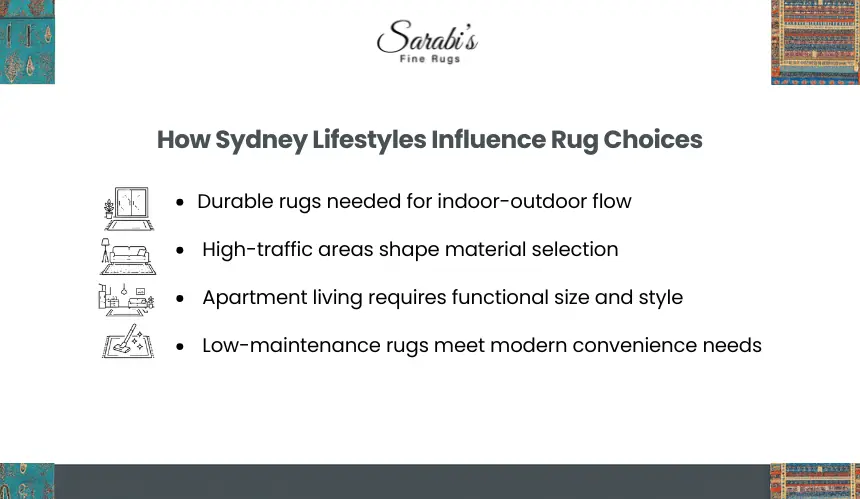
Rug selection in Sydney homes is heavily influenced by daily living patterns rather than just design preferences. Factors such as indoor-outdoor movement, high foot traffic, and compact urban layouts directly impact which rug styles remain practical over time. As a result, homeowners prioritize durability, ease of maintenance, and adaptability alongside aesthetics.
Why Indoor-Outdoor Living Requires Durable Rugs
Many homes in Sydney feature seamless transitions between indoor and outdoor spaces, increasing exposure to dirt, sunlight, and moisture. Rugs placed in these areas must handle constant movement without losing structure or color.
- Flatweave and low-pile rugs are preferred for easier cleaning
- Fade-resistant materials help maintain appearance under sunlight
- Tighter weaves reduce dust accumulation and wear
Tip: Position durable rugs near entry points or sliding doors to handle frequent movement without compromising longevity.
How High-Traffic Areas Shape Material Selection
Living rooms, hallways, and shared spaces experience continuous use, making material choice critical. Rugs in these areas must resist flattening, staining, and visible wear while still maintaining comfort.
- Wool offers resilience and natural stain resistance
- Synthetic blends provide durability with lower maintenance
- Textured surfaces help conceal signs of heavy use
Important Note: High-traffic rugs should prioritize performance first, as visually appealing but delicate materials may degrade quickly.
How Apartment Living Influences Rug Functionality
Apartments introduce different challenges, including limited space, noise control, and the need to create visual separation without walls. Rugs play a key role in making smaller spaces feel structured and comfortable.
- Larger rugs can visually expand compact rooms
- Soft materials help reduce noise and echo
- Minimal patterns prevent spaces from feeling crowded
Tip: Use rugs to define zones within smaller layouts, such as separating living and dining areas without adding physical dividers.
Why Low-Maintenance Rugs Are Becoming Essential
Busy lifestyles and multi-use spaces have increased demand for rugs that are easy to maintain. Homeowners prefer options that retain their appearance with minimal effort, especially in households with pets or children.
- Stain-resistant materials reduce cleaning frequency
- Washable or easy-care rugs improve convenience
- Durable fibers extend lifespan despite frequent use
Important Note: A rug that requires less maintenance is more likely to retain its visual appeal and functionality over time, especially in active households.
How to Choose the Right Rug Style for a Sydney Home
Choosing the right rug style depends on how the room is used, how much natural light enters the space, and what design tone the homeowner wants to create. In Sydney homes, the best rug choices usually combine visual softness, practical durability, and a strong connection to the surrounding interior style.
How Rug Size Affects the Overall Room Layout
Rug size has a major impact on how balanced a room feels. A rug that is too small can make furniture look disconnected, while an oversized rug can make the space feel heavy or crowded. In living rooms, the rug should usually sit under the front legs of major furniture pieces to create a more unified layout.
Tip: Measure the room and furniture arrangement before choosing a rug, rather than relying on visual guesswork.
Why Material Should Match Daily Use
Material selection should be based on lifestyle, not appearance alone. Wool works well in comfort-focused areas because it is soft, durable, and naturally resilient. Jute and sisal suit casual spaces where texture and airflow matter, while low-pile rugs are better for high-use areas that need easier cleaning.
Important Note: Delicate or high-pile rugs may look luxurious, but they are not always practical for busy spaces, pets, or areas near outdoor access points.
How Rug Style Should Complement Existing Décor
A rug should support the room’s design direction rather than compete with it. Neutral interiors often benefit from texture, while minimalist rooms can handle subtle patterns or abstract shapes. If the furniture already has strong colors or detailed finishes, a simpler rug usually creates better visual balance.
Tip: Treat the rug as either a grounding element or a focal point, but not both at the same time.
Why Placement Matters as Much as Style
Placement determines how well a rug performs visually and functionally. In dining areas, the rug should extend beyond the chairs so they remain on the rug when pulled out. In bedrooms, rugs should add softness around the bed rather than sit too far away from daily foot traffic zones.
Important Note: A well-placed rug can make a room feel intentional, while poor placement can make even a high-quality rug look mismatched.
Are Sustainable Rug Styles Becoming a Trend in Sydney Homes?
Sustainability is becoming a defining factor in rug selection across Sydney homes. Homeowners are increasingly looking beyond appearance and focusing on how materials are sourced, produced, and maintained over time. This shift is not just about environmental awareness but also about investing in products that offer long-term value and durability.
Why Natural and Renewable Materials Are in Demand
Rugs made from natural fibers such as wool, jute, and cotton are gaining popularity because they align with both sustainability goals and modern design preferences. These materials are biodegradable, breathable, and often produced with fewer synthetic processes, making them suitable for environmentally conscious households.
Tip: Choose rugs made from renewable fibers if long-term usability and environmental impact are both priorities.
How Eco-Friendly Production Influences Buying Decisions
Consumers are becoming more aware of how rugs are manufactured, including the use of natural dyes and ethical production methods. Rugs that emphasize transparency in sourcing and craftsmanship are increasingly preferred over mass-produced alternatives.
This awareness is shaping trends by shifting demand toward products that combine quality with responsible production practices.
Important Note: Not all rugs labeled as eco-friendly meet true sustainability standards, so verifying material sources and manufacturing details is essential.
Why Durability Is Part of Sustainable Design
Sustainability is not only about materials but also about lifespan. Rugs that maintain their structure, color, and texture over time reduce the need for frequent replacement, which contributes to lower overall environmental impact.
Durable rugs also support cost efficiency, making them a practical choice for long-term use.
Tip: Investing in a high-quality rug once is often more sustainable than replacing lower-quality options multiple times.
How Sustainable Rugs Fit Modern Interior Trends
Sustainable rugs naturally align with current interior styles, especially those focused on minimalism, natural textures, and neutral tones. Their understated appearance makes them easy to integrate into different design themes without requiring frequent updates.
Important Note: Sustainability and style are no longer separate considerations. In many cases, eco-conscious rugs already reflect the most current design trends, making them both a practical and aesthetic choice.
Frequently Asked Questions
What rug materials are best suited for sydney homes?
Materials like wool, jute, and sisal are widely preferred because they offer a balance of durability, breathability, and comfort. These materials perform well in open-plan spaces and high-traffic areas, making them suitable for both modern apartments and larger residential homes.
Are neutral rugs better for modern interior design?
Neutral rugs are often more versatile because they create a stable visual base that complements changing décor styles. They allow flexibility in furniture and accessories while maintaining a cohesive and uncluttered appearance across the space.
How do i choose the right rug size for my living room?
The right rug size depends on furniture placement and room layout. A well-sized rug should anchor the seating area, typically allowing the front legs of sofas and chairs to rest on it, which helps create a more connected and balanced look.
Are vintage and persian rugs still trending in australia?
Vintage and Persian-style rugs remain popular because they add depth, texture, and character to modern interiors. Their detailed patterns contrast well with minimalist designs, creating a more layered and visually interesting space.
What type of rugs work best for high-traffic areas?
Low-pile and flatweave rugs are ideal for high-traffic areas because they are easier to clean and more resistant to wear. Materials like wool and durable blends help maintain structure and appearance over time, even with frequent use.
Are sustainable rugs worth the investment?
Sustainable rugs are often worth the investment because they combine durability with environmentally responsible materials. Their longer lifespan and reduced need for replacement make them a practical choice for homeowners seeking both value and eco-conscious design.