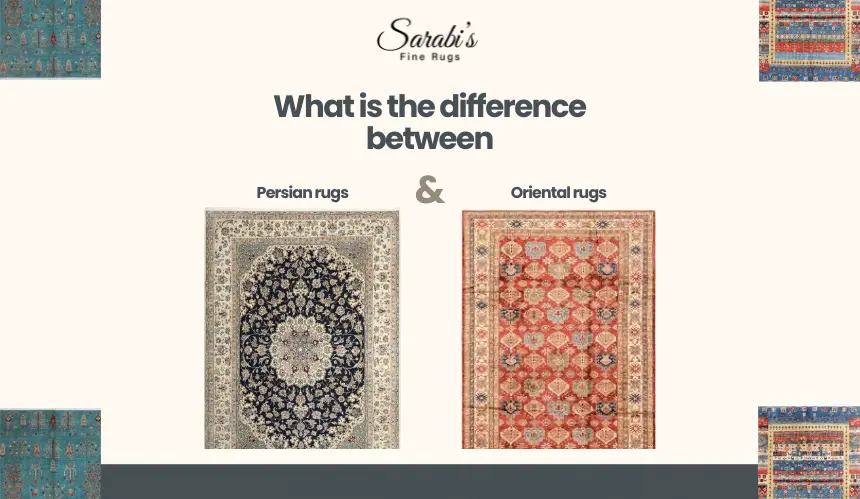
When it comes to handcrafted rugs, the terms Persian and Oriental often get tossed around as if they mean the same thing. But here’s the truth: while all Persian rugs are Oriental, not all Oriental rugs are Persian. So what’s the real difference? And why does it matter to you, whether you’re a first-time buyer, a seasoned collector, or simply someone looking to elevate a living space with timeless style?
Shopping for one? See our Persian rugs in Sydney at our North Willoughby showroom.
Let’s unravel the knots and dive into the rich distinctions that make each rug category unique.
Why the Confusion? Defining ‘Persian’ vs ‘Oriental’ Rugs
You’re not alone if you’ve ever been puzzled while shopping for rugs online or in-store. The overlap in styles, patterns, and marketing language often makes it hard to tell one type from another.
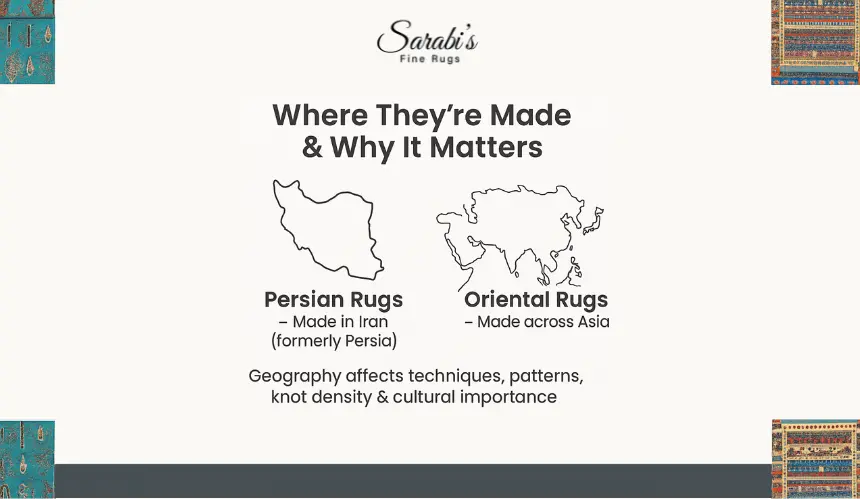
Persian rugs are made explicitly in Iran, formerly Persia, and follow time-honored regional traditions.
Oriental rugs, on the other hand, refer to any hand-knotted rug made in Asia, including countries like Turkey, Afghanistan, India, Pakistan, Nepal, China, and the Caucasus regions.
These geographic origins shape everything, from weaving technique to pattern, knotting density to wool texture.
Still unsure? Let’s look at where these rugs come from and why that matters.
Geographic Origins and Cultural Significance
What gives a rug its soul? The culture and landscape behind it.
- Persian Rugs: Woven in cities like Isfahan, Tabriz, Qom, and Kashan
- Oriental Rugs: Include styles such as Bokhara (Pakistan), Turkoman (Central Asia), Tibetan (Nepal), and Kazak (Caucasus)
Each region carries centuries of symbolism, storytelling, and artistic legacy. In Persia, rug-making is a revered art form dating back over 2,500 years. Tribal Oriental rugs often reflect spiritual or nomadic motifs using bold, geometric layouts.
And these origins don’t just shape the look, they influence how the rugs are built. Let’s explore the structure.
Weaving Techniques and Knot Types Explained
Ever wonder why some rugs feel more detailed, while others feel thicker and more tactile?
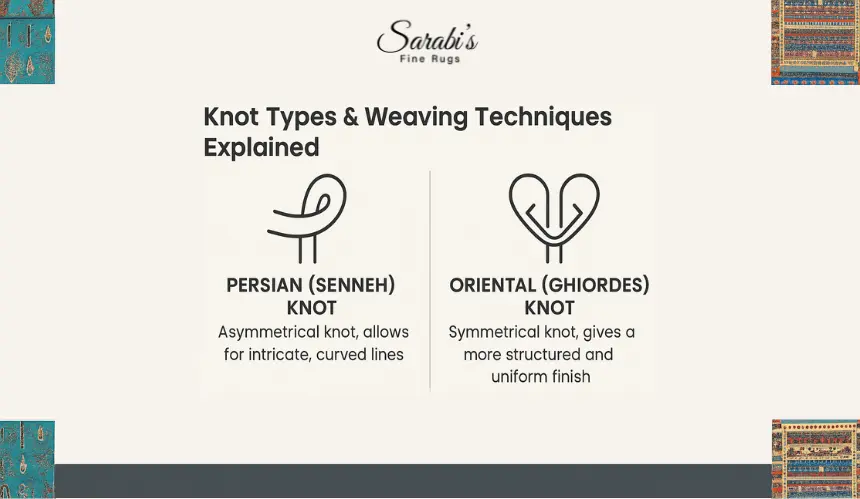
It often comes down to the knotting method:
- Persian (Senneh) Knot: Asymmetrical, allows for intricate, curved lines
- Oriental (Ghiordes) Knot: Symmetrical, gives a more structured and uniform finish
The knot density (measured in KPSI – knots per square inch) also varies. Persian rugs often feature higher knot counts, making them more detailed and precise in design.
So, how does this translate visually? The answer lies in design.
Design & Pattern Differences at a Glance
What catches your eye when you walk into a room with a hand-knotted rug?
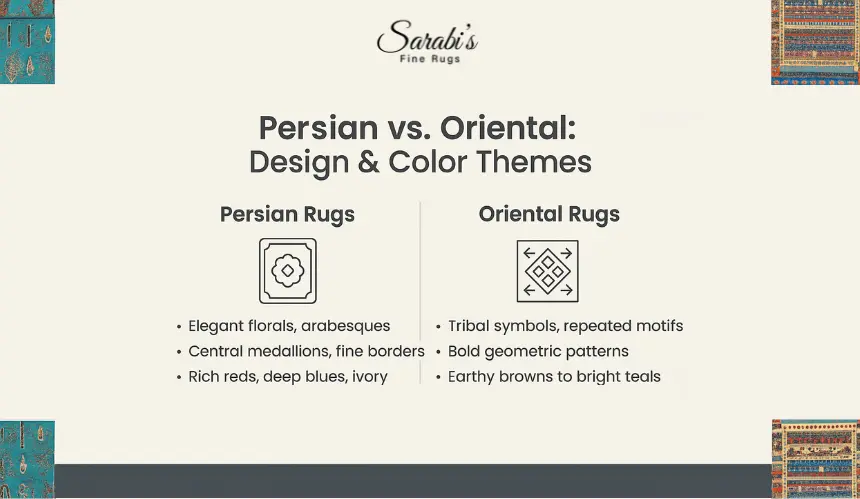
- Persian Rugs: Elegant florals, arabesques, central medallions, and fine borders. Their symmetry and subtle gradients are unmistakable.
- Oriental Rugs: Tribal symbols, repeated motifs, bold geometric patterns, and vibrant contrast.
Persian rugs tend to use rich reds, deep blues, and ivory, while Oriental rugs can range from earthy browns to bright teals, depending on region.
But it’s not just about design. Let’s talk material and feel, what you step on matters.
Materials & Dyes – What Sets Each Apart?
The best rugs aren’t just pretty, they’re built to last.
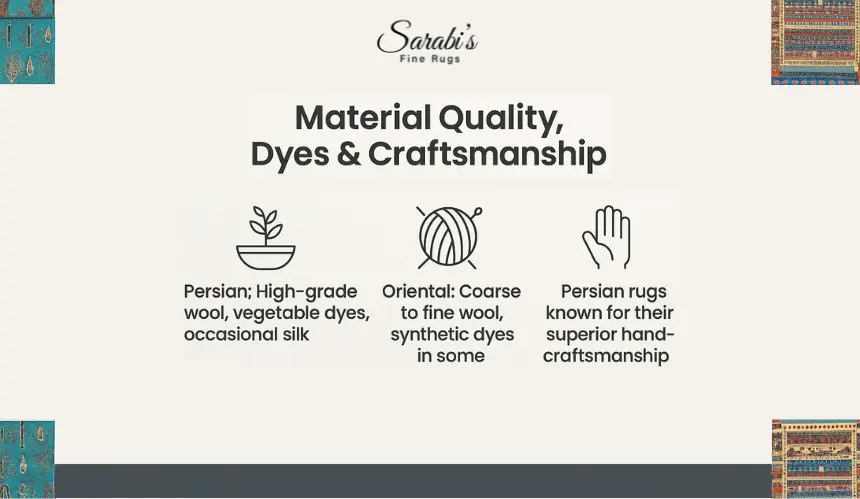
- Persian rugs use high-grade wool from local sheep, natural vegetable dyes, and sometimes incorporate silk for sheen and softness.
- Oriental rugs vary more: some tribal styles use coarser wool; others (like Chinese silk rugs) go for luxury.
Synthetic dyes have made their way into some Oriental exports, but true hand-dyed, vegetable-colored rugs still stand above in tone depth and colorfastness.
Value isn’t just in the material, it’s in the long-term return. Let’s talk investment.
Pricing, Investment Value & Collectability
Which rugs are worth more? And why?
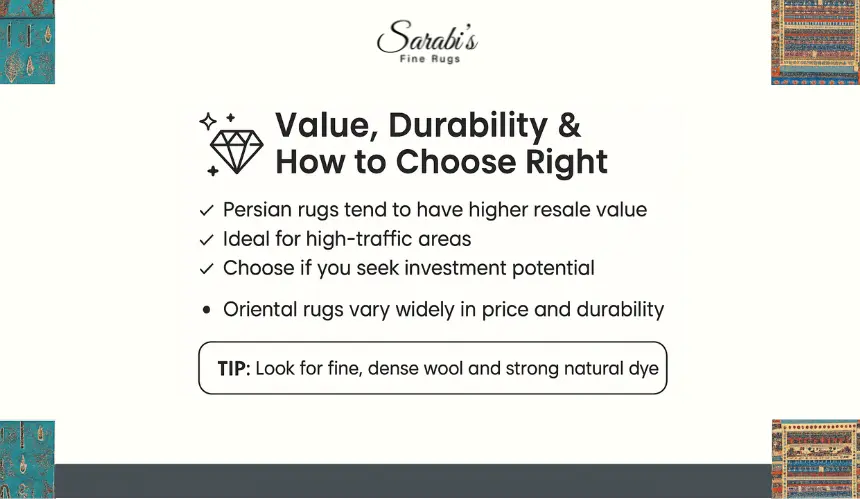
- Persian rugs, due to their craftsmanship and heritage, often carry higher resale values and appreciate over time
- Oriental rugs range widely, some tribal and antique styles are collectible, but mass-produced options exist too
Factors that affect price
- Age and condition
- Knot density and design complexity
- Materials (silk = premium)
- Rarity and provenance
Buying for beauty? Great. Buying for long-term value? Persian might edge ahead.
Durability & Practical Use: Which Works Best in Homes?
Not all rugs are made for museum floors.
- Persian rugs: Ideal for high-traffic areas thanks to fine knots and strong wool
- Oriental rugs: Some (like Kazak or Baluchi) are ultra-durable; others, like silk Chinese rugs, are best in low-use zones
Tip: Use a rug pad, rotate annually, and vacuum without beater bars for longevity.
Now that you know what’s underfoot, how do you pick the right one for your space?
Summary Table: Persian Rugs vs. Oriental Rugs
Persian Rugs vs. Oriental Rugs – Comparison at a Glance
| Feature | Persian Rugs | Oriental Rugs | Best For… |
| Origin | Specifically made in Iran (formerly Persia) | Made in various Asian countries (India, China, Turkey, etc.) | Buyers seeking country-specific authenticity |
| Design Characteristics | Central medallion, floral motifs, precise symmetry | Varied patterns – tribal, geometric, or floral | Those preferring either classic refinement or folk charm |
| Knotting Technique | Typically asymmetrical (Persian knot) | Can be symmetrical or asymmetrical | Collectors interested in weaving technique differences |
| Color Palette | Rich reds, deep blues, ivory, often natural dyes | Broader range, bright to muted; natural/synthetic dyes | Homeowners choosing rugs based on interior color harmony |
| Weaving Location | Always handmade in Iran | Handmade or machine-made across Asia | Those who value origin integrity |
| Cultural Legacy | Deep-rooted in Persian history and craftsmanship | Broader cultural traditions, less centralized | Those drawn to one cultural narrative over diversity |
| Value Over Time | Often appreciates as an heirloom | Varies, can hold value, especially tribal types | Long-term investors or collectors |
| Price Range | Generally more expensive | More varied and accessible | Budget-conscious buyers or those just starting out |
Choosing Between Persian and Oriental Rugs: What’s Right for You?
Here’s how to match your rug to your lifestyle:
- Love traditional elegance? Go Persian.
- Want a bold, tribal vibe? Try Oriental.
- On a tight budget? Explore hybrid or modern Oriental options.
- Need a family-friendly piece? Look for dense wool and fade-resistant dyes.
Rug terms to look for: area rug, hand-knotted, collector rug, natural fiber rug, decorative floor art
Still have questions? Let’s clear up common concerns.
Frequently Asked Questions
Are Persian rugs more expensive than Oriental rugs?
Yes, due to craftsmanship, materials, and historic prestige.
Are all Oriental rugs handmade?
No, some are machine-made. Always ask for hand-knotted certification.
Do Oriental rugs use synthetic materials?
Some do, especially modern exports. Persian rugs typically don’t.
Which lasts longer; Persian rugs or Oriental rugs?
Both can last generations, but Persian rugs tend to hold up longer due to tighter knots and stronger wool.
Do both types increase in value?
Only if they are handmade, well-maintained, and have collectible provenance.
Final Thoughts: Craft, Culture, and What Really Matters
If you’re drawn to luxury, fine detail, and cultural heritage, a Persian rug is likely your best fit. But if you’re looking for broader design options, potentially lower costs, or a specific tribal look, Oriental rugs open up a world of variety.
Ultimately, both styles are stunning, timeless, and bring a sense of artistry to your space. The right choice comes down to purpose, budget, and personal taste.
Looking to dive deeper into types of Persian city rugs or handmade Oriental alternatives? Let us know, and we’ll guide you further.
Looking for the real thing? Browse our Persian rugs, see them at our North Willoughby showroom, or book an in-home viewing.