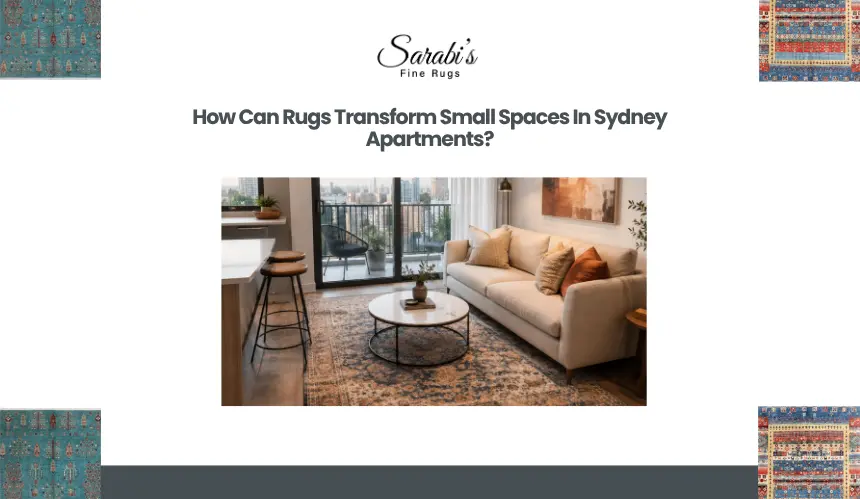
Quick Answer: Rugs transform small spaces by visually expanding room dimensions, defining functional zones, and enhancing comfort without adding physical bulk. The right rug size, color, and placement can make compact Sydney apartments feel more open, organized, and visually balanced.
Key ways rugs create this transformation include:
- Visual Expansion: Light tones and properly scaled rugs make rooms appear larger and less confined
- Space Definition: Rugs separate living, dining, and sleeping areas in open-plan or studio layouts
- Proportion Balance: Correct sizing aligns furniture and prevents a cramped or fragmented look
- Depth and Dimension: Strategic placement creates the illusion of layered space
- Acoustic Improvement: Rugs absorb sound, reducing echo in compact apartments
- Comfort Enhancement: Adds warmth and softness without occupying additional floor space
By combining visual design principles with functional benefits, rugs become a space-enhancing element that improves both the look and usability of small apartment interiors.
Living in a Sydney apartment often means working with limited square footage, open-plan layouts, and the constant challenge of making a space feel functional without appearing crowded. Even well-designed interiors can feel visually tight when furniture, lighting, and layout are not properly balanced.
Did you know? According to the Australian Bureau of Statistics, a growing share of urban residents live in compact dwellings, making space optimization a key design priority in cities like Sydney.
One of the biggest pain points in smaller apartments is the lack of clear spatial definition. Without boundaries, areas can feel cluttered or undefined, while poor visual flow can make rooms appear smaller than they actually are. Hard flooring surfaces, common in many Sydney apartments, can also amplify noise and reduce comfort, further affecting how the space is experienced.
Rugs offer a practical and design-driven solution to these challenges. By influencing visual perception, organizing layouts, and enhancing comfort, they can transform compact interiors into spaces that feel larger, more cohesive, and easier to live in, without requiring structural changes or additional furniture.
How Do Rugs Visually Expand Small Spaces?
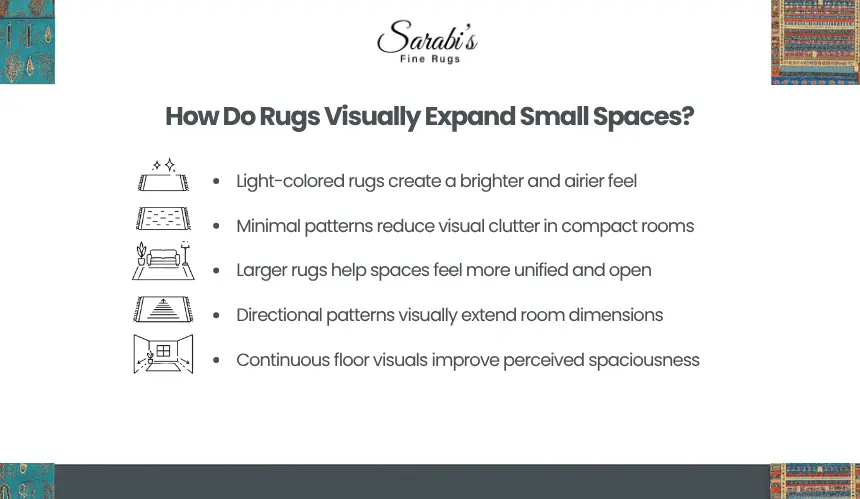
Rugs play a key role in shaping how a space is perceived, especially in compact apartments where every visual element influences the sense of openness. Through careful selection of size, color, and pattern, rugs can alter proportions, guide the eye, and make rooms feel more expansive than their actual dimensions.
How Do Colors And Patterns Affect Spatial Perception?
Color and pattern choices directly impact how large or small a space appears. Lighter tones reflect more light, while subtle patterns prevent visual clutter.
- Light-colored rugs, such as beige, soft grey, or off-white, create an airy and open feel
- Minimal or low-contrast patterns reduce visual fragmentation, making the floor appear continuous
- Avoiding overly busy designs helps maintain a clean and uncluttered look
In small apartments, simplicity in design often contributes more to perceived space than bold visual statements.
How Does Rug Size Influence Room Proportion And Scale?
Rug size is one of the most critical factors in determining whether a room feels cohesive or cramped. A rug that is too small can break up the space, while a properly sized rug unifies it.
- Larger rugs that extend under key furniture pieces create a sense of continuity
- Small, isolated rugs can make a room feel fragmented and visually smaller
- Correct scaling aligns furniture placement, improving overall balance
Did you know? Interior design studies on spatial perception suggest that continuous visual surfaces can make rooms appear up to 10–15% larger, emphasizing the importance of proper rug sizing.
Can Rugs Create The Illusion Of Depth In Compact Rooms?
Rugs can also be used to add depth, making a flat or confined space feel layered and dimensional. This effect is especially useful in studio apartments or narrow layouts.
- Linear or directional patterns can guide the eye across the room, extending perceived length
- Strategic placement can visually elongate or widen specific areas
- Layering textures subtly enhances depth without overcrowding the space
How Do Rugs Help Define Functional Zones In Small Apartments?
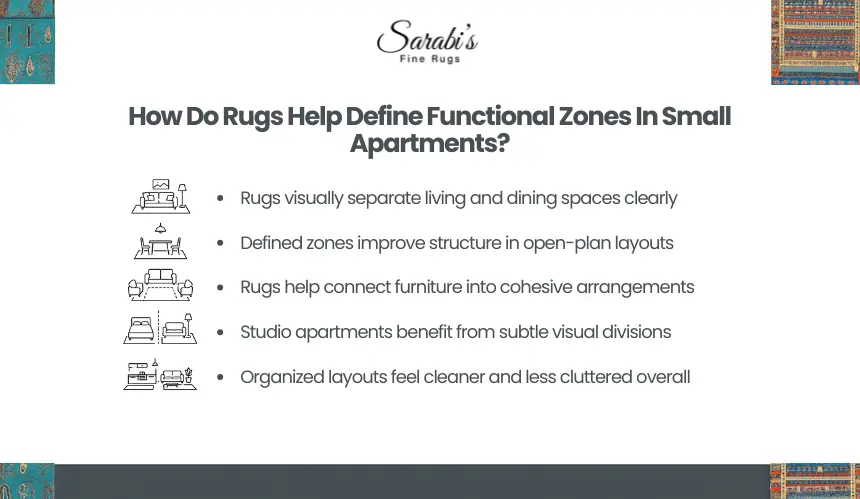
In small apartments, especially those with open-plan or studio layouts, one of the biggest challenges is the lack of clear separation between different living areas. Without defined boundaries, spaces can feel cluttered or visually confusing. Rugs solve this by creating subtle yet effective divisions that organize the layout without adding physical barriers.
How Can Rugs Separate Living And Dining Areas Effectively?
Rugs act as visual anchors that distinguish one area from another. In a compact apartment, placing a rug under a seating arrangement can clearly define the living zone, while a separate rug beneath a dining table establishes a distinct eating area. This separation helps the eye recognize individual functions within a shared space, making the layout feel more structured and intentional.
How Do Rugs Anchor Furniture In Small Layouts?
Furniture in small spaces can often appear scattered if not visually connected. Rugs bring cohesion by grouping furniture elements together, creating a unified arrangement. When key pieces such as sofas, chairs, or tables are partially or fully placed on a rug, the entire setup feels grounded rather than floating within the room. This sense of structure reduces visual clutter and improves spatial clarity.
How Do Rugs Improve Layout Clarity In Studio Apartments?
Studio apartments present a unique challenge, as all functions, sleeping, living, and sometimes working, exist within a single room. Rugs help establish these zones without walls or partitions. A rug under the bed area can subtly define a sleeping zone, while another in the living section creates a clear distinction. This layered approach allows the space to feel organized while maintaining openness.
How Do Rugs Improve Comfort And Acoustics In Compact Spaces?
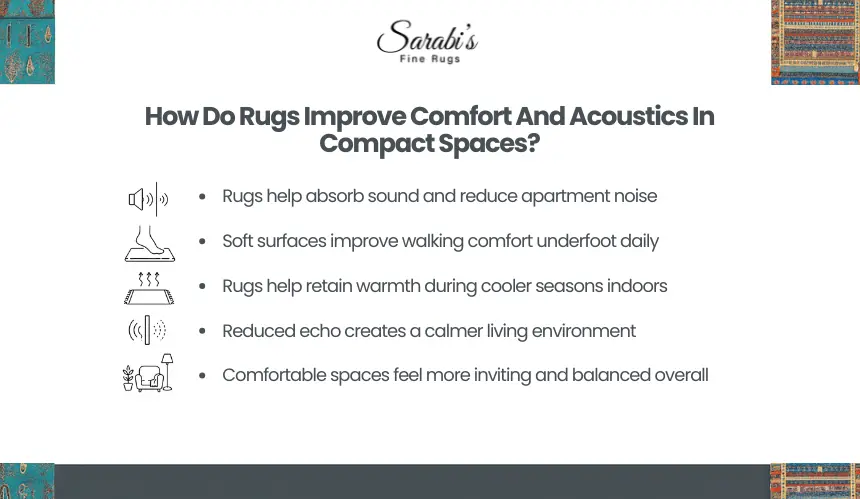
In small apartments, comfort is not only about furniture but also about how the space feels underfoot and how sound behaves within it. Hard flooring surfaces, commonly found in Sydney apartments, can make interiors feel cold and amplify everyday noise. Rugs address both of these issues by introducing softness and sound absorption without taking up additional space.
How Do Rugs Reduce Noise In Apartment Living?
Noise can travel easily in compact spaces, especially where surfaces like wood, tile, or laminate reflect sound. Rugs help absorb these sound waves, reducing echo and minimizing the impact of footsteps, furniture movement, and general activity. This is particularly beneficial in apartment living, where sound control contributes to both personal comfort and reduced disturbance to neighbors.
How Do Rugs Improve Walking Comfort And Warmth?
Bare floors can feel hard and uninviting, especially in areas where people spend a lot of time standing or walking. Rugs introduce a layer of cushioning that improves physical comfort, making everyday movement more pleasant. They also help retain warmth, making a noticeable difference in how cozy a space feels, particularly during cooler seasons.
How Do Rugs Enhance The Overall Living Experience In Small Spaces?
Beyond physical comfort, rugs contribute to a more balanced and inviting atmosphere. By softening both the visual and tactile aspects of a room, they make compact spaces feel less rigid and more livable. This subtle enhancement improves how the space is experienced daily, turning a purely functional layout into one that feels comfortable and well-designed.
What Rug Styles Work Best For Small Sydney Apartments?
Choosing the right rug style in a compact apartment is not just about aesthetics, it directly affects how spacious, cohesive, and comfortable the room feels. In Sydney apartments, where layouts are often tight and natural light varies, selecting the right combination of color, texture, and pattern can significantly influence spatial perception.
Which Rug Colors Make Small Spaces Feel Larger?
Color is one of the most powerful tools for visually expanding a space. Lighter tones reflect both natural and artificial light, helping rooms appear brighter and more open.
- Soft neutrals such as beige, ivory, and light grey enhance brightness and reduce visual density
- Muted tones create continuity across the floor, preventing the space from feeling segmented
- Cooler shades can add depth, making narrow rooms feel slightly more expansive
Did you know? Interior design research on visual perception shows that light-reflective surfaces can make spaces appear up to 15% more open, reinforcing the impact of color selection in small apartments.
How Do Minimalist And Neutral Rugs Support Compact Living?
Minimalist rug styles are particularly effective in small spaces because they reduce visual noise and maintain a clean, uncluttered appearance. This aligns well with modern apartment interiors, where simplicity enhances both function and design.
- Low-contrast patterns help maintain visual flow across the room
- Subtle textures add depth without overwhelming the layout
- Neutral palettes integrate easily with furniture, avoiding visual breaks
In compact environments, fewer visual interruptions allow the eye to move freely, which contributes to a stronger sense of openness.
What Patterns Should Be Avoided In Small Rooms?
While patterns can add personality, overly bold or complex designs can dominate limited floor space and disrupt balance. In small apartments, the goal is to enhance the room, not compete with it.
- High-contrast patterns can make floors feel visually crowded
- Large, busy designs may shrink perceived space by breaking continuity
- Overly intricate details can distract from the overall layout
Did you know? Design principles related to spatial cognition suggest that excessive visual contrast can reduce perceived room size by interrupting visual flow, making spaces feel more confined than they actually are.
How Should Rugs Be Placed To Maximize Space Efficiency?
Rug placement plays a critical role in how effectively a small apartment functions and feels. Even the right rug can lose its impact if positioned incorrectly. In compact layouts, placement should support flow, maintain visual continuity, and enhance the perception of space rather than disrupt it.
Should Rugs Go Under Furniture Or Around It?
One of the most effective strategies in small spaces is to integrate rugs with furniture rather than to isolate them. When rugs are placed under key furniture pieces, they create a unified visual zone that feels intentional and structured.
- Positioning at least the front legs of sofas and chairs on the rug helps anchor the arrangement
- Fully floating rugs, placed away from furniture, can make the space feel disjointed
- Larger rugs that extend beyond furniture edges create a more expansive and cohesive look
This approach prevents fragmentation and allows the room to feel more connected.
How Does Rug Placement Affect Room Flow And Movement?
In small apartments, maintaining smooth pathways for movement is essential. Poor rug placement can interrupt circulation and make the layout feel cramped.
- Rugs should align with natural walking paths rather than obstruct them
- Proper spacing between furniture and rug edges helps maintain visual breathing room
- Placement should guide the eye through the space, reinforcing openness
Did you know? Interior layout studies suggest that clear visual pathways can improve perceived spaciousness by making rooms feel more navigable and less confined.
What Are The Best Layout Strategies For Studio Apartments?
Studio apartments require a more strategic approach, as multiple functions are integrated into a single open space. Rugs can be used to define zones without compromising the layout’s openness.
- A larger rug in the living area establishes a central gathering zone
- A separate rug can subtly define the sleeping area without adding partitions
- Consistent spacing and alignment between rugs maintain balance across the space
How Can Rug Orientation Influence Perceived Room Size?
The direction in which a rug is placed can subtly affect how large or narrow a room appears. Orientation works as a visual guide that influences how the eye travels across the space.
- Lengthwise placement can make a room feel longer
- Horizontal alignment can visually widen narrow spaces
- Aligning rugs with the dominant room dimension enhances proportion
How Do Sydney Apartment Characteristics Influence Rug Selection?
Rug selection in Sydney apartments is influenced not only by interior design preferences but also by the unique characteristics of urban living. Factors such as compact floor plans, varying natural light conditions, and environmental considerations all play a role in determining which rugs perform best in these spaces.
How Do Smaller Floor Plans Affect Rug Size And Layout Choices?
Sydney apartments often feature limited floor space, which makes proportion and scale especially important. A rug that is too small can visually shrink the room by breaking up the floor area, while a properly sized rug helps unify the space and create a sense of openness.
In compact layouts, rugs should align with the main furniture arrangement rather than sit independently. This approach creates continuity and avoids the fragmented look that often makes small rooms feel tighter than they actually are.
How Does Natural Light Influence Rug Color Selection?
Natural light varies significantly across Sydney apartments depending on orientation, surrounding buildings, and window placement. This variation directly affects how rug colors appear within the space.
- Apartments with limited natural light benefit from lighter rugs that reflect brightness and prevent the room from feeling dim
- Well-lit interiors can accommodate slightly deeper tones without reducing the sense of openness
Did you know? Interior design studies show that light-reflective surfaces can enhance perceived brightness by up to 20%, making color selection a critical factor in smaller apartments with limited daylight.
How Do Urban Living Conditions Impact Rug Materials?
Urban apartment living introduces practical considerations such as foot traffic, dust, and maintenance requirements. These factors influence which rug materials are most suitable for long-term use.
Durable and easy-to-clean materials are often preferred in Sydney apartments, where compact spaces mean rugs are used frequently across multiple activities. Materials that resist wear and are simple to maintain help preserve both appearance and functionality over time.
How Do Open-Plan Layouts Change Rug Usage Strategy?
Many Sydney apartments feature open-plan designs that visually connect the living, dining, and kitchen areas. In these layouts, rugs must work cohesively rather than as isolated elements.
Using rugs that complement each other in tone and style helps maintain visual harmony while still defining separate functional zones. This balance ensures that the space feels organized without losing its open and connected character.
What Should Be Considered When Choosing Rugs For Small Spaces?
Selecting the right rug for a small apartment requires balancing aesthetics, functionality, and practicality. Since rugs influence both how a space looks and how it is used, the selection process should be guided by proportion, material performance, and everyday lifestyle needs rather than just visual appeal.
How To Choose The Right Rug Size For A Compact Room?
Size is one of the most critical factors in rug selection, as it directly affects how cohesive or fragmented a space appears. In small rooms, a well-proportioned rug can unify the layout, while an incorrectly sized one can disrupt balance.
A larger rug that accommodates key furniture elements helps create continuity and makes the room feel more expansive. In contrast, undersized rugs tend to isolate furniture pieces, making the space appear smaller and less organized.
What Materials Work Best For Durability And Maintenance?
Material selection plays an important role in both comfort and long-term usability, especially in high-traffic areas of small apartments. Rugs are often exposed to frequent use, making durability and ease of maintenance essential considerations.
- Synthetic blends and low-pile materials are generally easier to clean and maintain
- Natural fibers can offer texture and visual appeal, but may require more care
- Dense weaves tend to hold their shape better under regular use
Did you know? Studies on interior material performance suggest that low-pile rugs can be up to 40% easier to maintain in high-traffic areas than thicker alternatives, making them a practical choice for compact living spaces.
How Does Lifestyle Influence Rug Selection?
Lifestyle factors significantly impact which type of rug is most suitable. In small apartments, where spaces serve multiple purposes, rugs must support a range of activities without compromising functionality.
For households with pets, children, or frequent foot traffic, choosing materials that resist stains and wear becomes essential. Similarly, in multipurpose spaces such as studio apartments, rugs should balance comfort with durability to accommodate both relaxation and daily use.
How Important Is Texture In Small Space Design?
Texture adds depth and visual interest without occupying additional space, making it particularly valuable in compact interiors. Subtle variations in texture can enhance the overall feel of a room while maintaining a clean and uncluttered appearance.
Soft textures contribute to comfort, while flatter weaves support easier movement and maintenance. The right balance ensures that the rug enhances both usability and design without overwhelming the space.
What Mistakes Should Be Avoided When Using Rugs In Small Spaces?
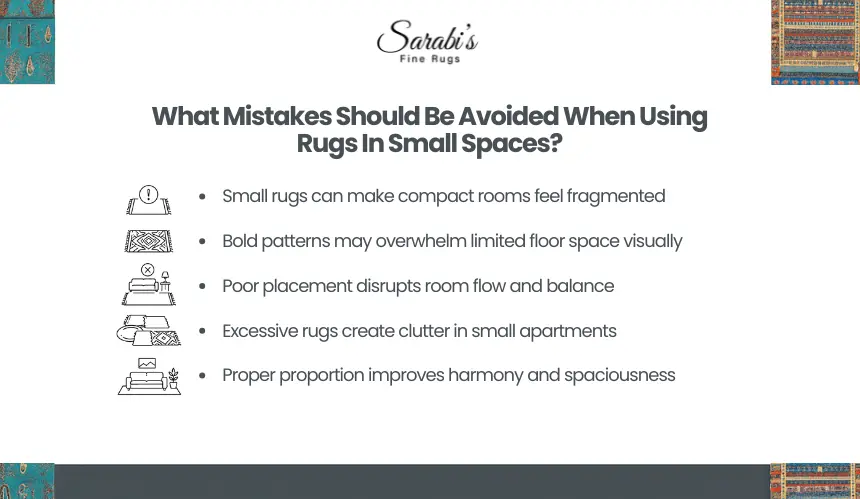
While rugs can significantly enhance small apartments, incorrect choices or placement can have the opposite effect, making spaces feel tighter, cluttered, or visually unbalanced. Avoiding common mistakes ensures that rugs contribute positively to both functionality and spatial perception.
Does Using Small Rugs Make Rooms Feel Even Smaller?
One of the most frequent mistakes is choosing rugs that are too small for the space. Small rugs tend to isolate furniture and disrupt the room’s visual flow, creating a fragmented layout.
Instead of enhancing the space, undersized rugs can make the room feel disjointed and confined. A properly scaled rug that aligns with furniture helps maintain continuity and creates a more expansive appearance.
Can Overly Bold Patterns Overwhelm Compact Spaces?
Bold and high-contrast patterns can dominate the floor area, drawing too much attention and disrupting visual balance. In small apartments, this can make the room feel cramped.
Subtle patterns and low-contrast designs are generally more effective, as they add interest without overpowering the space or interrupting its visual flow.
How Can Incorrect Placement Disrupt Room Balance?
Even a well-chosen rug can lose its effectiveness if placed incorrectly. Misaligned rugs or those that do not connect with surrounding furniture can create confusion in the layout.
- Placing rugs too far from furniture can make arrangements feel disconnected
- Misaligned positioning can disrupt natural movement and flow
- Inconsistent placement across zones can reduce overall cohesion
Does Using Too Many Rugs Create Visual Clutter?
In small apartments, adding multiple rugs without a clear strategy can lead to visual overload. While rugs are useful for defining zones, excessive use can make the space feel crowded rather than organized.
Did you know? Interior design principles suggest that limiting visual elements in compact spaces helps maintain clarity and improves perceived spaciousness, making restraint an important factor in rug usage.
Why Is Ignoring Proportion A Common Design Issue?
Proportion affects how every element in a room relates to one another. When rugs are not scaled appropriately to the room or furniture, they can disrupt the space’s overall balance.
Maintaining proportion ensures that rugs complement the layout rather than compete with it, creating a more harmonious, visually stable environment.
Frequently Asked Questions
How do rugs make a small room look bigger?
Rugs make a small room look bigger by creating visual continuity and reducing fragmentation. Larger rugs, light colors, and minimal patterns help reflect light and guide the eye across the space, making the room feel more open and less confined.
What size rug is best for a small apartment?
The best rug size is one that fits under key pieces of furniture, such as sofas or beds, to create a unified layout. Rugs that are too small can break up the space, while properly scaled rugs make the room feel more cohesive and spacious.
Are light or dark rugs better for small spaces?
Light-colored rugs are generally better for small spaces because they reflect more light and create an airy feel. Dark rugs can still work in well-lit apartments, but should be used carefully to avoid making the room feel visually heavy.
Can rugs help divide a studio apartment?
Rugs are highly effective for dividing studio apartments by visually separating different functional areas such as living, sleeping, and dining zones. This helps organize the layout without the need for walls or partitions.
How many rugs should be used in a small apartment?
The number of rugs depends on the layout, but using too many can create visual clutter. Typically, one to two well-placed rugs are enough to define zones while maintaining a clean and balanced appearance.