
Quick Answer: Oriental rugs should typically be professionally cleaned every 12 to 18 months to maintain fiber quality, color, and hygiene. However, homes with higher usage or environmental factors may require more frequent cleaning.
Recommended cleaning frequency based on conditions:
- Every 6–12 months → High foot traffic, pets, or children
- Every 12–18 months → Average household use
- Every 18–24 months → Low-traffic or decorative rugs
Did you know? Rugs can trap several times their weight in dust, dirt, and allergens, which means even rugs that look clean may still require deep cleaning to maintain indoor air quality and fiber integrity.
Oriental rugs are more than just decorative pieces; they are handcrafted investments made from delicate natural fibers such as wool or silk. Over time, these rugs accumulate dust, dirt, allergens, and microscopic debris that are not always visible on the surface. Many homeowners assume a rug only needs cleaning when it looks dirty, but by then, buildup may already be affecting its fibers and overall condition.
Proper cleaning frequency is critical to preserving both the appearance and the lifespan of an oriental rug. Regular maintenance helps prevent deep-set dirt from damaging fibers, fading colors, or causing premature wear. In areas like North Willoughby, where seasonal changes and everyday foot traffic can influence indoor conditions, understanding when to clean rugs becomes even more important.
Did you know? Indoor rugs can act as air filters, trapping dust and allergens, making regular cleaning essential not just for appearance but for maintaining healthier indoor air quality.
By understanding how often oriental rugs should be cleaned and which factors influence that timing, homeowners can protect their rugs while maintaining a cleaner, more comfortable living space.
What Is the Recommended Cleaning Frequency for Oriental Rugs?
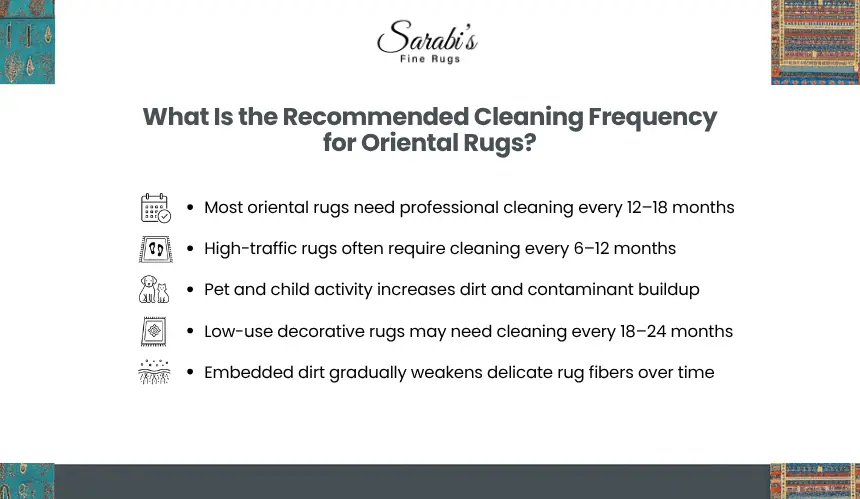
The ideal cleaning frequency for oriental rugs depends on usage patterns, environmental conditions, and fiber type. While general guidelines provide a baseline, adjusting the schedule to real-world conditions helps maintain both the appearance and structural integrity of the rug.
Did you know? Dirt particles trapped inside rug fibers can act like abrasive material, gradually wearing down fibers every time the rug is walked on.
What Is the Standard Cleaning Timeline for Most Homes?
For most households, oriental rugs should be professionally cleaned every 12 to 18 months. This timeframe allows for the removal of accumulated dust, allergens, and embedded debris before they begin to damage the fibers.
This schedule works best for:
- Moderate foot traffic areas
- Homes without pets
- Controlled indoor environments
Regular cleaning within this range helps maintain color vibrancy and fiber strength.
When Should Rugs Be Cleaned More Frequently?
In homes with higher usage, more frequent cleaning is necessary to prevent buildup and wear.
Cleaning every 6 to 12 months is recommended for:
- High-traffic areas such as living rooms or hallways
- Homes with pets that shed or track dirt
- Households with children
- Allergy-sensitive environments
Frequent cleaning helps remove contaminants before they settle deep into the rug.
How Often Should Low-Traffic Rugs Be Cleaned?
Rugs placed in low-use areas, such as formal rooms or decorative spaces, may not accumulate dirt as quickly.
These rugs can typically be cleaned every 18 to 24 months, depending on conditions.
Did you know? Even low-traffic rugs collect airborne dust and pollutants over time, which means occasional deep cleaning is still necessary.
By adjusting cleaning frequency based on usage and environmental conditions, homeowners can more effectively maintain the quality and longevity of their oriental rugs.
What Factors Affect How Often You Should Clean an Oriental Rug?
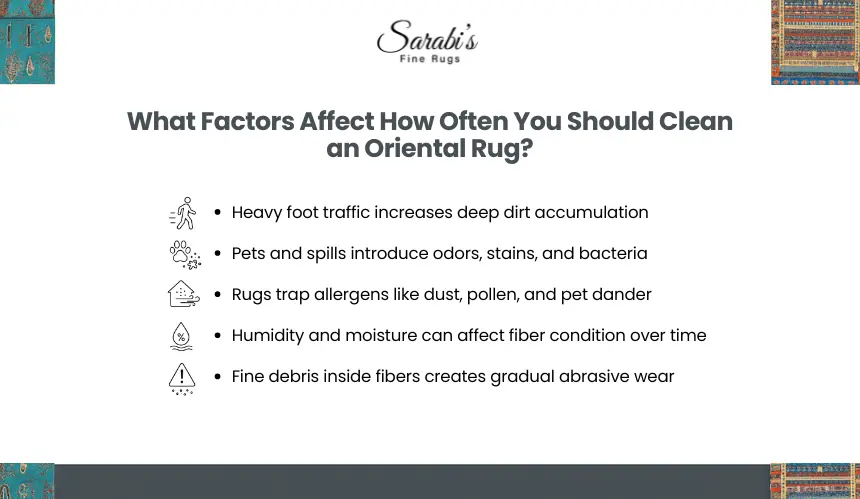
While general timelines provide a useful starting point, the actual cleaning frequency of an oriental rug depends on several environmental and lifestyle factors. These variables influence how quickly dirt, dust, and other contaminants accumulate in the rug’s fibers.
Understanding these factors helps homeowners create a more accurate and effective cleaning schedule.
Did you know? Fine particles like dust and sand can settle deep into rug fibers and act like microscopic abrasives, gradually wearing down the rug from the inside.
How Does Foot Traffic Influence Cleaning Needs?
Foot traffic is one of the most important factors affecting rug cleanliness. Rugs placed in frequently used areas tend to accumulate dirt much faster than those in low-use spaces.
High foot traffic can lead to:
- Faster buildup of dirt and debris
- Visible wear patterns in certain areas
- Increased pressure on rug fibers
Rugs in entryways, living rooms, or hallways typically require more frequent cleaning.
How Do Pets and Children Impact Cleaning Frequency?
Homes with pets and children often experience higher levels of dirt, spills, and accidental stains. These conditions can significantly increase the need for regular cleaning.
Common factors include:
- Pet hair and dander accumulation
- Accidental spills and stains
- Increased movement across the rug surface
These elements can contribute to faster contamination and odor buildup.
How Does Indoor Air Quality Affect Rugs?
Airborne dust, allergens, and pollutants settle into rugs over time, even in homes with minimal foot traffic. Poor indoor air quality can accelerate this process.
This can result in:
- Allergen buildup within rug fibers
- Reduced indoor air quality
- Increased need for deep cleaning
Did you know? Rugs can trap allergens such as dust mites and pollen, making them an important part of indoor air management.
How Do Climate and Humidity Play a Role?
Environmental conditions such as humidity and temperature can also affect rug maintenance. Moisture can encourage mold or mildew growth if not properly managed.
Factors to consider include:
- High humidity levels increase moisture retention
- Seasonal changes bring in dirt and debris
- Damp conditions are affecting rug fibers
By considering these factors, foot traffic, pets, air quality, and climate, homeowners can better determine how often their oriental rugs should be cleaned to maintain both cleanliness and durability.
How Does Foot Traffic Impact Cleaning Frequency?
Foot traffic is one of the most direct indicators of how often an oriental rug should be cleaned. The more a rug is used, the more quickly it accumulates dirt, debris, and pressure-related wear, which can gradually affect both its appearance and structural integrity.
Rugs in high-traffic areas experience repeated friction from shoes and foot traffic, pushing dirt deeper into the fibers over time.
Did you know? Every step on a dirty rug can grind embedded particles into the fibers, causing gradual fiber breakdown similar to sandpaper abrasion.
What Happens in High-Traffic Areas?
High-traffic zones such as entryways, hallways, and living rooms tend to collect the most dirt. These areas are constantly exposed to outdoor contaminants carried in on shoes and through daily movement.
Common effects include:
- Faster accumulation of dirt and dust
- Visible wear patterns in frequently used spots
- Flattening of fibers due to repeated pressure
Rugs in these areas typically require cleaning every 6 to 12 months to maintain their condition.
How Does Traffic Create Uneven Wear?
Foot traffic is rarely evenly distributed across a rug. Certain sections, such as pathways or central areas, receive more pressure, leading to uneven wear and dirt buildup.
This can result in:
- Noticeable discoloration in specific areas
- Differences in texture across the rug
- Faster deterioration in high-use sections
Regular cleaning helps balance these effects and restore the rug’s appearance.
Why Is Early Cleaning Important for High-Traffic Rugs?
Delaying cleaning in high-traffic areas allows dirt to settle deeper into the fibers, making it harder to remove and increasing the risk of long-term damage.
Did you know? Regular maintenance in high-traffic areas can significantly extend the lifespan of an oriental rug by preventing permanent fiber wear.
By adjusting cleaning frequency based on foot traffic levels, homeowners can better protect their rugs and maintain both their visual appeal and durability over time.
How Do Pets and Spills Change Cleaning Needs?
Pets and everyday spills significantly increase the frequency with which oriental rugs should be cleaned. These factors introduce organic matter, moisture, and bacteria into the rug fibers, which can lead to odors, staining, and long-term fiber damage if not properly addressed.
Homes with pets or frequent spills typically require a more proactive and frequent cleaning schedule to maintain hygiene and preserve rug quality.
Did you know? Pet accidents and food spills can penetrate deep into rug fibers and padding, making surface cleaning insufficient for complete removal.
How Do Pets Affect Oriental Rug Maintenance?
Pets contribute to the faster buildup of contaminants that are not always visible on the surface.
Common impacts include:
- Pet hair and dander are accumulating in fibers
- Dirt and debris tracked in from outside
- Occasional accidents cause odor and staining
These factors often require cleaning every 6 to 12 months, or sooner if issues arise.
Why Are Spills a Major Concern for Rug Health?
Spills can quickly soak into natural fibers such as wool or silk, leading to discoloration or structural weakening if not treated promptly.
Risks associated with spills include:
- Permanent staining if not cleaned quickly
- Fiber damage due to moisture absorption
- Residue buildup that attracts more dirt over time
Immediate spot cleaning is important, but periodic deep cleaning is still necessary.
How Do Odors and Bacteria Build Up?
Moisture from spills or pet accidents can create conditions that allow bacteria and odors to develop within the rug.
This can lead to:
- Persistent unpleasant smells
- Hygiene concerns in living spaces
- Reduced indoor air quality
Did you know? Professional cleaning methods are designed to remove deep-seated contaminants and neutralize odors, which standard home cleaning methods often cannot fully address.
By accounting for pets and spills in the cleaning schedule, homeowners can better maintain the cleanliness, freshness, and longevity of their oriental rugs.
What Are the Signs Your Oriental Rug Needs Cleaning?
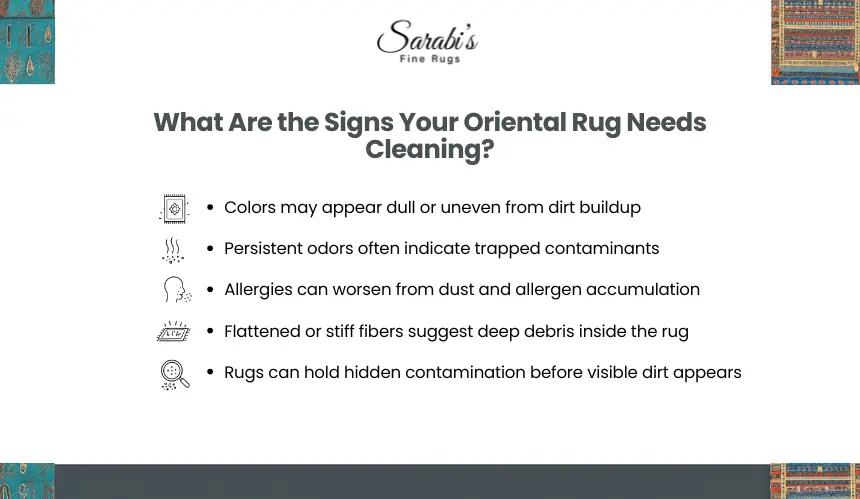
Even with a general cleaning schedule in place, oriental rugs often show clear indicators when they require professional cleaning. Recognizing these signs early helps prevent long-term damage and ensures the rug maintains its appearance and structural integrity.
Many rugs may appear clean on the surface yet harbor dirt and contaminants deep within the fibers.
Did you know? A rug can hold a significant amount of hidden debris before it becomes visibly dirty, which is why waiting for obvious dirt is not always the best indicator for cleaning.
Does the Rug Look Dull or Discolored?
One of the most noticeable signs is a loss of color vibrancy. Dirt and dust buildup can create a dull or faded appearance over time.
Common visual indicators include:
- Colors appear less vibrant than before
- Uneven shading across the rug
- A generally worn or tired look
This often means dirt has accumulated within the fibers.
Are There Persistent Odors?
Unpleasant odors can develop when contaminants such as moisture, pet residue, or organic debris remain trapped in the rug.
Signs to watch for:
- Musty or damp smells
- Lingering pet odors
- Unexplained indoor odors near the rug
These odors usually indicate deep contamination that requires professional cleaning.
Are Allergies or Indoor Air Issues Increasing?
Rugs can trap allergens such as dust, pollen, and pet dander. When these build up, they may affect indoor air quality.
Possible indicators include:
- Increased allergy symptoms indoors
- Dust accumulation despite regular cleaning
- Reduced air freshness in the room
Did you know? Regular rug cleaning can help reduce allergen levels in indoor environments, improving air quality.
Has the Texture or Feel of the Rug Changed?
Changes in texture can indicate that dirt and debris have settled into the fibers.
This may include:
- Rough or stiff areas in the rug
- Flattened fibers in high-use zones
- A heavier or less flexible feel
These signs suggest that the rug needs deep cleaning to restore its natural softness.
By paying attention to visual, physical, and environmental signs, homeowners can determine when their oriental rug requires cleaning, even before major damage occurs.
Can Over-Cleaning Damage Oriental Rugs?
While regular cleaning is essential, cleaning an oriental rug too frequently or using improper methods can lead to fiber wear, color fading, and structural weakening. Because these rugs are often made from delicate natural materials like wool or silk, maintaining a balanced cleaning schedule is important.
Did you know? Excessive cleaning, especially with harsh chemicals or improper techniques, can strip natural oils from fibers, making them more brittle over time.
How Can Frequent Cleaning Affect Rug Fibers?
Every cleaning process places some level of stress on rug fibers. When done too often, this can gradually weaken the material.
Potential risks include:
- Fiber thinning due to repeated washing
- Loss of natural softness and flexibility
- Increased susceptibility to wear and tear
This is particularly important for handmade or antique rugs.
Why Do Harsh Cleaning Methods Cause Damage?
Improper cleaning techniques can be more harmful than beneficial. Using strong chemicals or excessive water can affect both the fibers and the dyes used in oriental rugs.
Common issues include:
- Color bleeding or fading
- Residue buildup from cleaning agents
- Damage to the rug’s backing or foundation
Professional cleaning methods are designed to avoid these risks.
What Is the Right Balance for Rug Maintenance?
The goal is to maintain a balanced cleaning schedule that removes dirt without overexposing the rug to cleaning processes.
Best practices include:
- Following recommended cleaning intervals (6–18 months, depending on use)
- Using professional cleaning services for deep cleaning
- Performing regular light maintenance, such as vacuuming
Did you know? Properly maintained oriental rugs can last for decades or even generations, making balanced care essential for long-term preservation.
By avoiding over-cleaning and focusing on proper techniques, homeowners can protect their rugs while maintaining their beauty and durability.
Why Does Professional Cleaning Matter for Oriental Rugs?
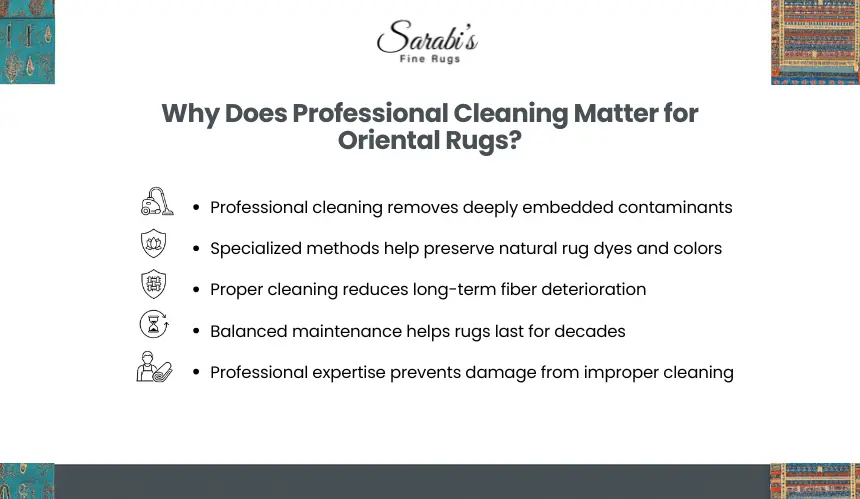
Professional cleaning plays a crucial role in maintaining oriental rugs because it goes beyond surface-level care and targets deep-seated dirt, contaminants, and fiber-level buildup. Unlike regular vacuuming or DIY methods, professional cleaning is designed to preserve the rug’s structure, color, and longevity.
Oriental rugs are often made from natural fibers and crafted using hand techniques, which require specialized care to avoid damage during cleaning.
Did you know? Standard household cleaning methods typically remove only surface dirt, while professional cleaning reaches embedded particles trapped deep within rug fibers.
How Does Professional Cleaning Remove Deep Contaminants?
Over time, dirt, dust, and allergens settle deep into the rug’s foundation. Professional cleaning methods are designed to extract these particles without harming the fibers.
This process helps:
- Remove deeply embedded dirt and debris
- Eliminate allergens and pollutants
- Restore the rug’s original texture and softness
Deep cleaning helps maintain both hygiene and appearance.
How Does Professional Cleaning Preserve Colors?
Oriental rugs often feature intricate patterns and natural dyes that can fade or bleed if not handled correctly. Professional cleaning techniques are tailored to protect these details.
Benefits include:
- Maintaining color vibrancy
- Preventing dye bleeding
- Preserving detailed patterns
This ensures the rug retains its aesthetic value over time.
How Does It Extend the Lifespan of the Rug?
Regular professional cleaning reduces the buildup of abrasive particles that can wear down fibers. By removing these contaminants, the rug experiences less internal damage.
This contributes to:
- Slower fiber deterioration
- Improved durability over time
- Longer overall lifespan
Did you know? Well-maintained oriental rugs can last several decades or longer, especially when cleaned and cared for properly.
Why Is Professional Expertise Important?
Professional cleaners understand:
- Fiber types (wool, silk, blends)
- Appropriate cleaning techniques
- Safe moisture levels and drying methods
This expertise helps prevent accidental damage that can occur with improper cleaning.
By investing in professional cleaning, homeowners can ensure their oriental rugs remain clean, vibrant, and structurally sound for years to come.
Frequently Asked Questions
How often should oriental rugs be professionally cleaned?
Oriental rugs should generally be professionally cleaned every 12 to 18 months. Homes with high foot traffic, pets, or allergy concerns may require cleaning every 6 to 12 months to maintain cleanliness and protect the rug fibers.
Can I clean an oriental rug at home?
Basic maintenance, such as vacuuming, can be done at home, but deep cleaning is best handled by professionals. Improper cleaning methods or excessive moisture can damage delicate fibers and cause color fading or structural issues.
Does regular vacuuming replace professional cleaning?
Vacuuming helps remove surface dust and debris, but it does not eliminate deeply embedded dirt, allergens, or contaminants. Professional cleaning is necessary to maintain the rug’s internal structure and overall hygiene.
How do pets affect oriental rug cleaning frequency?
Pets increase the need for more frequent cleaning due to hair, dander, dirt, and potential accidents. In such cases, rugs may need to be cleaned every 6 to 12 months to prevent buildup and maintain freshness.
What happens if oriental rugs are not cleaned regularly?
Without regular cleaning, dirt and debris accumulate within the fibers, leading to a dull appearance, odor buildup, and gradual fiber damage. Over time, this can reduce the rug’s lifespan and overall quality.
How do I know if my rug needs cleaning sooner?
Signs such as dull color, persistent odors, increased allergy symptoms, or changes in texture may indicate that the rug needs cleaning earlier than scheduled. Monitoring these signs helps prevent long-term damage.
Need a handmade rug cleaned or repaired? See our rug cleaning and repairs service, with pickup and delivery available depending on your location.