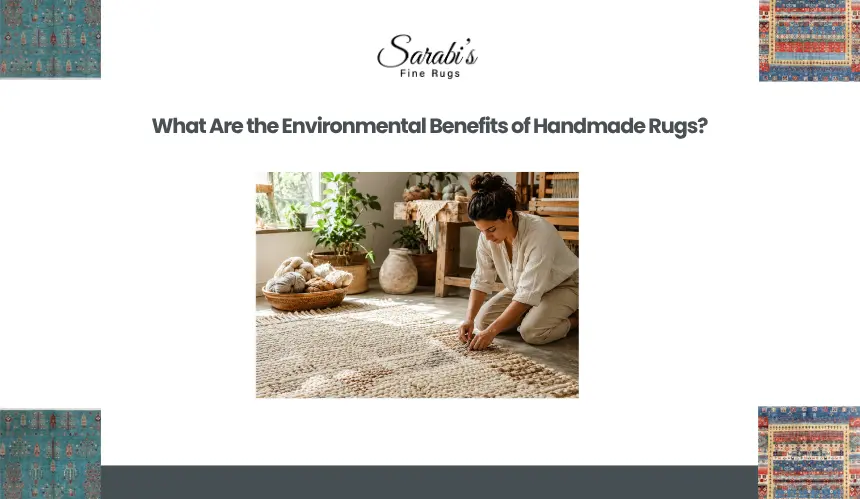
Quick Answer: Handmade rugs offer environmental benefits by using natural, biodegradable materials, low-energy production methods, and long-lasting construction. They reduce waste, limit chemical use, and support sustainable consumption, making them a more eco-friendly alternative to mass-produced rugs.
Key Environmental Benefits at a Glance
- Made from natural fibers like wool, cotton, and silk that are biodegradable
- Produced using low-energy, handwoven techniques instead of heavy machinery
- Use of natural or low-impact dyes reduces chemical pollution
- Long lifespan minimizes frequent replacement and waste generation
- Support for small-scale, ethical production rather than mass manufacturing
Tip: Choosing durable, handmade rugs reduces environmental impact over time by lowering the need for replacements.
Important Note: The sustainability of a rug depends not only on materials but also on how it is produced, maintained, and used throughout its lifecycle.
Sustainability has become a key consideration in home design, yet many everyday décor choices still rely on mass-produced materials with high environmental impact. Rugs, for example, are often chosen based on appearance or price without considering how they are made, what materials are used, or how long they will last. This can lead to repeated replacements, increased waste, and greater overall environmental footprint.
One of the biggest challenges is understanding the difference between truly sustainable products and those that simply appear eco-friendly. Many machine-made rugs use synthetic fibers and chemical dyes that are not biodegradable and require energy-intensive manufacturing processes. While these options may seem convenient, they often contribute to long-term environmental strain through production emissions and disposal waste.
Another issue is the lifecycle of a rug. Products with shorter lifespans require more frequent replacement, which increases resource consumption and waste over time. In contrast, items designed with durability and natural materials can significantly reduce environmental impact, but this is not always immediately visible at the point of purchase.
Understanding the environmental benefits of handmade rugs helps address these concerns at a deeper level. It highlights how material choice, production methods, and long-term use all contribute to sustainability, allowing homeowners to make more informed and responsible decisions.
Tip: When evaluating sustainability, consider the entire lifecycle of the product, not just its initial appearance or labeling.
Important Note: Eco-friendly design is not defined by a single feature but by the combined impact of materials, production, durability, and disposal.
What Makes Handmade Rugs Different in Production?
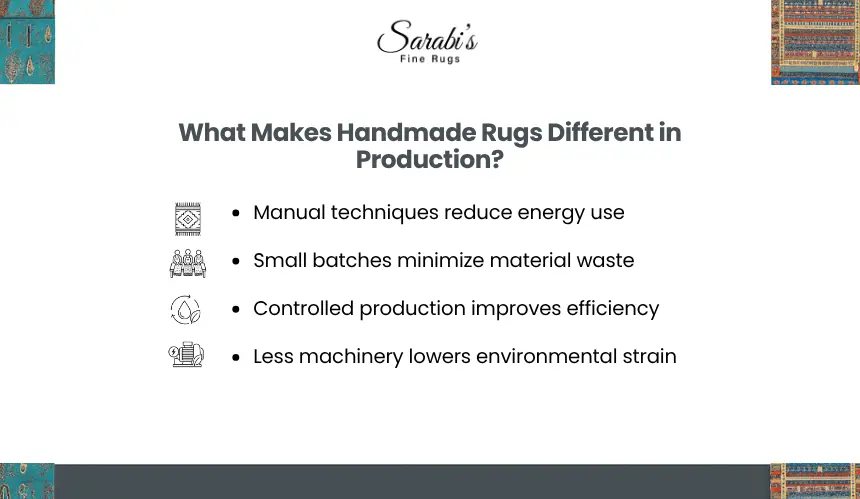
The environmental impact of handmade rugs begins with how they are produced. Unlike industrial manufacturing, handmade rug production follows a slower, more controlled process that relies on manual techniques rather than heavy machinery. This fundamental difference significantly reduces energy use, emissions, and overall environmental strain.
How Handwoven Techniques Reduce Environmental Impact
Handmade rugs are created using hand-knotting or handweaving methods, where each thread is carefully placed without automated systems. This process eliminates the need for large-scale industrial equipment, reducing both energy consumption and mechanical waste.
It also allows for greater precision and less material wastage during production.
Tip: Handmade processes not only lower environmental impact but also result in stronger, more durable construction.
Why Low Energy Consumption Makes a Difference
Machine-made rugs require continuous power to operate large-scale manufacturing systems, including spinning, dyeing, and weaving machines. In contrast, handmade rugs rely primarily on human skill, significantly lowering energy demand.
This reduced energy use directly contributes to a smaller carbon footprint, especially when production occurs on a smaller scale.
Important Note: Lower energy consumption is one of the key factors that makes handmade rugs more sustainable over time.
How Small-Scale Production Minimizes Waste
Handmade rug production is typically carried out in smaller batches, which reduces excess inventory and material waste. Unlike mass production, where overproduction is common, handmade processes are often demand-driven.
This approach ensures that resources are used more efficiently and unnecessary waste is minimized.
Tip: Choosing products made in smaller quantities supports more responsible production practices.
Why Controlled Production Improves Resource Efficiency
Because handmade rugs are produced with careful attention to detail, there is greater control over material usage and process quality. This reduces the likelihood of defects and the need for disposal or reprocessing.
Efficient use of resources at every stage contributes to a more sustainable production cycle.
Important Note: Sustainability in production is not only about materials but also about how efficiently those materials are used throughout the process.
How Natural Materials Improve Sustainability in Handmade Rugs
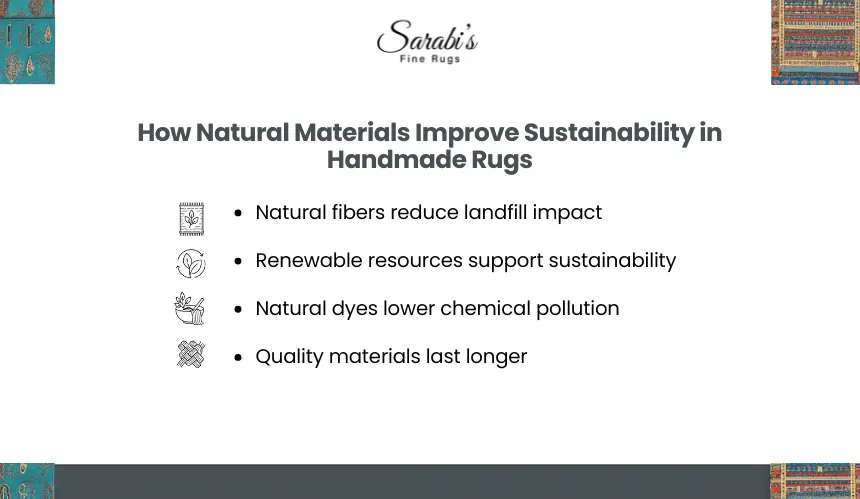
The sustainability of handmade rugs is closely tied to the materials used in their construction. Natural fibers and dyes play a critical role in reducing environmental impact by supporting biodegradability, renewable sourcing, and lower chemical use. These factors contribute to a more sustainable lifecycle compared to synthetic alternatives.
Why Biodegradable Fibers Reduce Environmental Waste
Handmade rugs are commonly made from natural fibers such as wool, cotton, and silk. These materials decompose naturally over time, unlike synthetic fibers that can persist in the environment for decades.
When a rug reaches the end of its lifecycle, biodegradable fibers break down without leaving long-term pollutants, reducing landfill impact.
Tip: Choosing biodegradable materials supports responsible disposal and reduces long-term environmental harm.
How Renewable Resources Support Sustainable Production
Natural fibers are often derived from renewable sources. Wool, for example, is sourced from sheep and can be replenished regularly, while cotton is grown and harvested in cycles.
This renewable nature allows for continuous production without permanently depleting resources, making it more sustainable compared to petroleum-based synthetic fibers.
Important Note: Renewable materials must still be sourced responsibly to maintain their environmental benefits.
Why Natural Dyes Reduce Chemical Pollution
Many handmade rugs use dyes derived from natural sources such as plants, minerals, or insects. These dyes typically contain fewer harmful chemicals than synthetic alternatives, reducing water and soil contamination during production.
Natural dyes also age more gracefully, developing subtle variations rather than degrading unevenly.
Tip: Slight color variation in a rug often indicates the use of natural dyes, which is a positive sustainability factor.
How Material Quality Contributes to Long-Term Sustainability
High-quality natural materials tend to be more durable, allowing handmade rugs to last longer with proper care. This reduces the need for frequent replacement, lowering overall resource consumption.
Durability is a key component of sustainability, as longer-lasting products generate less waste over time.
Important Note: The environmental benefit of natural materials is maximized when they are maintained and used over extended periods rather than replaced frequently.
Why Handmade Rugs Have a Lower Carbon Footprint
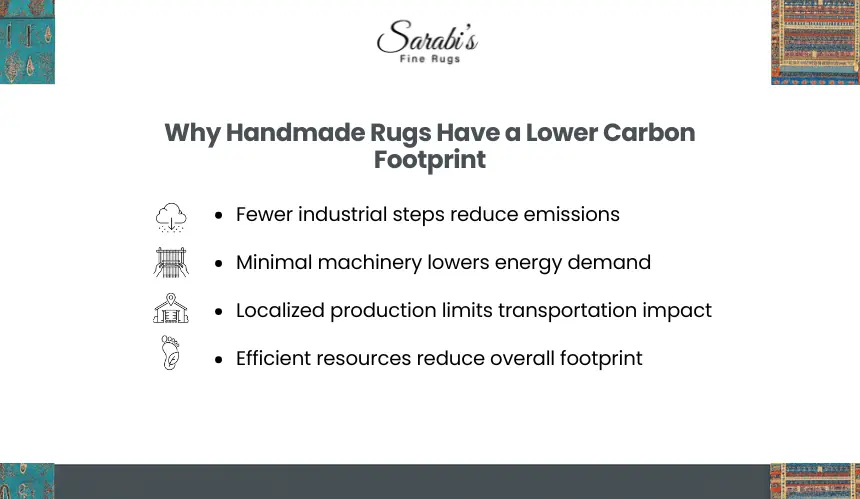
The carbon footprint of a product is largely determined by how it is manufactured, transported, and maintained over time. Handmade rugs generally have a lower carbon footprint because they avoid energy-intensive industrial processes and rely on localized, small-scale production methods. This results in reduced emissions throughout the production cycle.
How Reduced Industrial Processing Lowers Emissions
Machine-made rugs require multiple industrial steps such as fiber processing, chemical treatment, machine weaving, and finishing. Each of these stages consumes energy and generates emissions.
Handmade rugs simplify this process by minimizing mechanical intervention and focusing on manual craftsmanship, which significantly lowers overall environmental impact.
Key differences in processing include:
- Fewer manufacturing stages compared to industrial production
- Minimal reliance on large-scale machinery
- Reduced need for chemical treatments during processing
Tip: Products with fewer processing stages typically have a smaller environmental footprint.
Why Minimal Machinery Use Reduces Energy Consumption
Industrial rug production depends on continuous machine operation, often powered by non-renewable energy sources. In contrast, handmade rugs are created using manual techniques that require little to no electricity during the weaving process.
This shift from machine-based to skill-based production plays a major role in lowering energy demand.
Important Note: Energy savings in production directly translate to lower greenhouse gas emissions over time.
How Localized Production Limits Transportation Impact
Handmade rugs are often produced in smaller, regional settings rather than centralized factories. This can reduce the need for large-scale transportation and distribution networks, which are significant contributors to carbon emissions.
- Shorter supply chains reduce fuel consumption
- Smaller production volumes limit excess shipping
- Local sourcing of materials further lowers transport impact
Tip: Supporting locally or regionally produced goods helps reduce the environmental impact associated with long-distance shipping.
Why Efficient Resource Use Supports a Lower Footprint
Handmade production typically involves careful material handling, resulting in less waste and more efficient use of resources. Because each rug is crafted individually, there is greater control over how materials are used and less likelihood of large-scale production waste.
Important Note: A lower carbon footprint is achieved not only through reduced energy use but also through minimizing waste and optimizing resource efficiency at every stage.
How Durability Contributes to the Environmental Benefits of Handmade Rugs
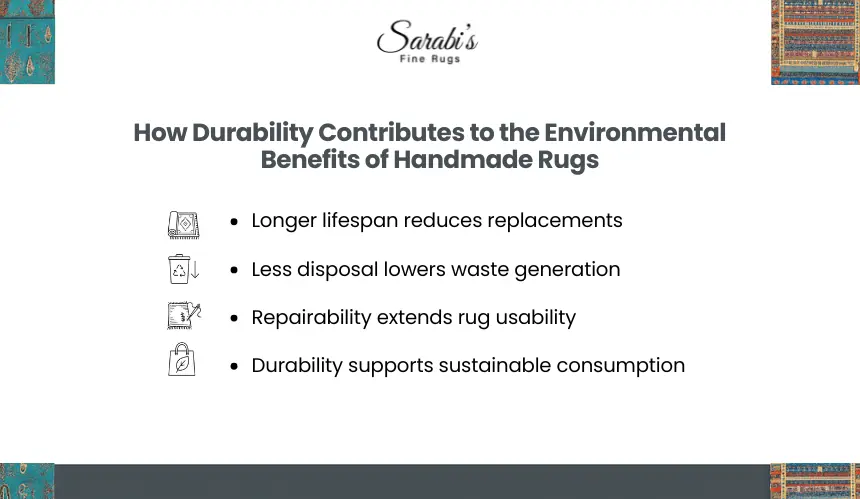
Durability is one of the most important yet often overlooked aspects of sustainability. Handmade rugs are designed to last for decades, which significantly reduces the need for frequent replacement. This long lifespan directly lowers resource consumption, waste generation, and overall environmental impact.
Why a Longer Lifespan Reduces Environmental Impact
Handmade rugs are constructed using strong, time-tested techniques such as hand-knotting, which creates a dense and resilient structure. This allows the rug to withstand daily use without losing its integrity.
Because these rugs last longer, fewer replacements are needed, which reduces the demand for new materials and production.
Tip: Investing in a durable rug once is more sustainable than replacing lower-quality rugs multiple times.
How Reduced Replacement Lowers Waste Generation
Short-lived products contribute significantly to landfill waste. Machine-made rugs, especially those made from synthetic fibers, are often discarded after a few years due to wear or damage.
Handmade rugs, on the other hand, remain usable for extended periods, reducing the volume of discarded materials.
- Fewer replacements mean less manufacturing demand
- Lower disposal rates reduce landfill accumulation
- Durable materials maintain usability over time
Important Note: Waste reduction is a key component of sustainability, and product lifespan plays a major role in achieving it.
Why Repairability Extends Product Life
Another advantage of handmade rugs is their ability to be repaired or restored. Unlike mass-produced rugs, which are often discarded when damaged, handmade rugs can be re-knotted, re-dyed, or reinforced.
This extends their usability and reduces the need for replacement.
Tip: Periodic maintenance and professional care can significantly extend the life of a handmade rug.
How Durability Supports Sustainable Consumption
Sustainable consumption focuses on using products that provide long-term value rather than short-term convenience. Handmade rugs align with this principle by offering both durability and timeless design.
This reduces the cycle of frequent purchasing and disposal, contributing to a more responsible consumption pattern.
Important Note: The environmental value of a product is not just in how it is made, but in how long it remains functional and relevant.
Handmade vs Machine-Made Rugs: Environmental Comparison
Understanding the environmental benefits of handmade rugs becomes clearer when compared directly with machine-made alternatives. The differences lie in production methods, material usage, and long-term environmental impact. While both serve the same functional purpose, their lifecycle impact varies significantly.
How Production Methods Affect Environmental Impact
Handmade rugs rely on manual weaving techniques, which require minimal energy and generate less industrial waste. In contrast, machine-made rugs involve large-scale manufacturing processes that consume significant energy and often rely on automated systems.
- Handmade rugs use low-energy, manual production
- Machine-made rugs depend on continuous industrial machinery
- Industrial production often generates higher emissions and waste
Tip: Fewer production stages generally indicate a lower environmental footprint.
Why Material Differences Influence Sustainability
Material choice plays a major role in environmental impact. Handmade rugs are typically made from natural fibers, while machine-made rugs often use synthetic materials derived from petroleum.
- Natural fibers are biodegradable and renewable
- Synthetic fibers are non-biodegradable and resource-intensive
- Natural dyes reduce chemical pollution compared to synthetic dyes
Important Note: Material sustainability depends on both sourcing and how the material behaves at the end of its lifecycle.
How Waste and Disposal Impact the Environment
Machine-made rugs are often produced in large quantities, leading to excess inventory and higher disposal rates. Their shorter lifespan also contributes to frequent replacement and increased landfill waste.
Handmade rugs, due to their durability and repairability, generate significantly less waste over time.
- Short lifespan increases disposal frequency
- Synthetic materials contribute to long-term environmental pollution
- Durable handmade rugs reduce overall waste generation
Tip: Choosing longer-lasting products is one of the most effective ways to reduce environmental impact.
Why Lifecycle Impact Favors Handmade Rugs
When considering the full lifecycle, production, usage, and disposal, handmade rugs generally have a lower environmental impact. Their combination of natural materials, low-energy production, and extended lifespan makes them a more sustainable option.
Important Note: Sustainability should be evaluated across the entire lifecycle of a product, not just at the point of purchase.
How Choosing Handmade Rugs Supports Eco-Conscious Living
Selecting handmade rugs goes beyond a single purchase decision. It reflects a broader shift toward eco-conscious living, where design choices are aligned with sustainability, responsible sourcing, and long-term value. These rugs contribute to a more mindful approach to home décor by combining environmental responsibility with practical usability.
Why Ethical Craftsmanship Supports Sustainable Practices
Handmade rugs are often produced by skilled artisans using traditional techniques. This form of production emphasizes quality over quantity and reduces reliance on large-scale industrial systems that contribute to environmental strain.
Ethical craftsmanship also encourages responsible use of materials and supports communities that rely on sustainable production methods.
Tip: Choosing handcrafted products helps promote slower, more responsible manufacturing practices.
How Handmade Rugs Fit into Sustainable Home Design
Sustainable home design focuses on reducing environmental impact while maintaining functionality and aesthetics. Handmade rugs align with this approach by offering natural materials, durability, and timeless design.
They integrate easily into eco-conscious interiors that prioritize long-lasting, low-impact materials.
- Natural fibers support biodegradability
- Durable construction reduces replacement frequency
- Timeless designs minimize trend-driven waste
Important Note: Sustainable design is most effective when all elements, including rugs, contribute to long-term usability rather than short-term trends.
Why Long-Term Value Encourages Responsible Consumption
Eco-conscious living involves making choices that reduce the cycle of frequent buying and disposal. Handmade rugs support this by offering extended lifespan and adaptability, allowing them to remain relevant across changing interior styles.
This reduces resource consumption and promotes a more sustainable consumption pattern.
Tip: Investing in high-quality, long-lasting items reduces overall environmental impact over time.
How Consumer Choices Influence Environmental Impact
Every purchase contributes to broader environmental outcomes. Choosing handmade rugs encourages production methods that prioritize sustainability, reduced emissions, and efficient resource use.
By supporting these practices, consumers play a role in promoting environmentally responsible industries.
Important Note: Eco-conscious living is shaped by consistent decisions, where even small choices, such as selecting a rug, contribute to larger environmental benefits.
Frequently Asked Questions
Are handmade rugs eco friendly?
Handmade rugs are generally eco-friendly because they use natural materials, low-energy production methods, and fewer chemicals. Their long lifespan and biodegradability also reduce waste, making them a more sustainable choice compared to synthetic, mass-produced alternatives.
What materials are used in handmade rugs?
Handmade rugs are typically made from natural fibers such as wool, cotton, and silk. These materials are renewable, biodegradable, and more environmentally friendly than synthetic fibers, especially when sourced and processed responsibly.
How do handmade rugs reduce environmental impact?
They reduce environmental impact through low-energy production, minimal machinery use, and natural materials. Their durability also lowers the need for frequent replacement, which helps reduce overall resource consumption and waste generation.
Are natural dyes better for the environment?
Natural dyes are generally better because they contain fewer harmful chemicals and produce less pollution during the dyeing process. They also age more naturally, reducing the need for chemical treatments over time.
Do handmade rugs last longer than machine-made rugs?
Handmade rugs often last significantly longer due to their strong construction and high-quality materials. With proper care, they can remain functional and visually appealing for decades, making them a more sustainable long-term option.
Are handmade rugs worth the cost?
Handmade rugs are often worth the cost because they combine durability, craftsmanship, and sustainability. Their longer lifespan and reduced environmental impact make them a practical investment over time.