Grey Vase Transitional Rug
This grey vase transitional rug is hand knotted in India from wool and silk. Its size can be confirmed in the showroom, where we can measure it against your room and furniture.
The design up close
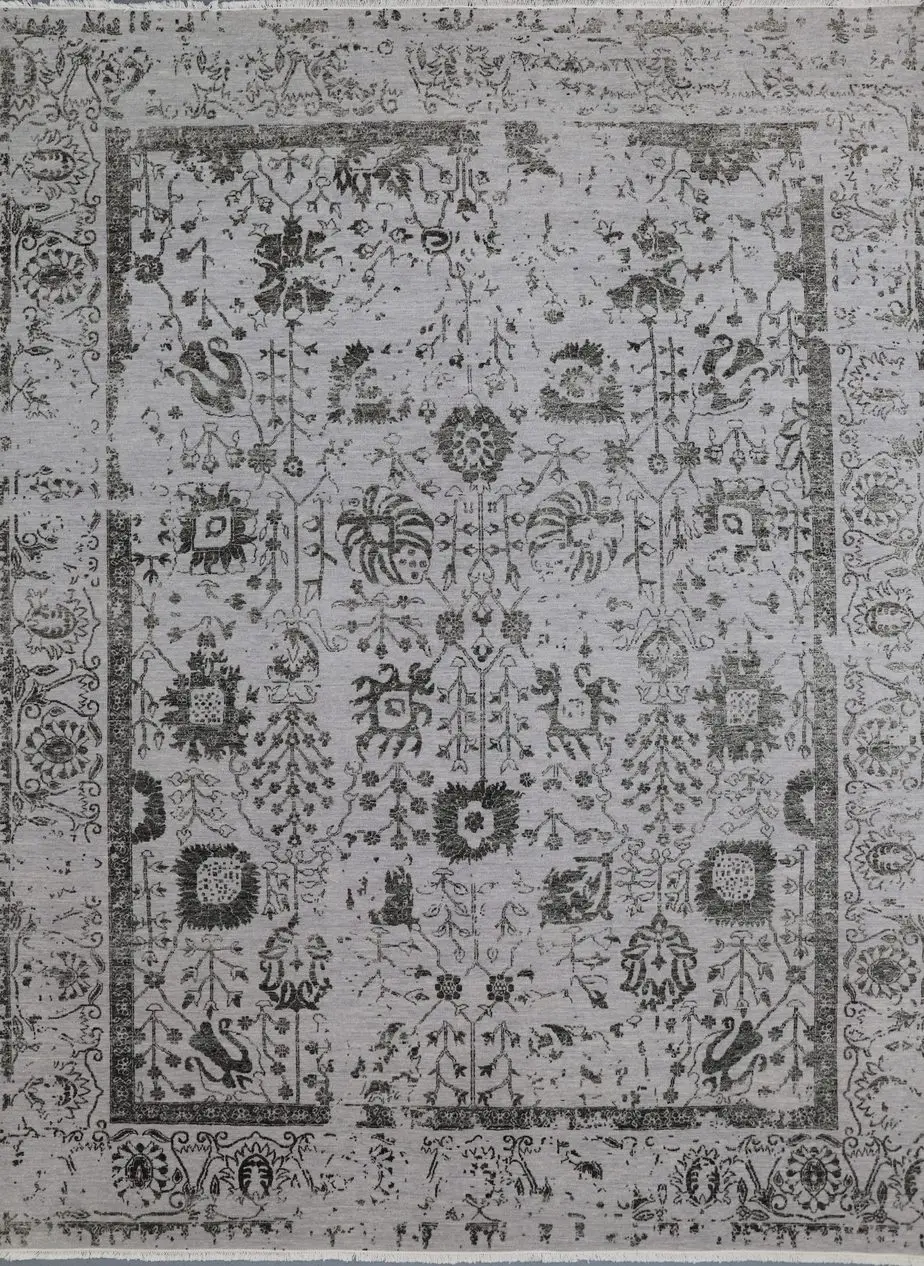
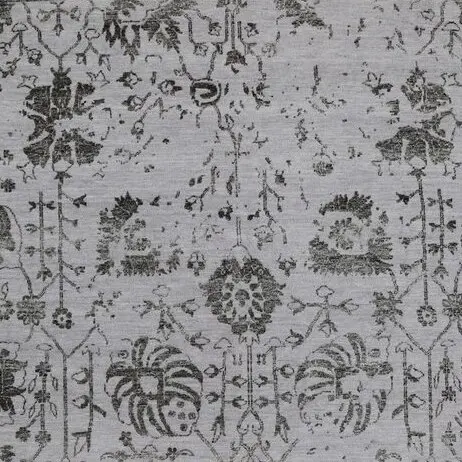
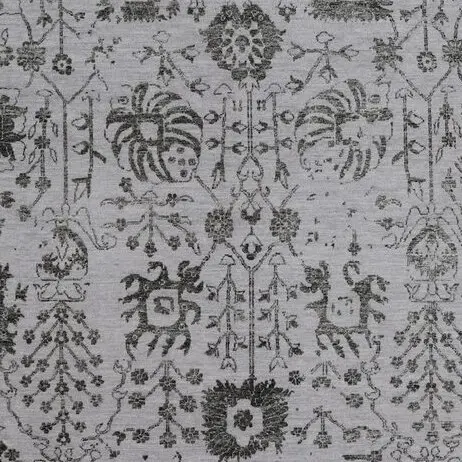
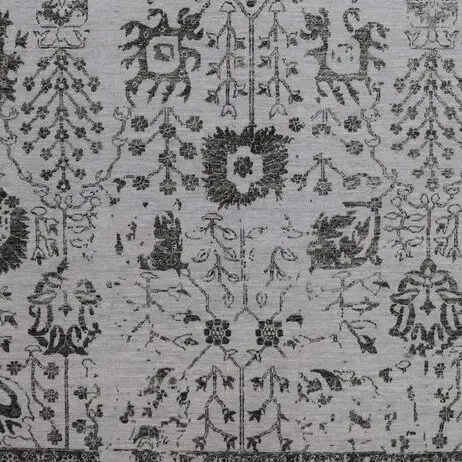
The rug is built around a tall central panel framed by a dark charcoal border. Inside the frame, rows of stylised flowers, rosettes and vine motifs rise up the field, with a larger rosette at the centre and smaller motifs repeated above and below it. Birds sit near the upper corners of the panel and again near the lower edge, drawn in the same charcoal as the rest of the pattern.
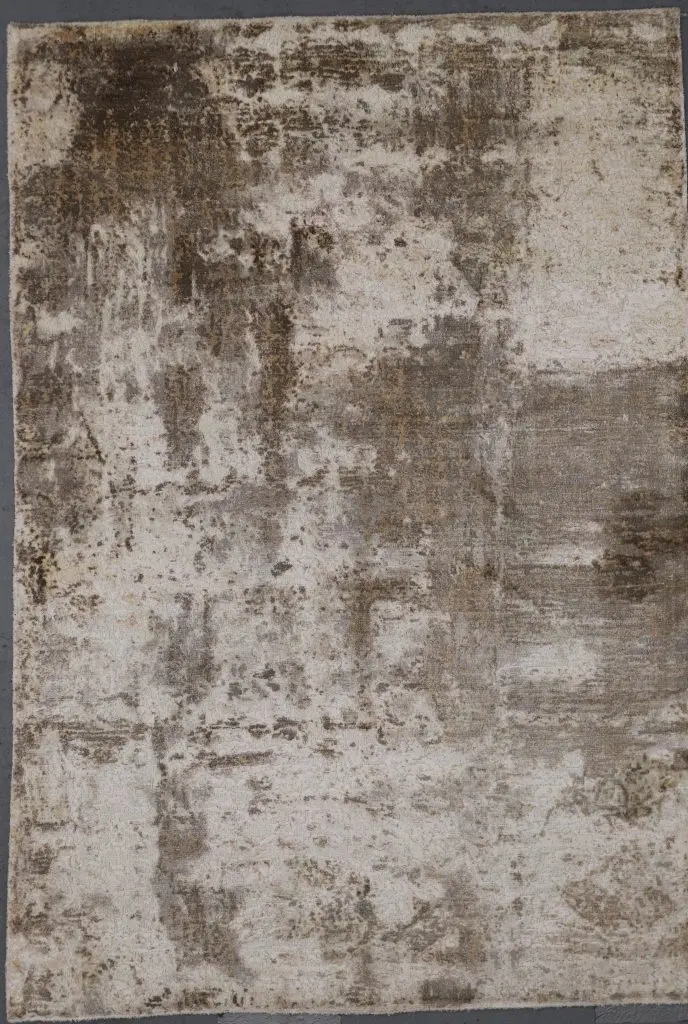
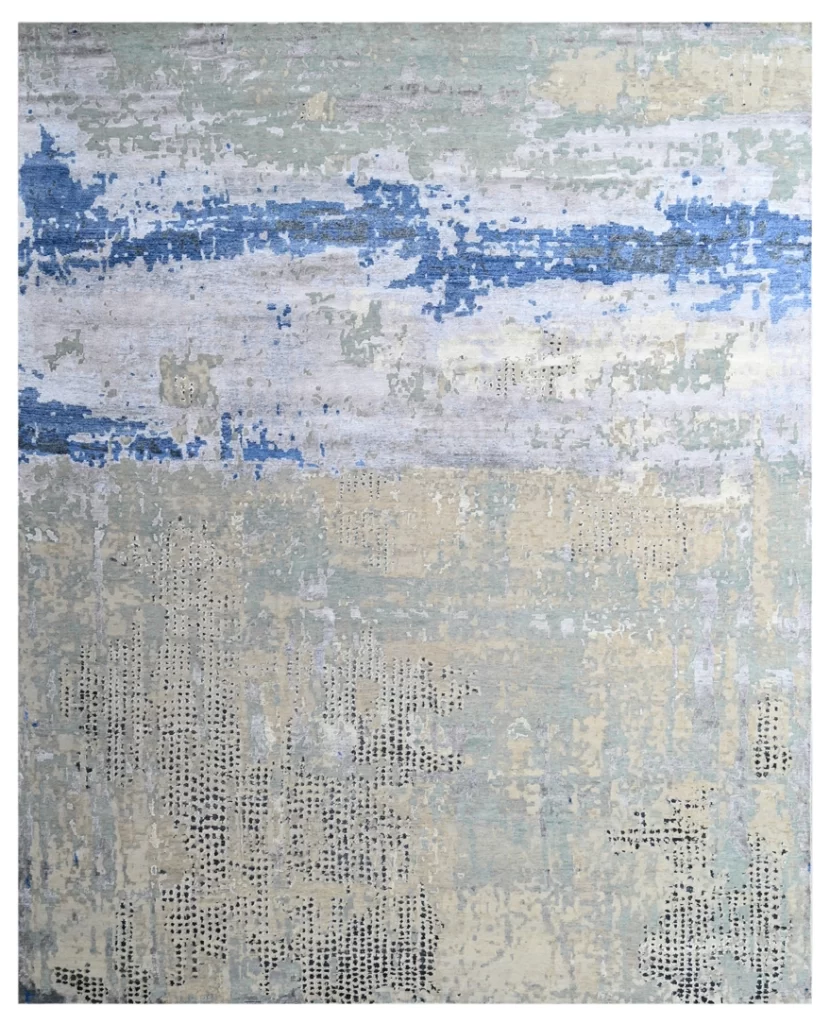
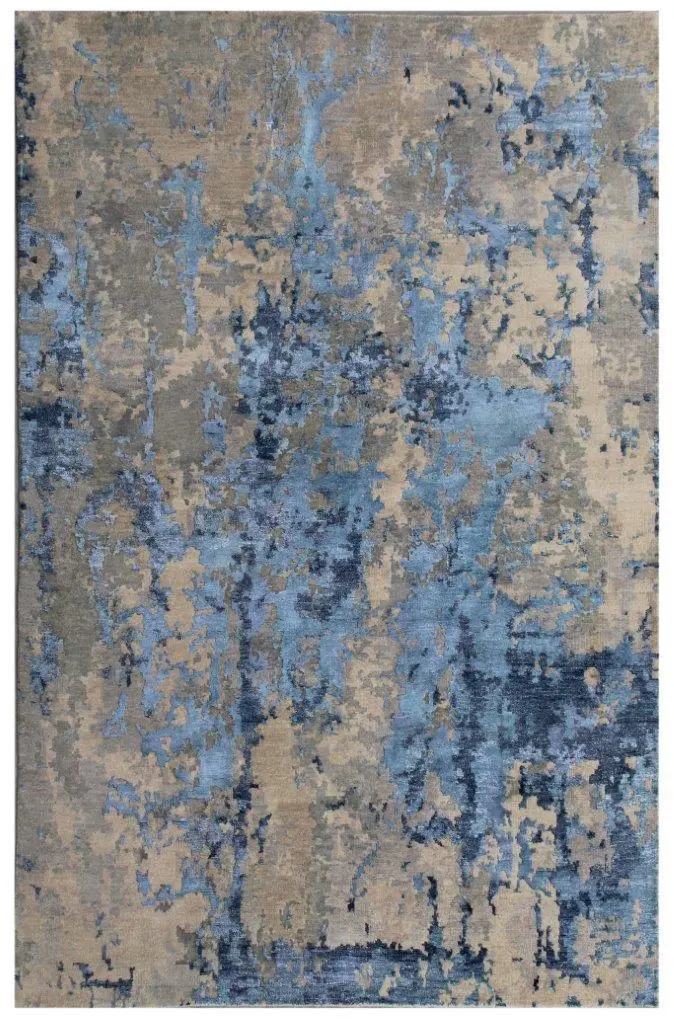
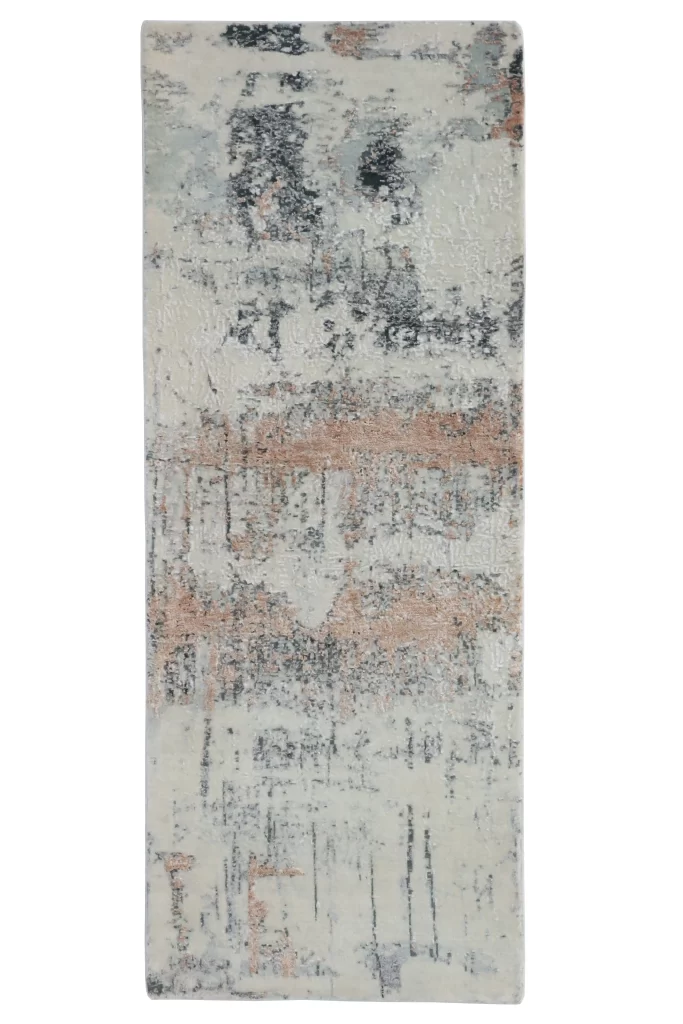
The outer border carries a band of scrolling vines and rosettes, with a wider band of scrolling leaves at the top and bottom. Much of the pattern looks worn, and some motifs break up into patches of pale ground, so the design seems to fade in and out across the field. The ground itself is a soft silver grey, and this grey vase transitional rug keeps its drawing in darker grey and charcoal. From a distance the ground reads as an even grey, while up close the darker drawing separates into individual vines and rosettes.
Indian rugs and their weaving centres
India has a long hand-knotted rug tradition, with weaving centres including Agra and the Bhadohi and Mirzapur area of Uttar Pradesh. Agra has been a carpet-weaving centre since at least the 17th century, and the Bhadohi and Mirzapur area is the largest carpet-making region in India. Indian workshops weave many modern and transitional designs, often to order, in a wide range of colours. This grey vase transitional rug belongs to that modern group.
How it is made
Each knot is tied by hand on a loom, and the pile is then cut level. This grey vase transitional rug is made from wool and silk, and our records note German dyes. Wool is the most common pile in Indian rugs. Some rugs mix wool with silk, and this one is made from that blend.
Sizing this grey vase transitional rug
The size of this rug can be confirmed in the showroom, where we can talk through how a rug of this design would sit in your room. Bring your room measurements and the list of furniture you plan to place on it. Grey tones like these suit timber floors, white or pale walls and charcoal or cream furnishings, and the drawing reads best from a short distance across the room. Our team can also talk through how the grey tones sit against your existing rugs and furniture.
Looking after your rug
Vacuum it on a suction-only setting, or with the beater bar switched off, so the brush does not pull at the knots. Turn it around every six to twelve months so sun and foot traffic wear it evenly. Blot spills with a clean white cloth and cold water rather than rubbing them in. Rubbing spills can dull silk, so when it needs a full clean, choose a cleaner who washes handmade rugs by hand and handles that fibre with care.
Put a good underlay beneath it. It stops the rug sliding on timber or tiles, adds cushioning and takes some of the wear off the pile. Moths like wool in dark, quiet spots, such as the part of a rug under a sofa, so vacuum those areas often and lift the furniture now and then.
See it before you buy
Visit our showroom at 307 Penshurst St, North Willoughby, open every day from 10 am to 4:30 pm, to see this grey vase transitional rug in person. If you would rather judge it in your own room, with your own light and furniture, book a home trial and we will bring a selection to you.
You can see this grey vase transitional rug in our showroom or at home. Browse more Modern Transitional, or ask about a custom made rug in your own size and colour. Read more about rugs and carpets.