Copper Bokhara Rug
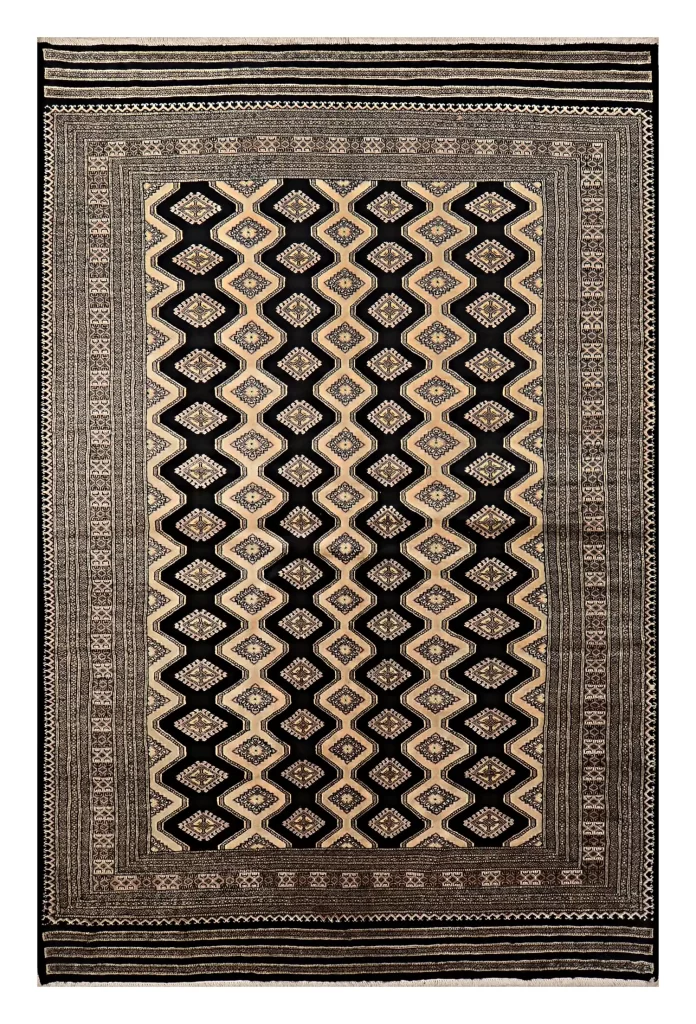
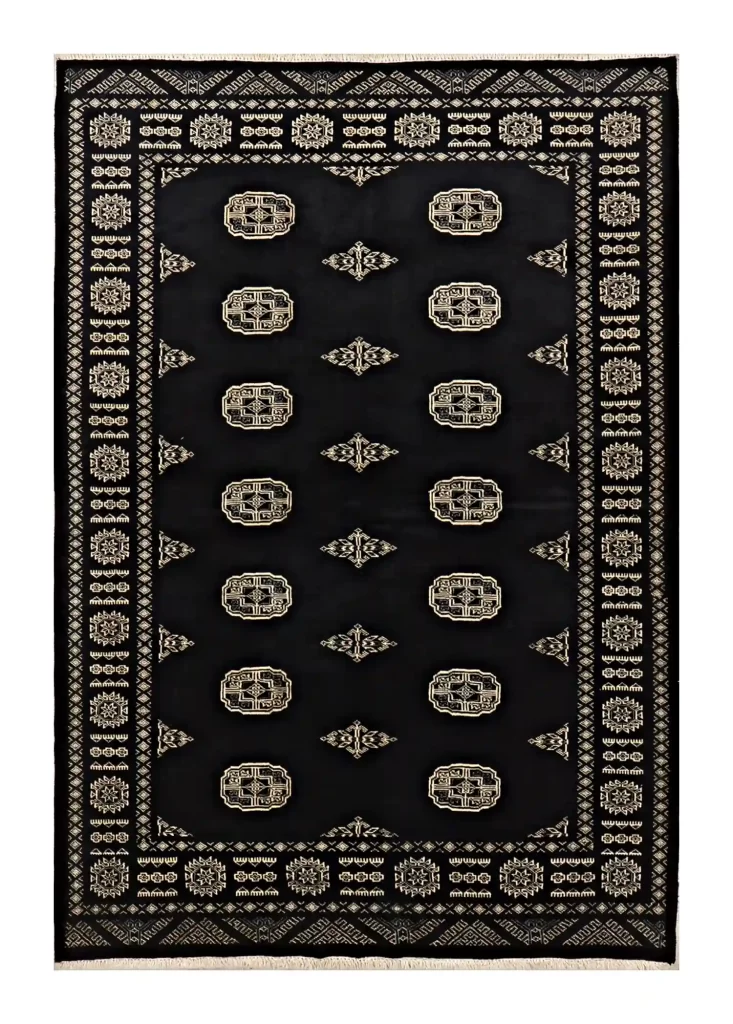
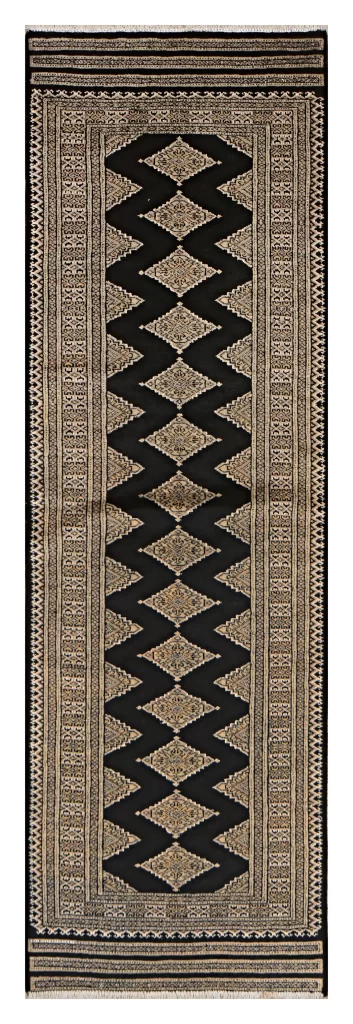
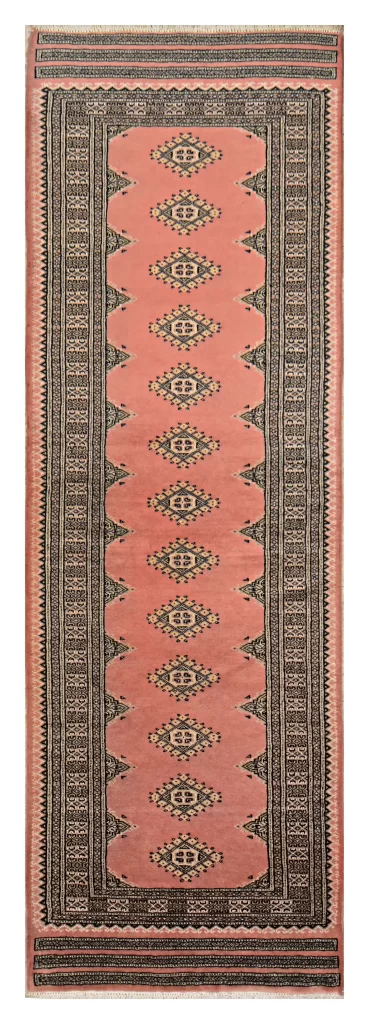
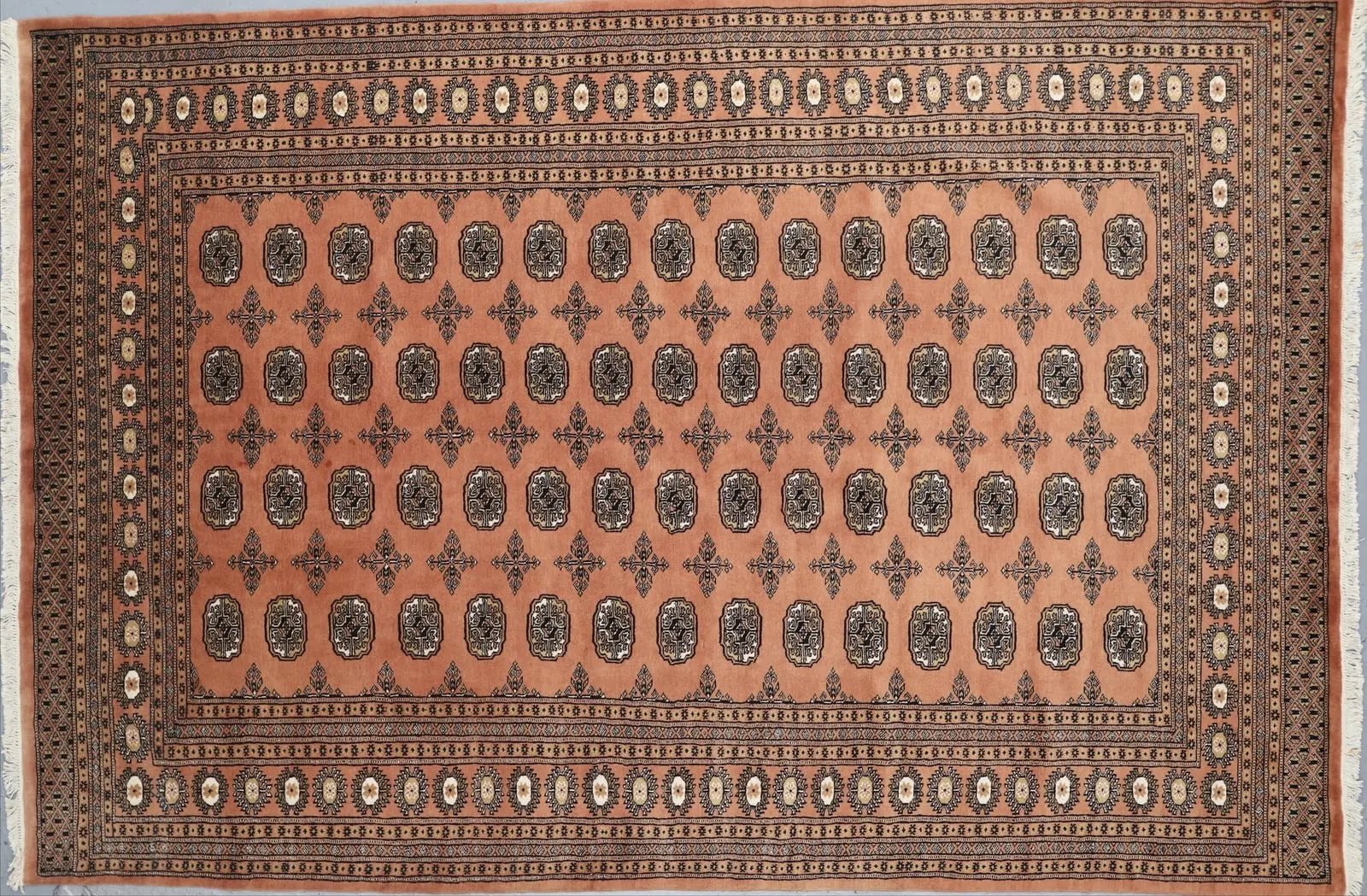
This copper Bokhara rug is hand knotted in Pakistan from wool, measuring 300 x 202 cm, or about 6.1 square metres. Rows of dark gul motifs sit on a warm copper field, inside borders of black, tan and cream.
The design up close
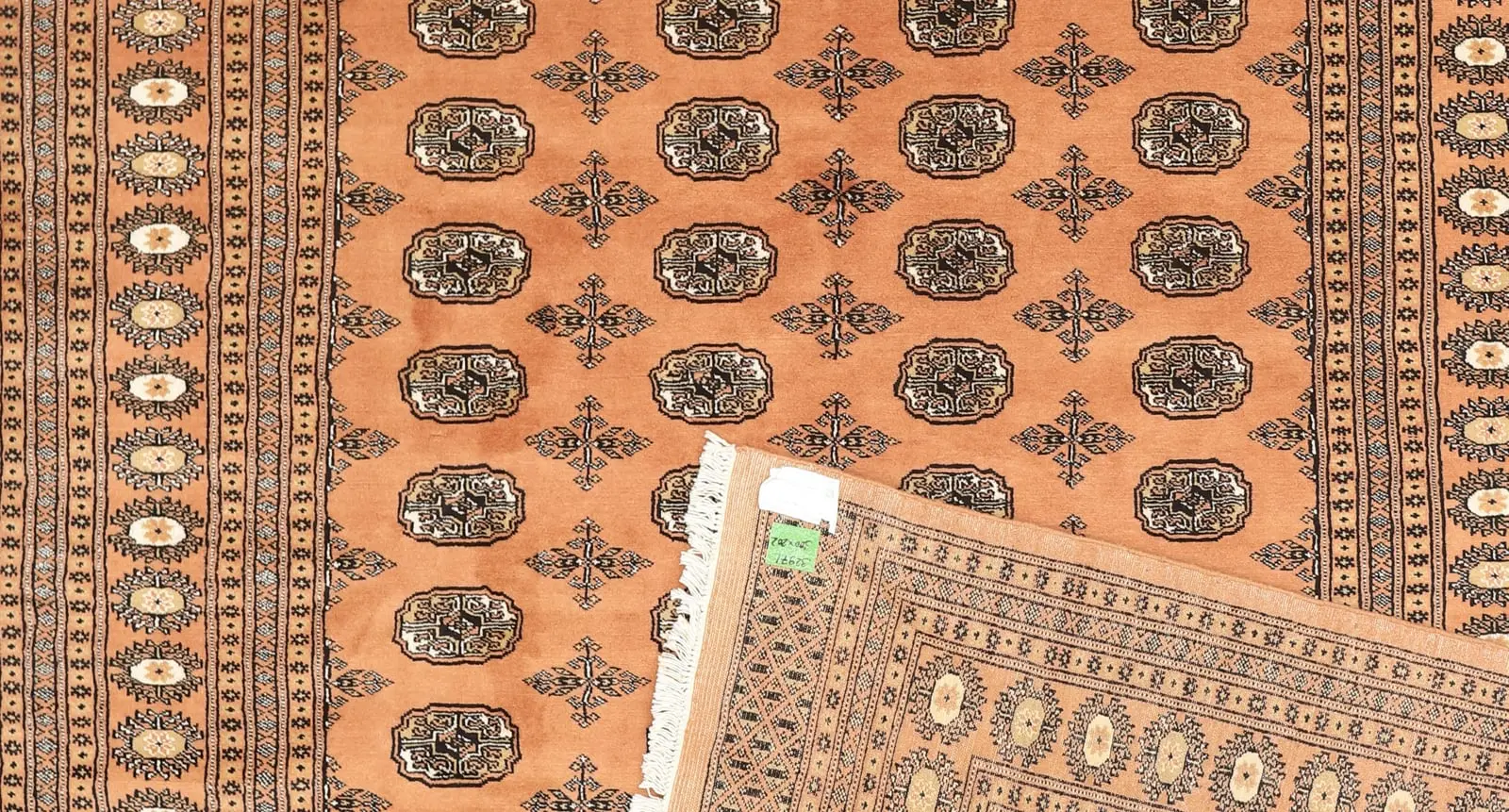
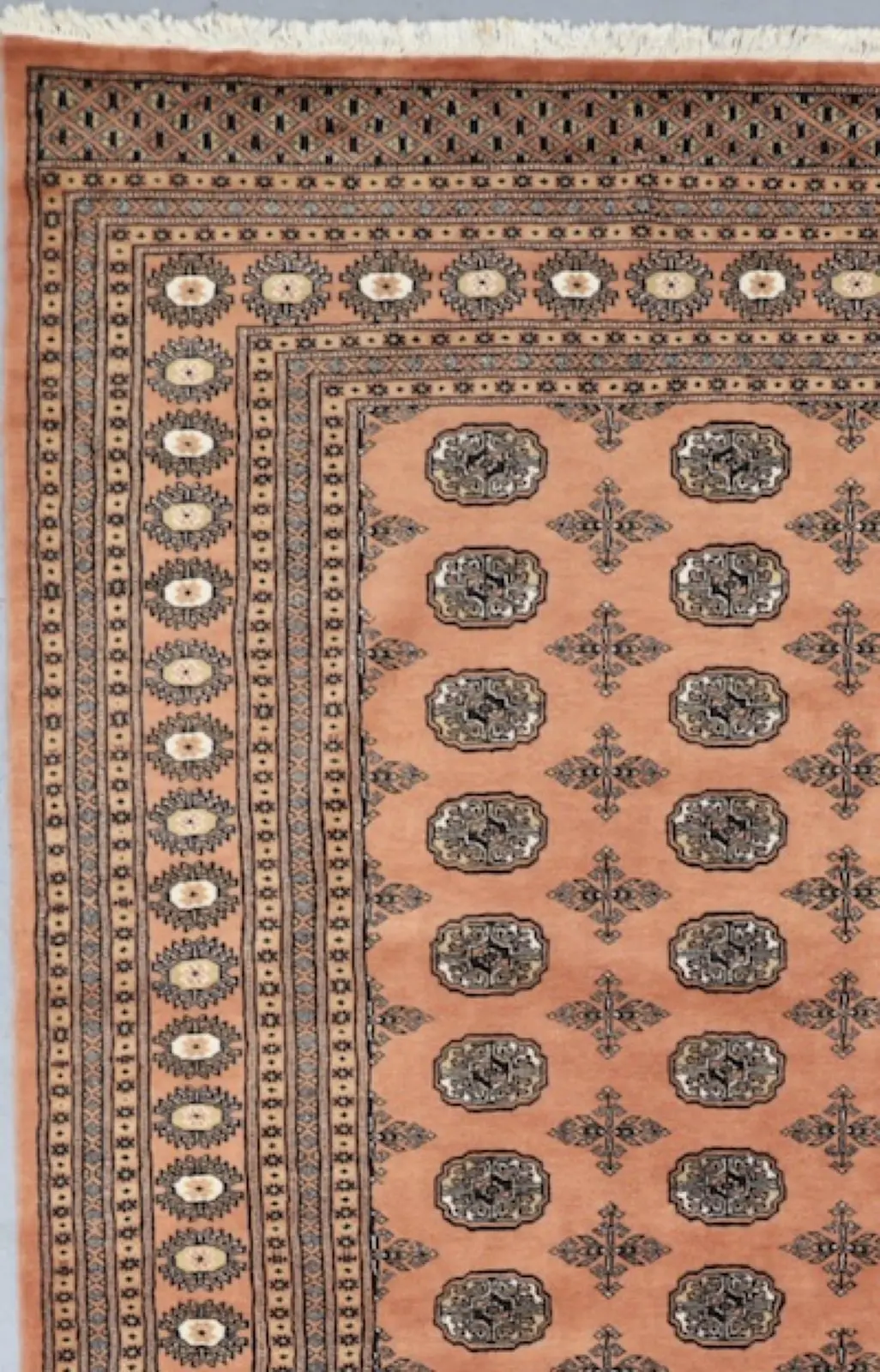
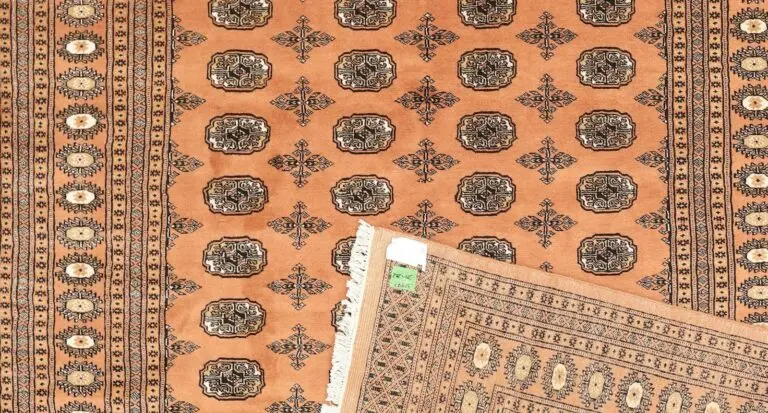
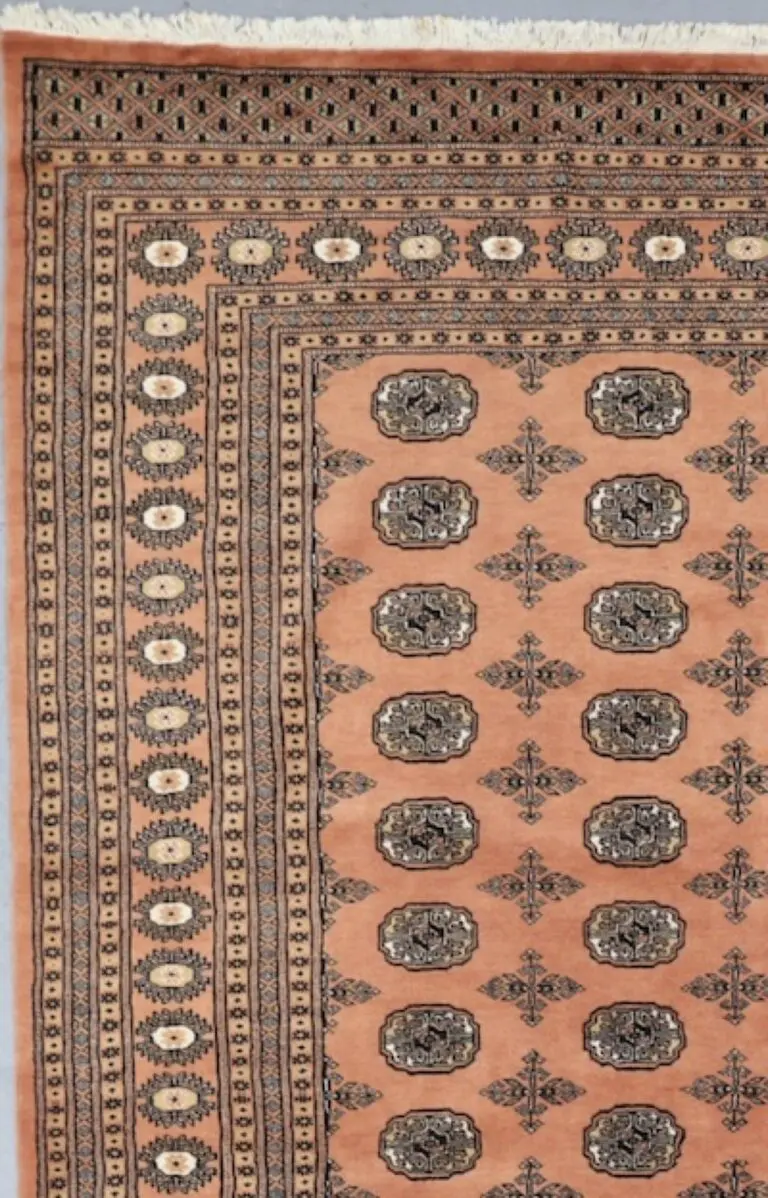
The field holds four rows of fifteen oval guls, drawn in black with cream and tan highlights, with a small cross-shaped motif between each pair. The copper ground between them is a soft, peachy rust that shifts slightly in tone across the rug.
Around the field, several thin bands lead to a main border of smaller guls set on copper, each with a cream centre. On the two long sides, a black border carries a diamond lattice in copper, and a short white fringe finishes the ends.
This copper Bokhara rug has the same dark outlines on every motif, which keeps the rows sharp.
About Pakistani rugs and Bokhara designs
Bokhara designs are rows of octagonal motifs called guls, taken from Turkmen tribal rugs and usually set on a red ground. They are often called Bokhara rugs, after the old trading city.
Pakistan is known for finely knotted wool rugs in classic designs such as Bokhara and Jaldar, with repeating motifs that work in traditional and modern rooms alike. Hand-knotted rug making grew rapidly in Pakistan after independence in 1947, with Lahore among the early centres.
Many Pakistani rugs are washed after weaving, which gives the wool a soft sheen. Their fine knotting and repeating designs make them a good choice for dining rooms, studies and living rooms.
How a copper Bokhara rug is made
This rug is hand knotted on a loom, one knot at a time, with a wool pile trimmed level afterwards. A Bokhara depends on each gul being the same size, row after row, and on outlines that stay crisp across the whole field.
Turn the rug over and the design shows clearly on the back, knot by knot, which is a simple way to tell a hand knotted rug from a printed one.
Colour in your room
Copper sits well with cream or warm white walls, oak or walnut floors and leather in tan or chocolate. It also works with navy or sage cushions if you want a cooler contrast to the warm field.
Sizing it for your room
At 300 x 202 cm, this copper Bokhara rug covers about 6.1 square metres. In a living room, a three-seat sofa of about 2.2 m leaves roughly 40 cm of rug showing past each end, and the front legs of two armchairs can rest on it around a coffee table.
Under a dining table of about 180 x 90 cm, which seats six, the rug leaves about 60 cm at each end and 56 cm along each side. Chairs pulled back at the ends stay on the rug.
Looking after your rug
Vacuum it on a suction-only setting, or with the beater bar switched off, so the brush does not pull at the knots. Turn it around every six to twelve months so sun and foot traffic wear it evenly. Blot spills with a clean white cloth and cold water rather than rubbing them in. When it needs a full clean, choose a cleaner who washes handmade rugs by hand.
Put a good underlay beneath it. It stops the rug sliding on timber or tiles, adds cushioning and takes some of the wear off the pile. Moths like wool in dark, quiet spots, such as the part of a rug under a sofa, so vacuum those areas often and lift the furniture now and then.
See it before you buy
Visit our showroom at 307 Penshurst St, North Willoughby, open every day from 10 am to 4:30 pm, to see this copper Bokhara rug in person. If you would rather judge it in your own room, with your own light and furniture, book a home trial and we will bring a selection to you.
Browse more Traditional rugs, or ask about a custom made rug in your own size and colour.