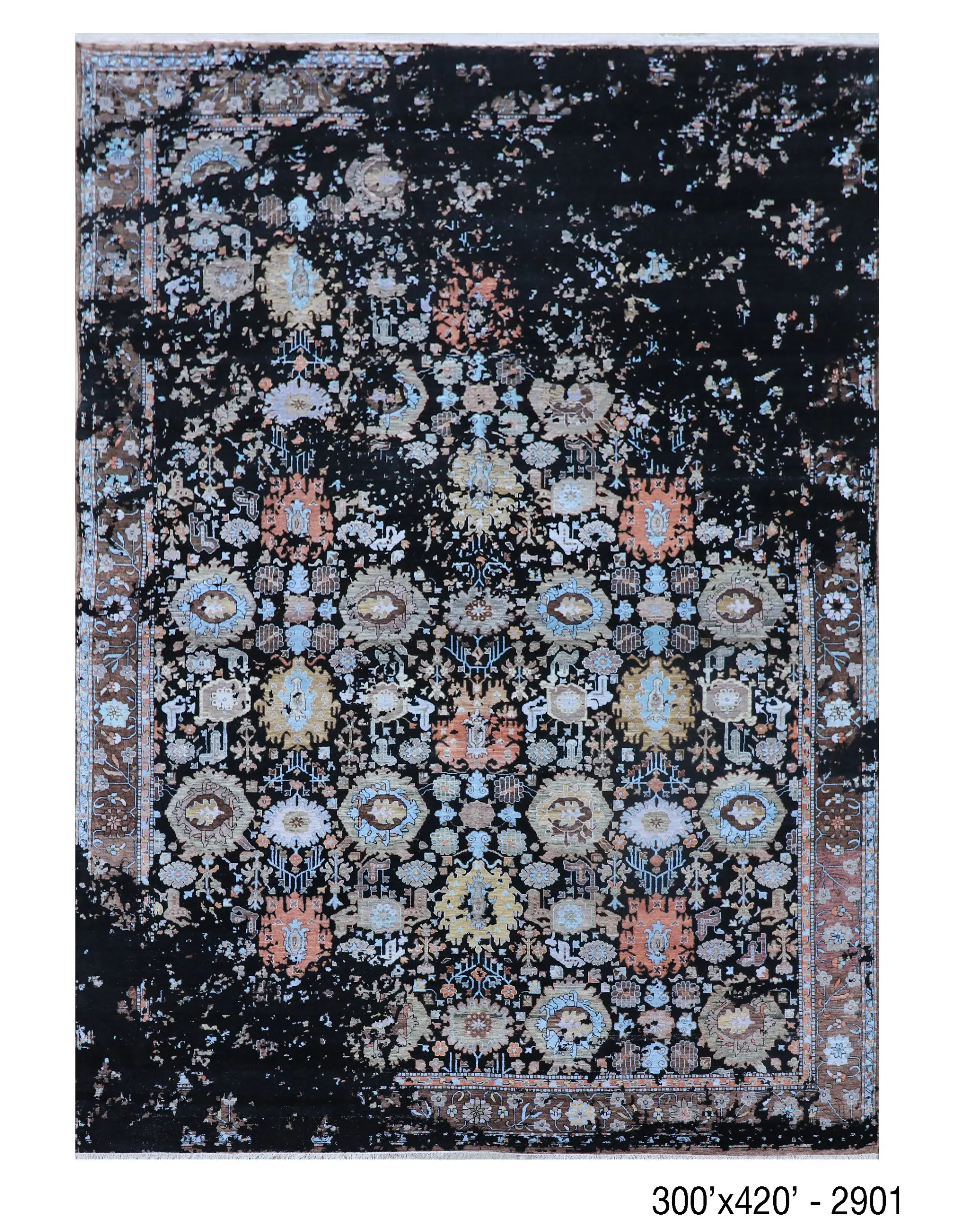
Blue Transitional Wool Rug
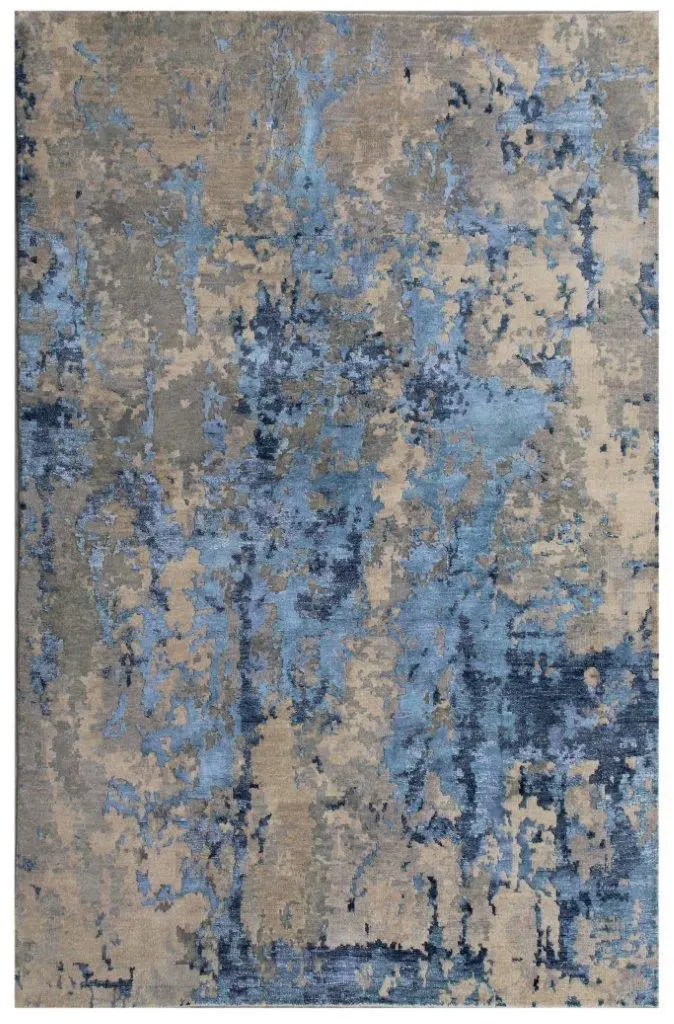
This blue transitional wool rug was hand knotted in India from wool and silk, and its exact size can be confirmed in the showroom. Its ground is near black, with a mottled, worn-looking wash across the field, and the pattern picks out pale blue, gold, rust and beige. Our records note German dyes.
The design up close
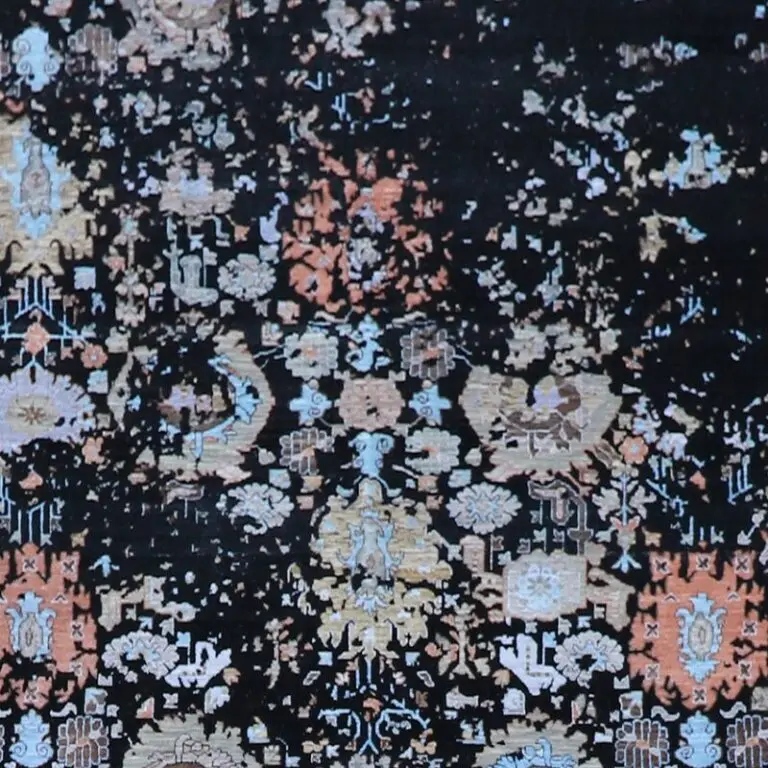
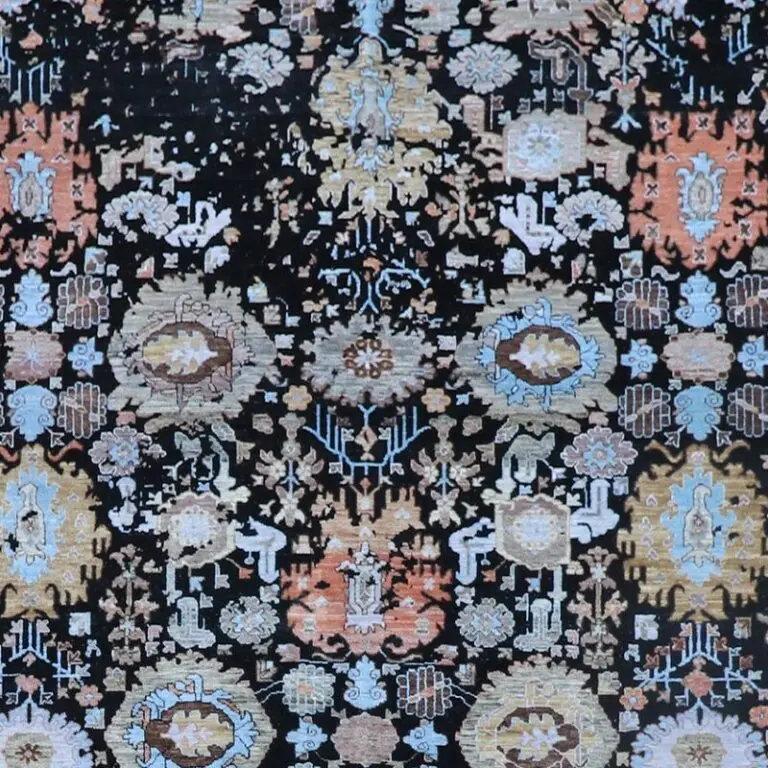
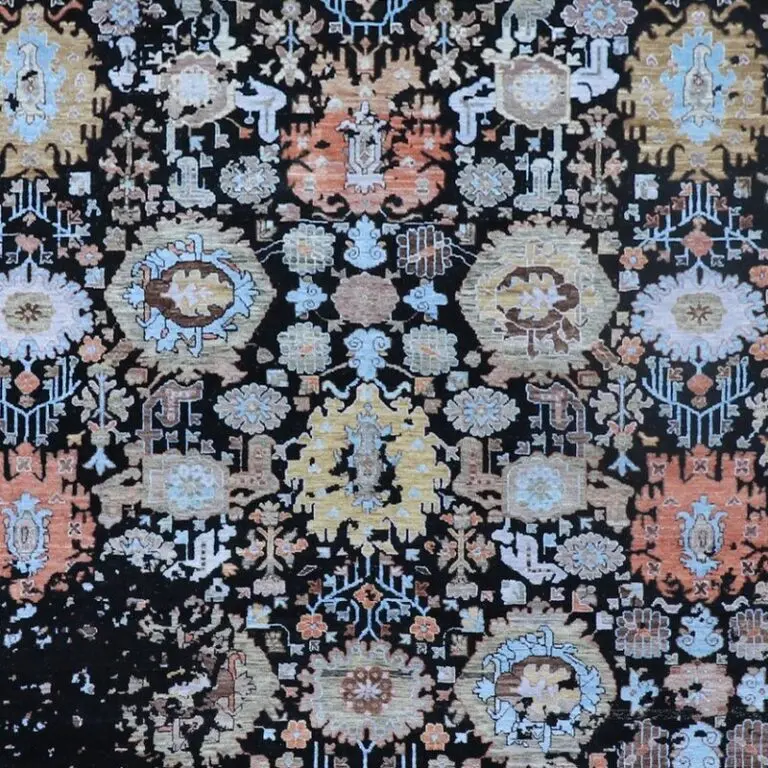
The field is covered with rows of oval medallions in beige, gold and rust, each ringed by small flowers and motifs. Pale blue accents outline the medallions and the small motifs between them, so the pattern reads as a fine, layered texture. Rust and orange medallions sit toward the centre and the top of the field, and the edges are built from small repeating shapes.
Seen from across the room, the medallions read as a steady pattern. Seen closer, the rows of small flowers and the pale blue outlines show clearly.
A tan and brown border with small floral motifs frames the field. The mottled wash across the dark ground makes the rug look more like a painted surface than a flat pattern.
How a blue transitional wool rug is made
Indian hand knotted rugs come from a long tradition, with weaving centres including Agra and the Bhadohi and Mirzapur area of Uttar Pradesh. Indian workshops weave many modern and abstract designs, often to order. Wool is the most common pile, and some rugs mix wool with silk, as this one does.
Transitional style and where it works
Our category tags place this rug among modern transitional pieces, which blend modern and traditional designs. Its medallions and floral motifs look at home beside classic furniture, while the dark ground suits contemporary rooms. Indian rugs in this style work well in living rooms and bedrooms. If you want a rug that sits between a modern room and a traditional one, compare this piece side by side with plainer rugs before you choose.
Sizing it for your room
The exact size of this rug can be confirmed in the showroom, so you can see how it sits in the space before you decide. Bring a tape measure and ask us to check the dimensions against your furniture first. Choose by what your furniture needs: the front legs of a sofa and armchairs around a coffee table, or a dining table with the chairs pulled out. A blue transitional wool rug is worth comparing against your own floor plan before you buy.
Looking after your rug
Vacuum it on a suction-only setting, or with the beater bar switched off, so the brush does not pull at the knots. Turn it around every six to twelve months so sun and foot traffic wear it evenly. Blot spills with a clean white cloth and cold water rather than rubbing them in. When it needs a full clean, choose a cleaner who washes handmade rugs by hand.
Rubbing spills can dull silk, so this rug needs a cleaner who handles that fibre by hand. Put a good underlay beneath this blue transitional wool rug. It stops the rug sliding on timber or tiles, adds cushioning and takes some of the wear off the pile. Moths like wool in dark, quiet spots, so vacuum under furniture often.
See it before you buy
Visit our showroom at 307 Penshurst St, North Willoughby, open every day from 11 am to 4:30 pm, to see this blue transitional wool rug in person. If you would rather judge it in your own room, with your own light and furniture, book an in-home viewing and we will bring a selection to you.
Browse more Modern Transitional, or ask about a custom made rug in your own size and colour. Read more about rugs and carpets.