Beige Pictorial Gabbeh Rug
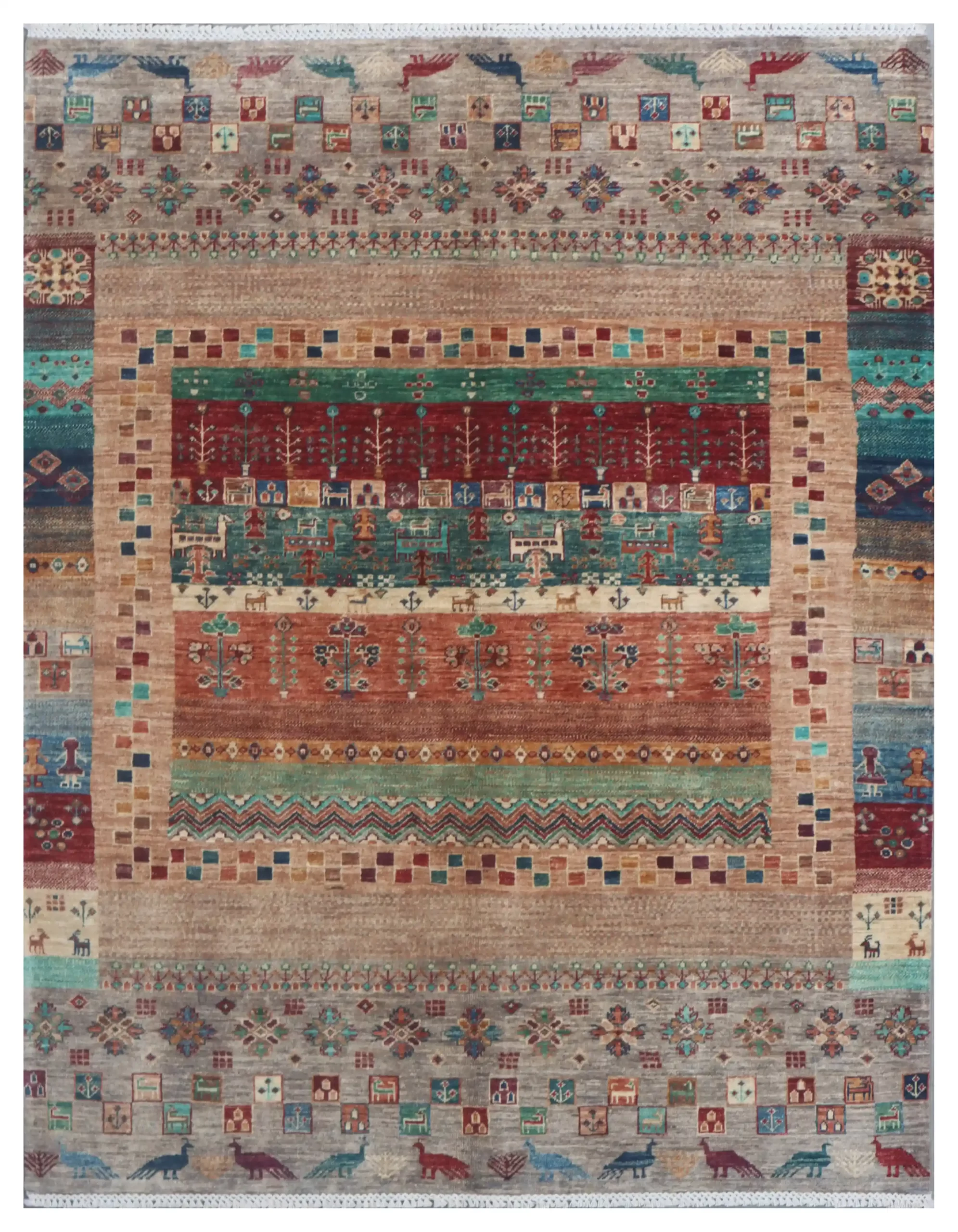
This beige pictorial Gabbeh rug was hand knotted in Afghanistan in wool and measures 200 x 157 cm, which is about 3.1 square metres. Its ground is a warm taupe, and the centre is built from horizontal bands of green, red, teal, cream and rust, with small trees and animals set into several of them.
The design up close
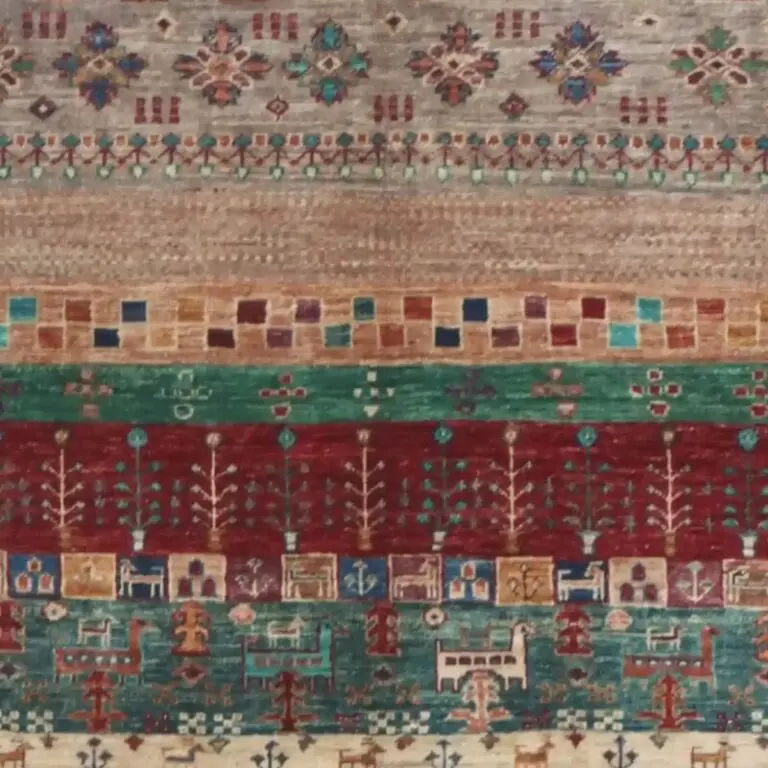
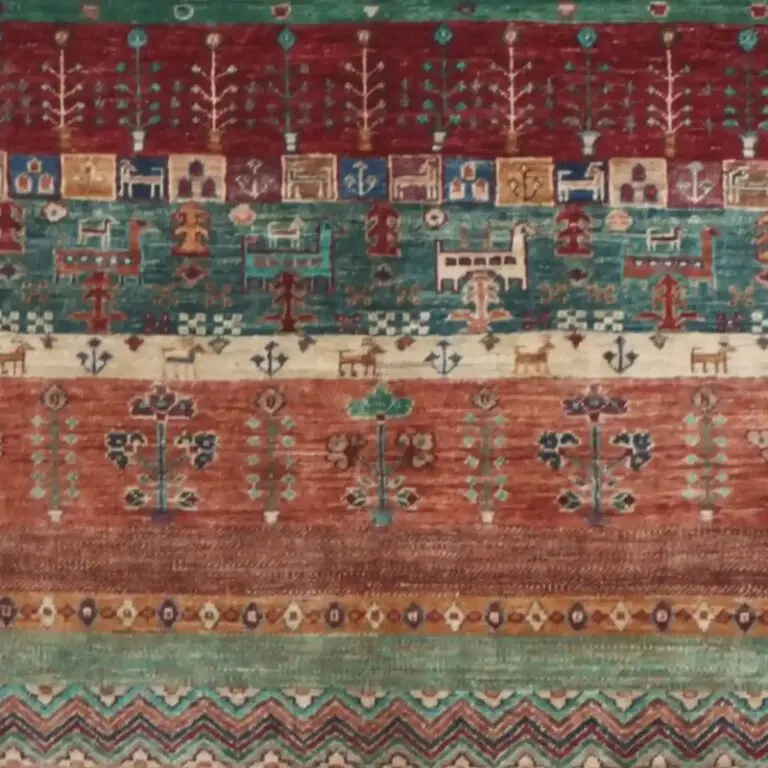
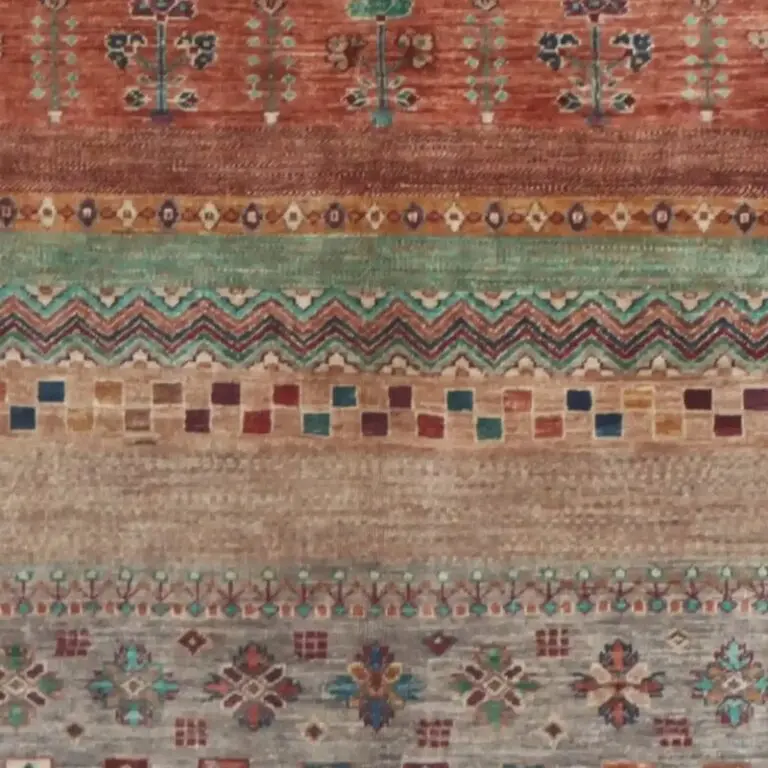
In this beige pictorial Gabbeh rug, the centre panel is made of stacked bands. A green band sits at the top, then a deep red band with rows of small stylised trees, then a teal band with tiny animals. A cream band carries more small animals, and a rust band below it has plant motifs in teal, cream and blue. Near the foot of the panel, a green band and a zigzag band in red and cream close the field.
A ring of small squares in red, blue, teal and cream frames the panel. Beyond it the taupe margin carries rows of small rosettes in green, rust and blue, and each side has a strip of teal and red bands holding tiny figures. Along the top, small birds in red, green and blue sit on squares, and along the bottom a row of birds in red, blue and teal crosses the margin.
On this beige pictorial Gabbeh rug, the red and rust bands are the widest in the centre panel, so the heaviest colour sits in the middle. The green and teal bands are thinner, so they read as edges between the wider bands.
Where Gabbeh rugs come from
Gabbeh rugs come from a nomadic weaving tradition: a thick, soft pile, open fields of colour and simple motifs, sometimes small figures or animals. The Gabbeh belongs to the tribes of the Zagros mountains in Iran, including the Lori and Qashqai, who wove simple rugs mainly for their own households. Weavers in Afghanistan now make Gabbeh rugs in the same spirit.
How it is made
Weavers tie each knot by hand on a loom, then shear the pile level. This beige pictorial Gabbeh rug is double hand knotted, so each knot is tied around two warp threads. Our records note vegetable dyes for this rug.
Sizing this beige pictorial Gabbeh rug
The 200 x 157 rug covers about 3.1 square metres. The front legs of a sofa and two armchairs can rest on it around a coffee table. A six-seat dining table of about 180 x 90 cm would leave only about 10 cm of rug at each end, so for this beige pictorial Gabbeh rug a living room, study or bedroom is the better fit than a dining room.
Looking after your rug
Vacuum it on a suction-only setting, or with the beater bar switched off, so the brush does not pull at the knots. Turn it around every six to twelve months so sun and foot traffic wear it evenly. Blot spills with a clean white cloth and cold water rather than rubbing them in. When it needs a full clean, choose a cleaner who washes handmade rugs by hand.
Put a good underlay beneath it. It stops the rug sliding on timber or tiles, adds cushioning and takes some of the wear off the pile. Moths like wool in dark, quiet spots, such as the part of a rug under a sofa, so vacuum those areas often and lift the furniture now and then.
See it before you buy
Visit our showroom at 307 Penshurst St, North Willoughby, open every day from 10 am to 4:30 pm, to see this beige pictorial Gabbeh rug in person. If you would rather judge it in your own room, with your own light and furniture, book a home trial and we will bring a selection to you.
Browse more Gabbeh Rugs, or ask about a custom made rug in your own size and colour. Read more about Gabbeh rugs.