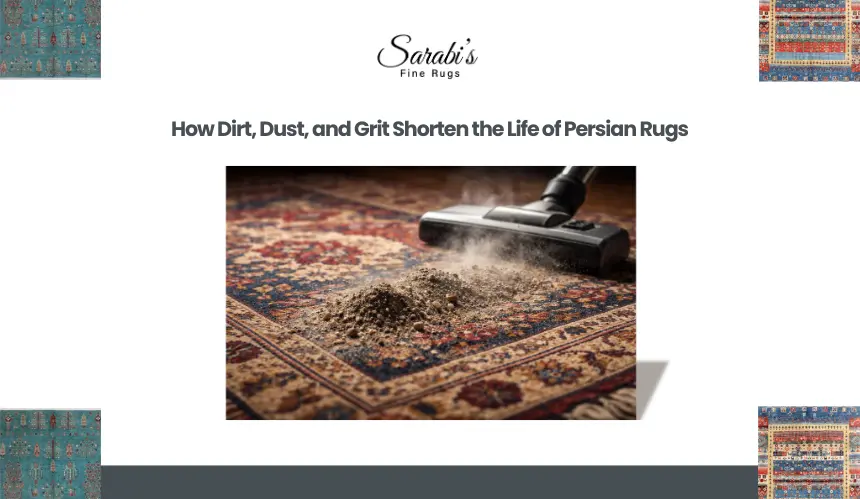
Persian rugs are designed to last for generations, yet many experience premature wear due to factors that are not immediately visible. Dirt, dust, and grit accumulate gradually within the rug’s structure, causing damage long before surface discoloration becomes noticeable.
Shopping for one? See our Persian rugs in Sydney at our North Willoughby showroom.
Homeowners researching Persian rug cleaning in Willoughby, Australia, are often responding to fading, thinning, or fiber breakdown without realizing that embedded particles are the primary cause. Understanding how everyday contaminants interact with rug fibers helps explain why proper care is essential for preserving both beauty and structural integrity.
Why Fine Rug Fibers Are Especially Vulnerable to Abrasion
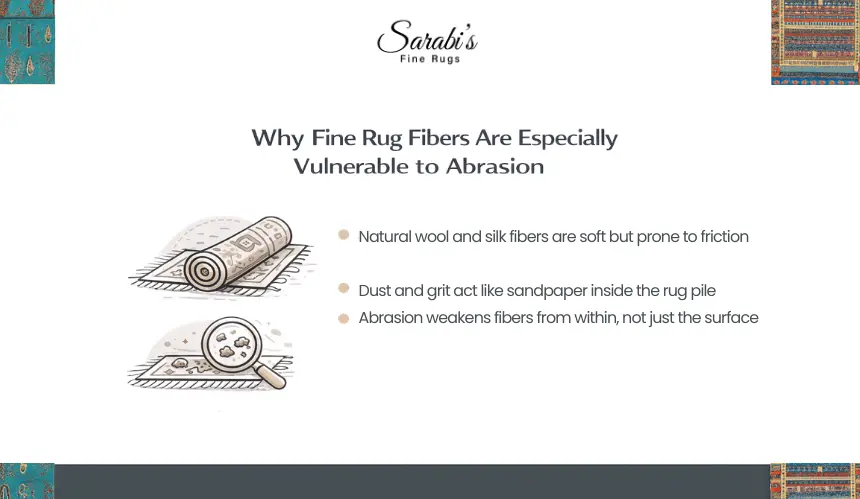
Persian rugs are typically hand-knotted from natural fibers such as wool or silk, which provide durability and softness but are also prone to wear from friction over time. These fibers are designed to flex, not grind against abrasive particles trapped deep within the pile.
Grit Acts Like Sandpaper Inside the Rug
Dust and grit settle between fibers and at the base of the pile where foot traffic presses them downward. With each step, these particles rub against the fibers, slowly cutting and weakening them. This abrasive action accelerates fiber breakage, resulting in thinning even when the rug appears clean on the surface.
Wear Begins at the Foundation, Not the Surface
Damage caused by grit often starts at the knot and foundation level rather than the visible pile tips. Once fibers weaken near their base, they lose structural support and begin to shed or break, making wear difficult to reverse through surface cleaning alone.
How Dust Accumulation Affects Color and Appearance
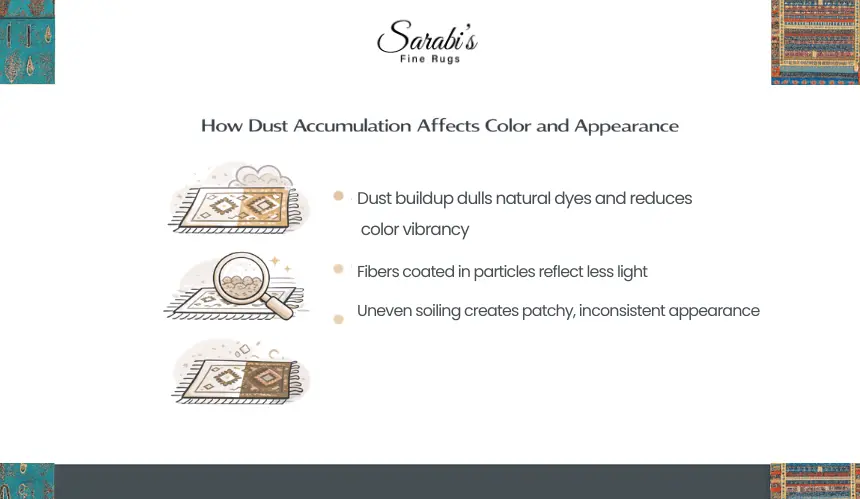
Beyond physical wear, dust buildup also affects the visual qualities that make Persian rugs valuable and distinctive. Color vibrancy depends on light reflecting off clean fibers, not fibers coated in particulate residue.
Dust Dulls Natural Dyes Over Time
Persian rugs often use natural dyes that rely on fiber clarity to reflect depth and richness. When dust coats the fibers, it creates a grey or muted appearance that makes colors appear faded. This dulling effect is gradual and often mistaken for age-related fading rather than contamination.
Uneven Soiling Creates Patchy Appearance
Areas with higher foot traffic accumulate more grit, resulting in uneven wear and inconsistent color tone. Over time, these high-use zones may appear darker or thinner, disrupting the visual balance of intricate patterns and borders.
Did you know? Many rugs that appear “faded” regain noticeable vibrancy after proper deep cleaning removes embedded dust.
The Role of Foot Traffic in Driving Contaminants Deeper
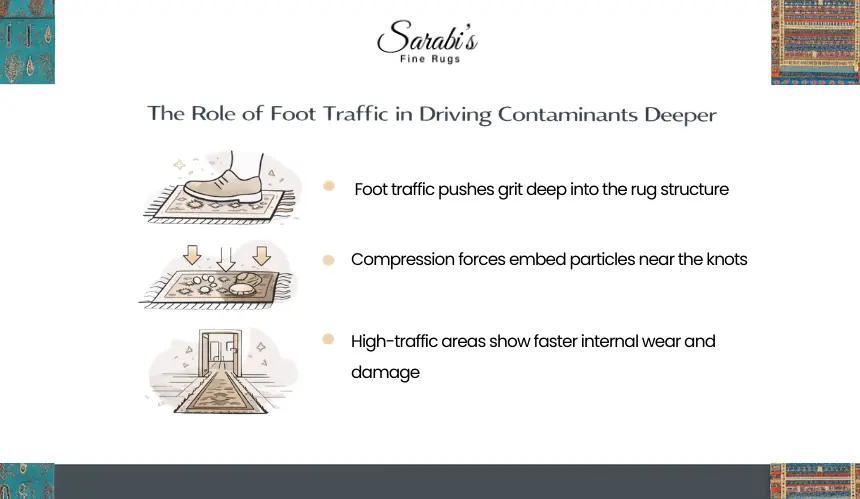
Foot traffic does not simply add dirt to a rug’s surface; it actively drives contaminants deeper into the structure, where damage accelerates.
Compression Forces Push Grit Into the Pile
Every step compresses the rug pile, forcing fine particles downward toward the knots. This repeated compression embeds grit beyond the reach of routine vacuuming, allowing abrasion to continue unchecked at the most critical structural points.
Traffic Patterns Predict Wear Zones
Entryways, hallways, and seating areas experience concentrated pressure that increases grit penetration. These predictable wear zones often show damage first, even when the rest of the rug appears intact, highlighting the relationship between use patterns and internal abrasion.
Why Regular Vacuuming Is Not Enough
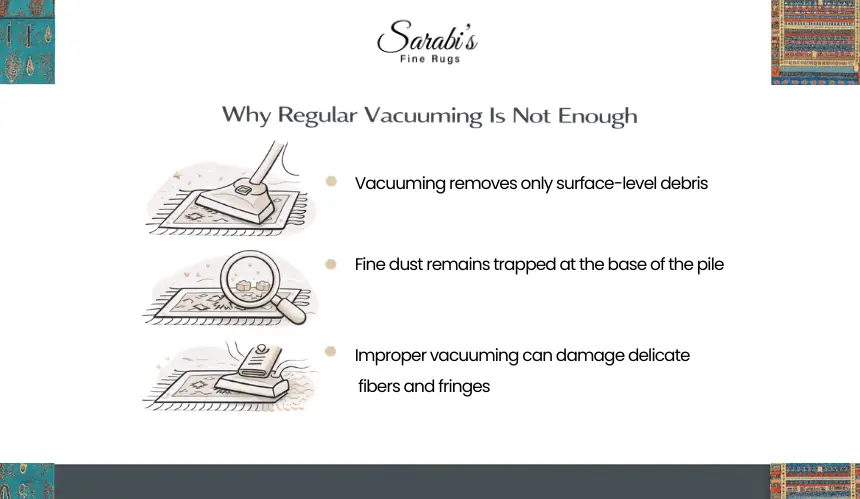
Vacuuming is essential for surface maintenance, but it has limitations for fine rugs with dense pile and hand-knotted construction.
Surface Removal vs Embedded Contaminants
Standard vacuuming removes loose debris on the surface but cannot fully extract fine dust trapped at the base of the pile. Over time, this residue accumulates and continues to abrade fibers despite regular cleaning routines.
Risk of Improper Vacuum Techniques
Aggressive vacuuming or beater-bar settings can damage delicate fibers and fringes without removing embedded grit. Improper technique may worsen wear by stressing weakened fibers already compromised by internal abrasion.
Moisture, Dust, and Fiber Degradation
Dust and grit often interact with moisture, creating additional risks that accelerate rug deterioration.
Moisture Turns Dust Into Abrasive Sludge
When dust combines with humidity or spills, it forms a gritty residue that clings to fibers. This mixture increases friction and promotes faster fiber breakdown, particularly in humid environments or areas prone to spills.
Increased Risk of Odor and Microbial Growth
Moist, dust-laden fibers can trap organic material that supports odor development and microbial activity. While not always visible, these conditions weaken fibers chemically and structurally over time.
Long-Term Structural Consequences of Embedded Grit
Ignoring internal contamination does more than reduce appearance; it compromises the rug’s foundational integrity.
Knot Weakening and Pile Loss
As grit abrades fibers at the knot level, knots loosen, and fibers detach more easily. This leads to gradual pile loss that cannot be corrected by surface treatments once it has progressed.
Edge and Fringe Deterioration
Edges and fringes are particularly vulnerable because they trap dust and receive frequent contact. Embedded grit accelerates fraying and breakage, often becoming the first visible sign of more serious internal damage.
Why Professional Cleaning Interrupts the Damage Cycle
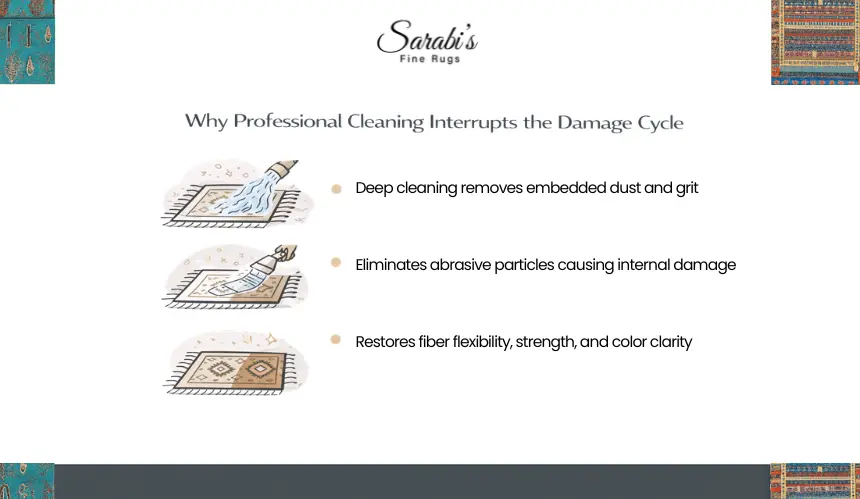
Proper rug cleaning focuses on removing contaminants from within the rug, not just improving appearance.
Controlled Dust and Grit Extraction
Professional cleaning methods are designed to flush fine particles from deep within the pile and foundation without stressing fibers. Removing this abrasive material interrupts the wear cycle and slows future deterioration.
Restoring Fiber Flexibility and Appearance
Once contaminants are removed, fibers regain flexibility and reflect light more effectively. This restoration improves both structural resilience and visual clarity, extending the rug’s usable life.
Frequently Asked Questions
Can dust really cause permanent rug damage?
Yes. Fine grit abrades fibers internally, leading to irreversible wear if left untreated.
How often should Persian rugs be professionally cleaned?
Frequency depends on use, but regular deep cleaning helps prevent internal damage from accumulating.
Does surface cleaning remove grit effectively?
Surface cleaning helps but does not eliminate deeply embedded particles.
Why do rugs wear faster in high-traffic areas?
Foot traffic forces grit deeper into fibers, accelerating abrasion.
Can cleaning restore worn fibers?
Cleaning cannot repair broken fibers, but can prevent further damage and improve appearance.
Preserving Persian Rugs Through Informed Care
Dirt, dust, and grit shorten the life of Persian rugs by acting as internal abrasives that weaken fibers from the inside out. This damage often progresses invisibly until wear becomes advanced and irreversible. Understanding this cause-and-effect relationship highlights why proper cleaning is a preservation measure rather than a cosmetic choice. Homeowners focused on protecting fine rugs often consult specialists, such as Sarabi’s Fine Rugs, to ensure contaminants are removed safely and that structural integrity is maintained over time.
Looking for the real thing? Browse our Persian rugs, see them at our North Willoughby showroom, or book an in-home viewing.