Tribal Pictorial Gabbeh Rug
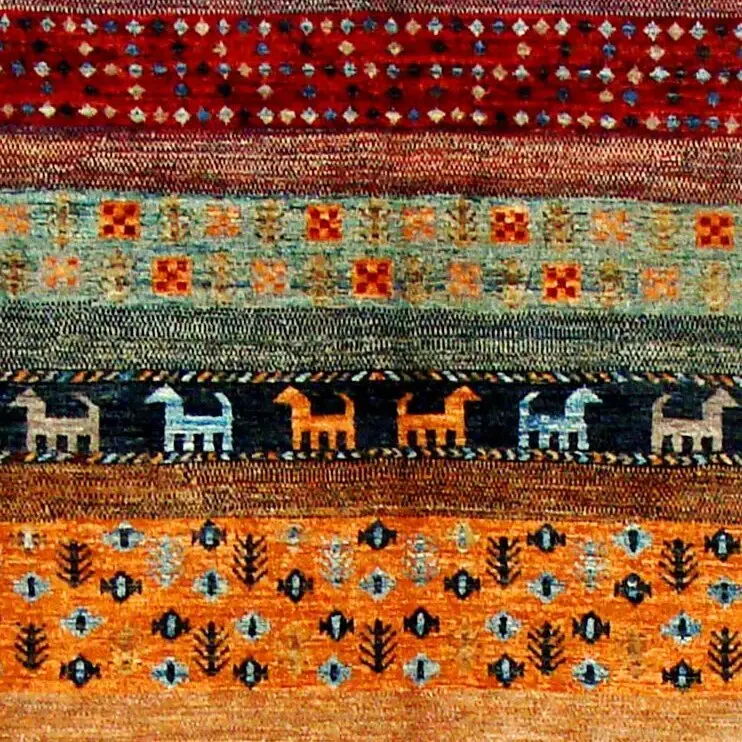
This tribal pictorial Gabbeh rug was double hand knotted in Afghanistan from wool and measures 290 x 198 cm. Horizontal bands run red, orange, sand, navy and teal across the field, framed by a turquoise border with small figures and squares. Our records note vegetable dyes.
The design up close
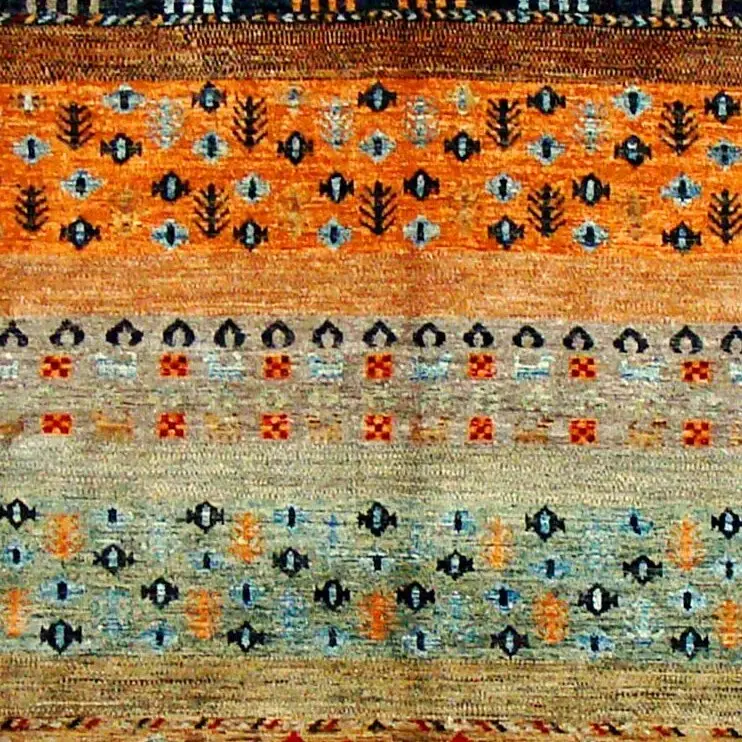
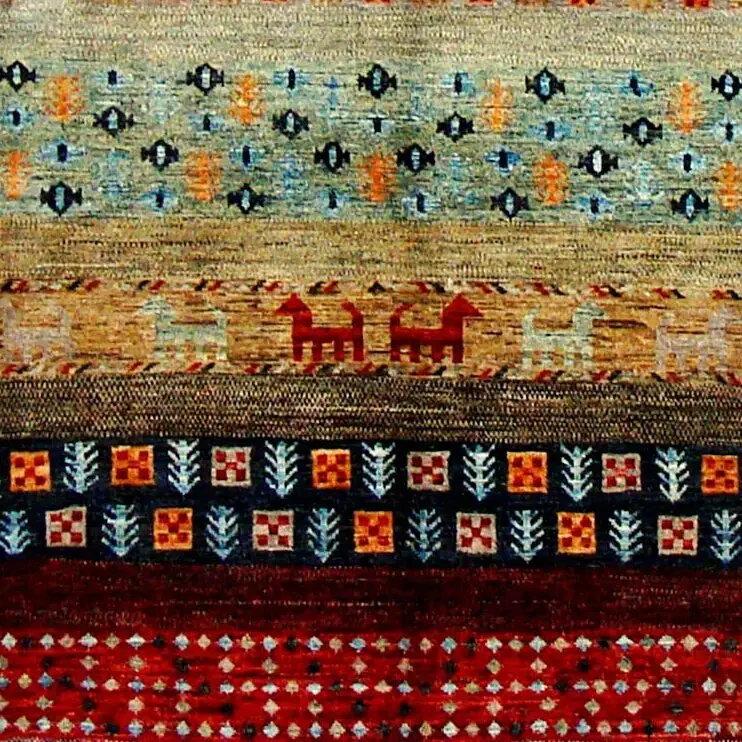
Near the top of the field a red band holds rows of small diamonds in navy and cream. Below it, a navy band carries a row of stylised animals, horses and birds in cream and orange. A broad orange band follows, filled with small trees and motifs in navy and teal, and lower down a sand band shows a line of horses in brown and red.
Further down, a band of blue and cream plant motifs sits above a dark brown band with a line of red and blue squares, and a deep red band closes the field. The outer frame is a wide turquoise border, with narrower bands of small squares, diamonds and tiny figures on the left and right.
Along the top and bottom the squares alternate navy, orange, teal and red, with small animals between them. The frame keeps the many colours of the field from running into the walls, and this tribal pictorial Gabbeh rug suits a room with plain furniture, so the pattern can carry the colour.
Where the Gabbeh comes from
The Gabbeh is a rug of the tribes of the Zagros mountains in Iran, including the Lori and Qashqai, who wove thick, simple rugs mainly for their own households. The name is often translated as raw or natural, which suits the look: deep pile, open fields of colour and only a few motifs. Weavers in Afghanistan now make Gabbeh rugs in the same spirit, and this tribal pictorial Gabbeh rug is hand knotted there.
How a tribal pictorial Gabbeh rug is made
Double hand knotted means each knot is tied by hand around two warp threads, which gives a firmer, more hard-wearing pile. The wool is handspun, and the pile is sheared level once the knotting is finished, so the bands sit evenly across the rug.
Sizing it for your room
At 290 x 198 cm the rug covers about 5.7 square metres, enough for a sofa and two armchairs to sit around it. A three-seat sofa of around 2.2 m leaves about 35 cm of rug showing past each end. A tribal pictorial Gabbeh rug this size suits a family room or a living room with plain upholstery, because the bands carry the colour.
In a dining room, a table of about 180 x 90 cm leaves roughly 55 cm of rug at each end and 54 cm along each side, so the chairs will pull partly onto the rug. A tribal pictorial Gabbeh rug in this size works best under a six-seat table in a room with warm timber or neutral walls.
Looking after your rug
Vacuum it on a suction-only setting, or with the beater bar switched off, so the brush does not pull at the knots. Turn it around every six to twelve months so sun and foot traffic wear it evenly. Blot spills with a clean white cloth and cold water rather than rubbing them in. When it needs a full clean, choose a cleaner who washes handmade rugs by hand.
Put a good underlay beneath it. It stops the rug sliding on timber or tiles, adds cushioning and takes some of the wear off the pile. Moths like wool in dark, quiet spots, such as the part of a rug under a sofa, so vacuum those areas often and lift the furniture now and then.
See it before you buy
Visit our showroom at 307 Penshurst St, North Willoughby, open every day from 10 am to 4:30 pm, to see this tribal pictorial Gabbeh rug in person. If you would rather judge it in your own room, with your own light and furniture, book a home trial and we will bring a selection to you.
Browse more Gabbeh Rugs, or ask about a custom made rug in your own size and colour. Read more about Gabbeh rugs.