Transitional Khorjin Rug
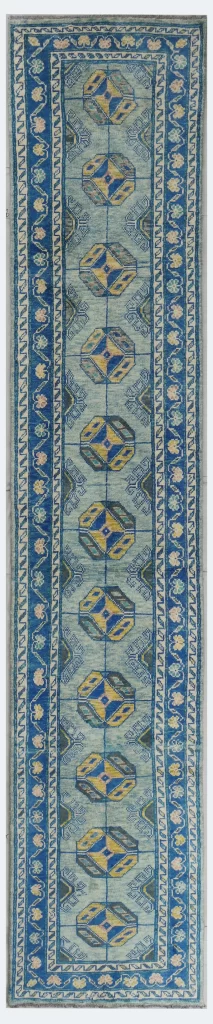
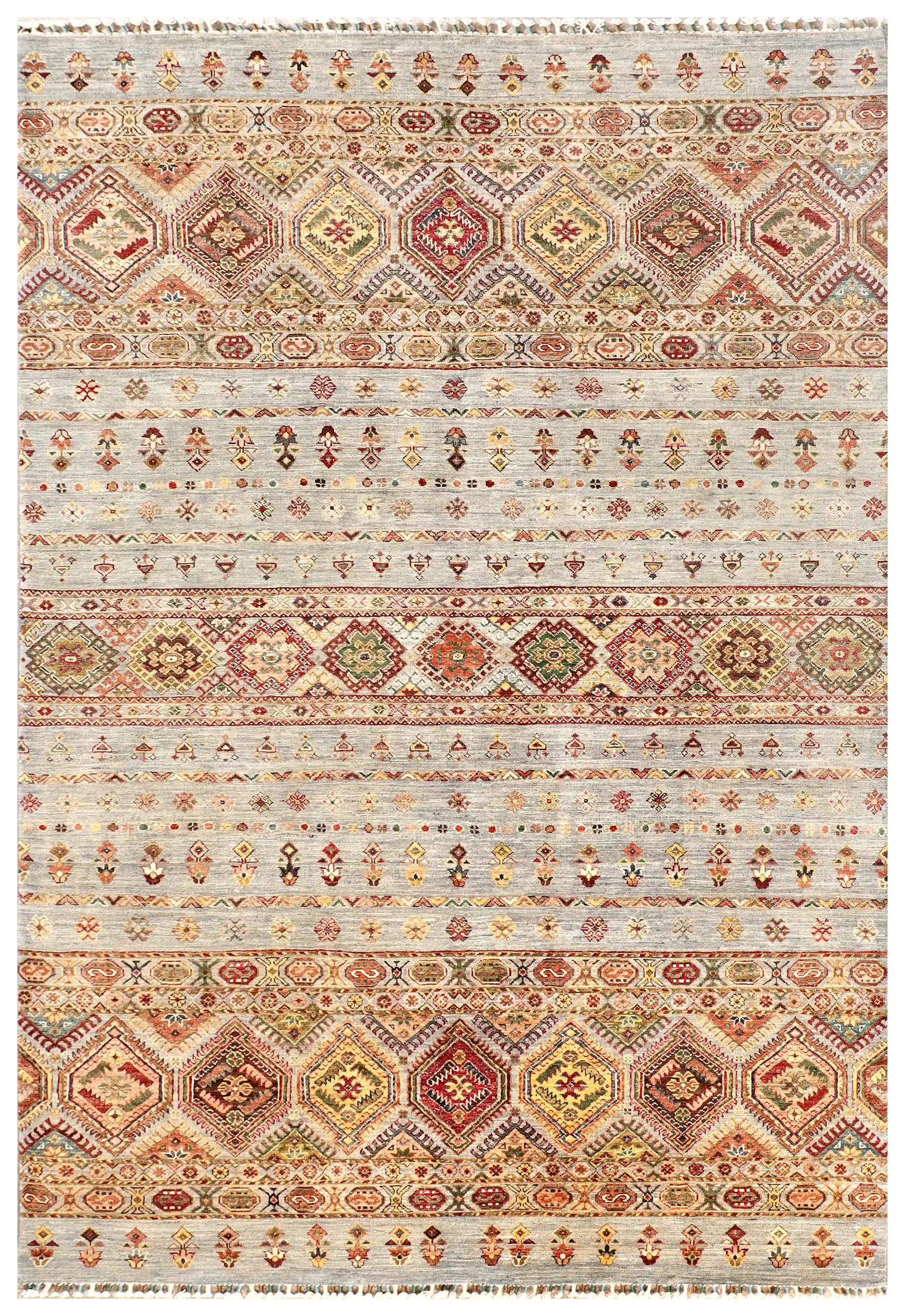
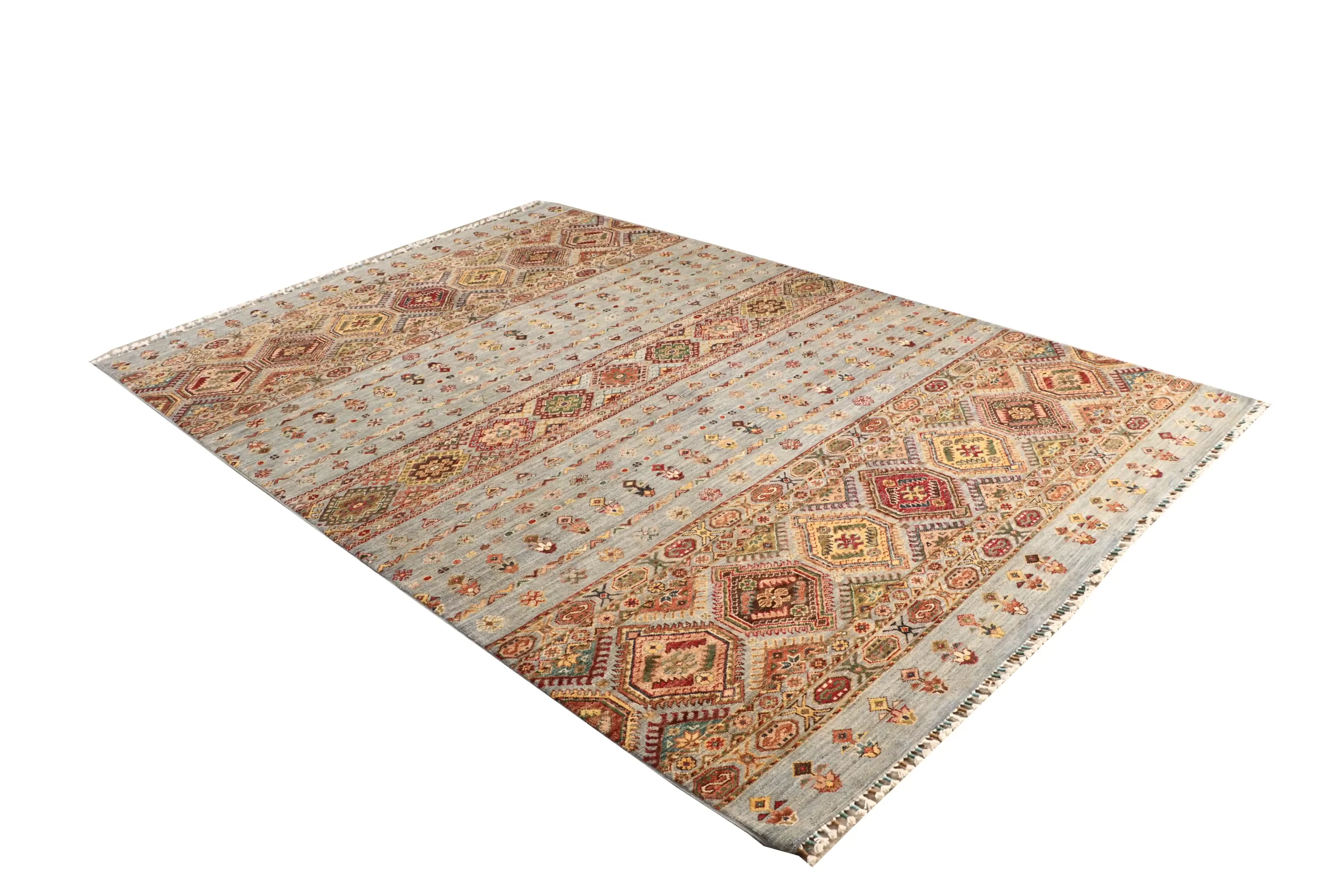
This transitional Khorjin rug is hand double knotted in Afghanistan from wool and measures 259 x 176 cm, or about 4.6 square metres. Its sandy ground carries rows of small red, gold, green and navy motifs, so it sits between traditional and modern rooms.
The design up close
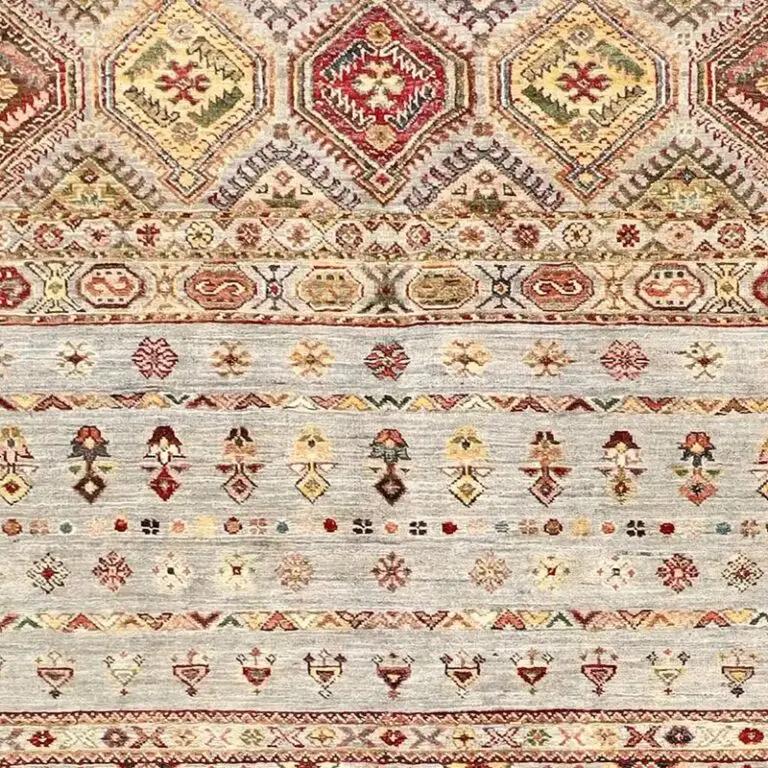
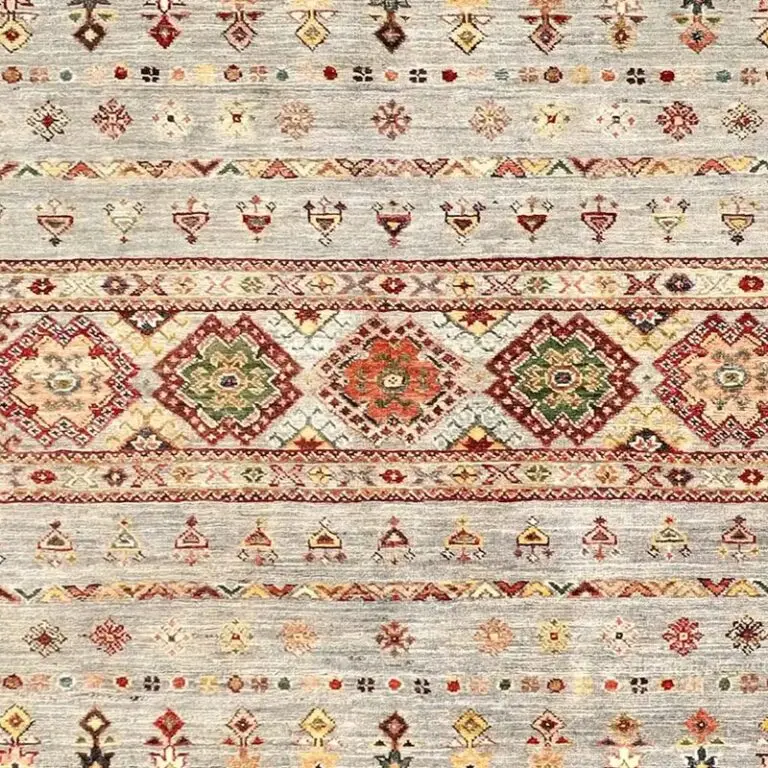
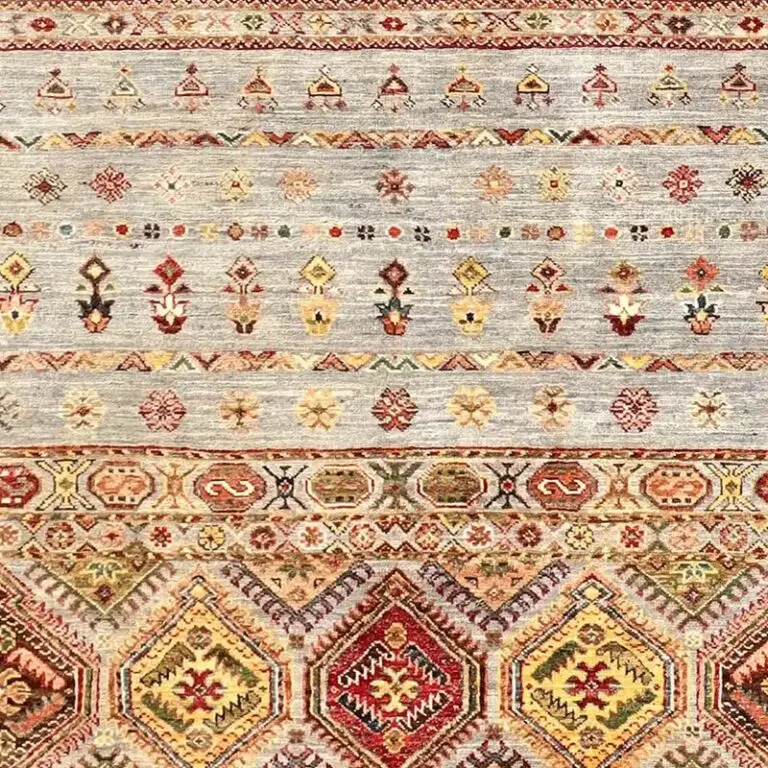
The ground is a pale sandy grey-beige, and the field is divided into horizontal bands. Most bands repeat a row of very small motifs in red, orange, mustard and green, including tiny flower and stem shapes and little stars, set at even intervals. Narrow bands of dots and zigzags separate them.
Several broader bands carry larger hexagon-shaped medallions, one near the top, one across the middle and one at the bottom. Each medallion is outlined in navy and filled with red, ivory and green, and the bottom band has the boldest colours, with red and gold medallions against the sand. This transitional Khorjin rug uses bright colour in small doses, so no single band takes over.
A narrow band of small motifs runs along the top and bottom edges, and short fringe finishes both ends. The bands change in colour as they go down, which gives the rug a lively rhythm.
From saddlebag to rug
Khorjin rugs take their name from the Khorjin, a woven saddlebag. A Khorjin is a pair of woven bags joined together and carried over a horse or donkey, traditionally decorated with geometric patterns. Today’s Khorjin rugs take that look across the whole field, often in many colours, as this rug does with its rows of motifs and hexagons.
How it is made
Each knot in this transitional Khorjin rug was tied by hand, and the rug is double hand knotted on a loom. The wool is hand spun, which gives the yarn a slightly uneven, natural thickness. Our records note vegetable dyes. Because the design is built into the knotting, it shows clearly on the back of the rug too.
Sizing a transitional Khorjin rug in your room
At 259 x 176 cm, this transitional Khorjin rug covers about 4.6 square metres. Its length suits a living room where the front legs of a sofa and two armchairs rest on it around a coffee table. A three-seat sofa of 2.2 m leaves only about 20 cm of rug at each end, so the sofa and the rug line up closely.
Under a dining table of about 180 x 90 cm, the rug leaves roughly 40 cm at each end and 43 cm along each side, so the whole table sits on the rug. The sandy base and warm bands suit timber floors, cream walls and natural linen.
Looking after your rug
Vacuum it on a suction-only setting, or with the beater bar switched off, so the brush does not pull at the knots. Turn it around every six to twelve months so sun and foot traffic wear it evenly. Blot spills with a clean white cloth and cold water rather than rubbing them in. When it needs a full clean, choose a cleaner who washes handmade rugs by hand.
Put a good underlay beneath it. It stops the rug sliding on timber or tiles, adds cushioning and takes some of the wear off the pile. Moths like wool in dark, quiet spots, such as the part of a rug under a sofa, so vacuum those areas often and lift the furniture now and then.
See it before you buy
Visit our showroom at 307 Penshurst St, North Willoughby, open every day from 11 am to 4:30 pm, to see this transitional Khorjin rug in person, beside our other handmade traditional rugs. If you would rather judge it in your own room, with your own light and furniture, book an in-home viewing and we will bring a selection to you.
Browse more Khorjin Rugs, or ask about a custom made rug in your own size and colour. Read more about Afghan rugs.