Sand Tabriz Mahi Rug
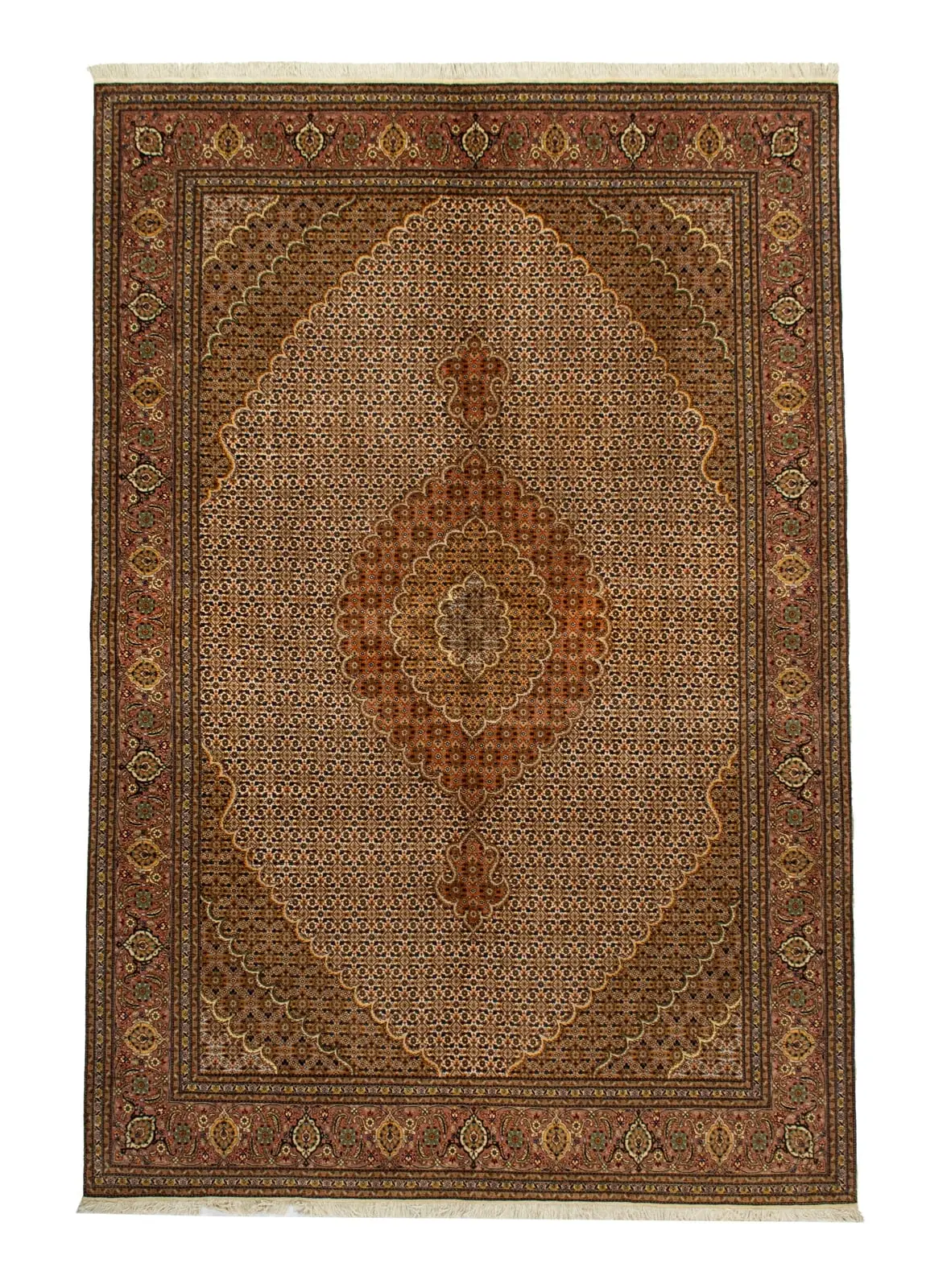
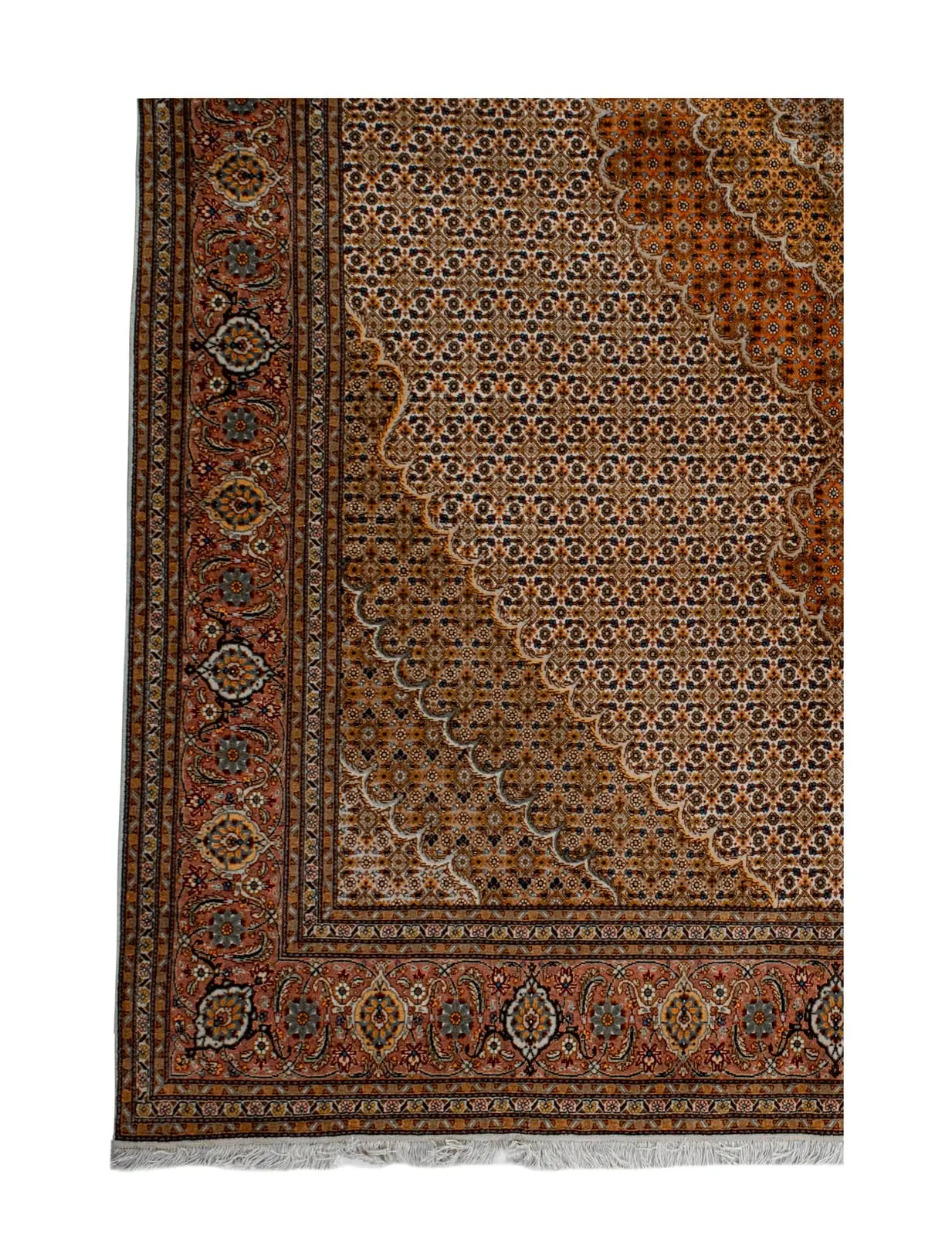
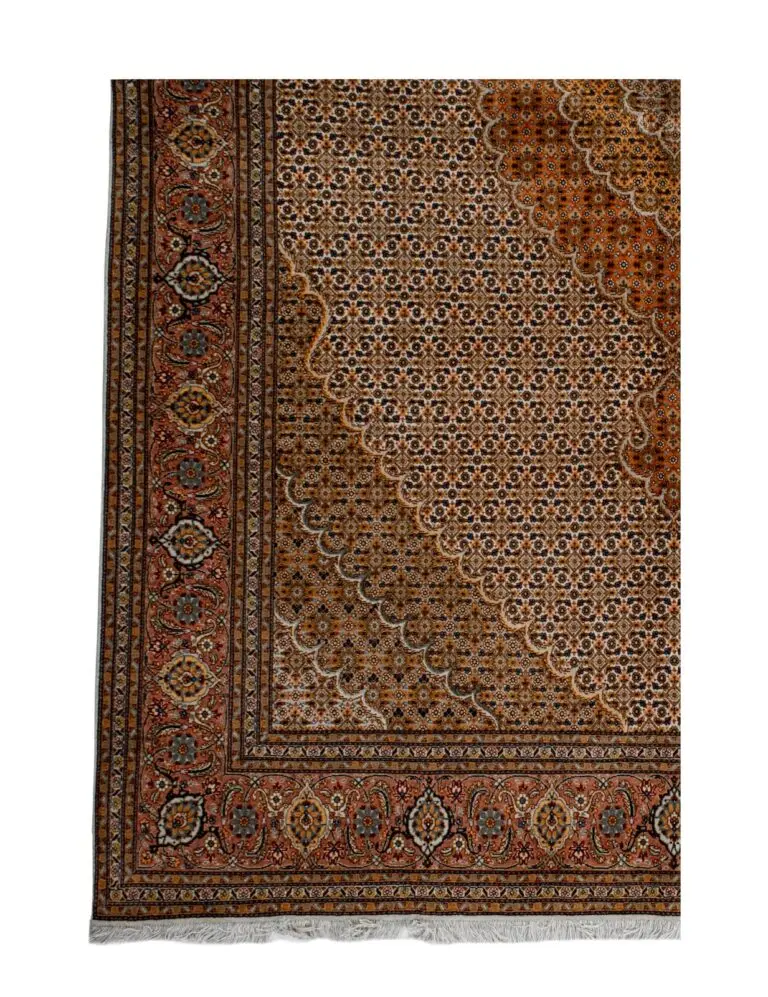
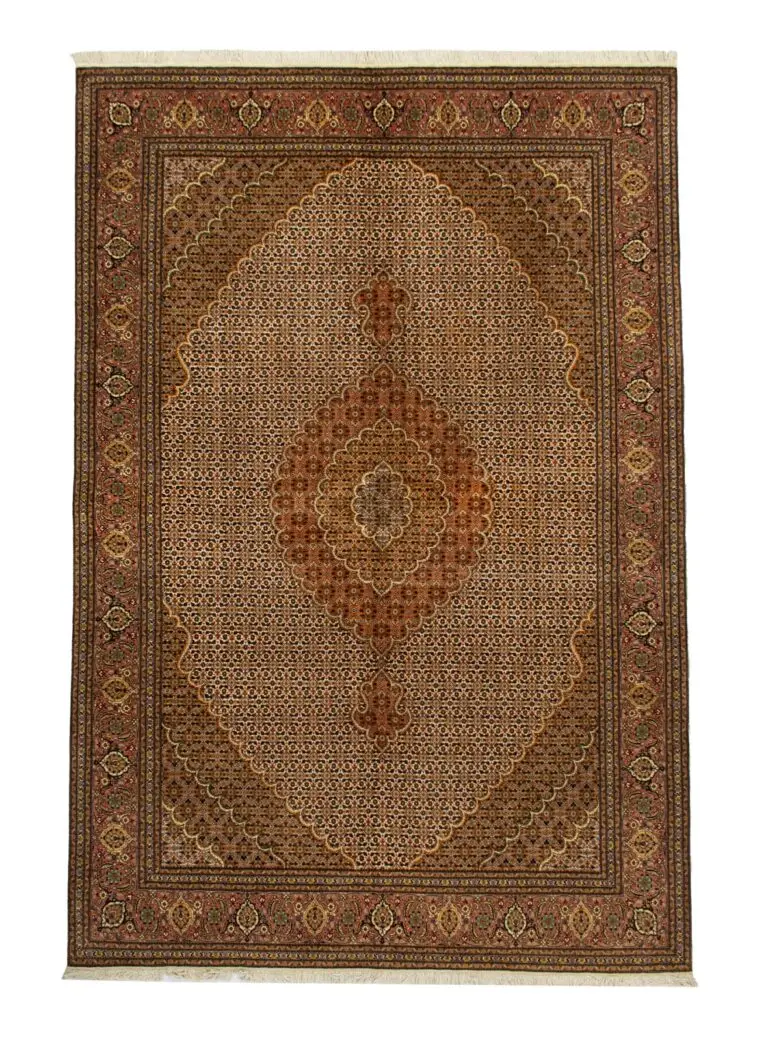
This sand Tabriz Mahi rug is a hand knotted rug made in Iran from wool and silk, measuring 300 x 200 cm. That is about 6.0 square metres. A pale sand field covered in tiny repeating motifs holds a gold edged diamond and a copper centre.
The design up close
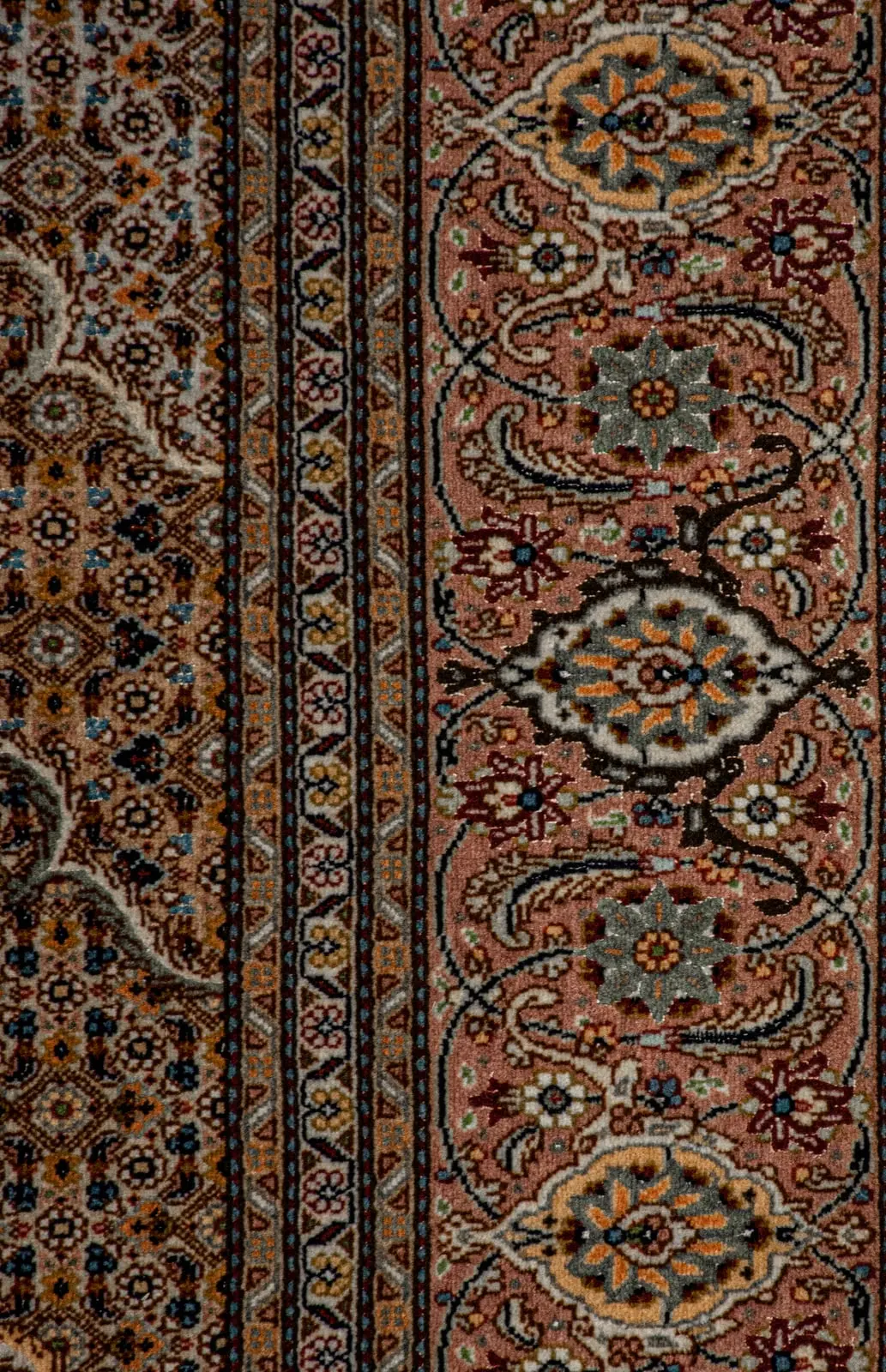
The field is a dense, even pattern of small leaf and flower shapes in cream, tan, navy and gold, repeated row after row. A large diamond outlined in gold, with a scalloped edge, spreads across the centre. Inside it a stepped copper and rust medallion, with small pendants above and below, holds a pale centre of its own.
In each corner of this sand Tabriz Mahi rug, a darker olive and brown spandrel with a scalloped edge meets the field. The same small pattern runs through it, so the change reads as a shift in tone rather than a new design. Several narrow guard stripes in cream, navy and gold run around the field.
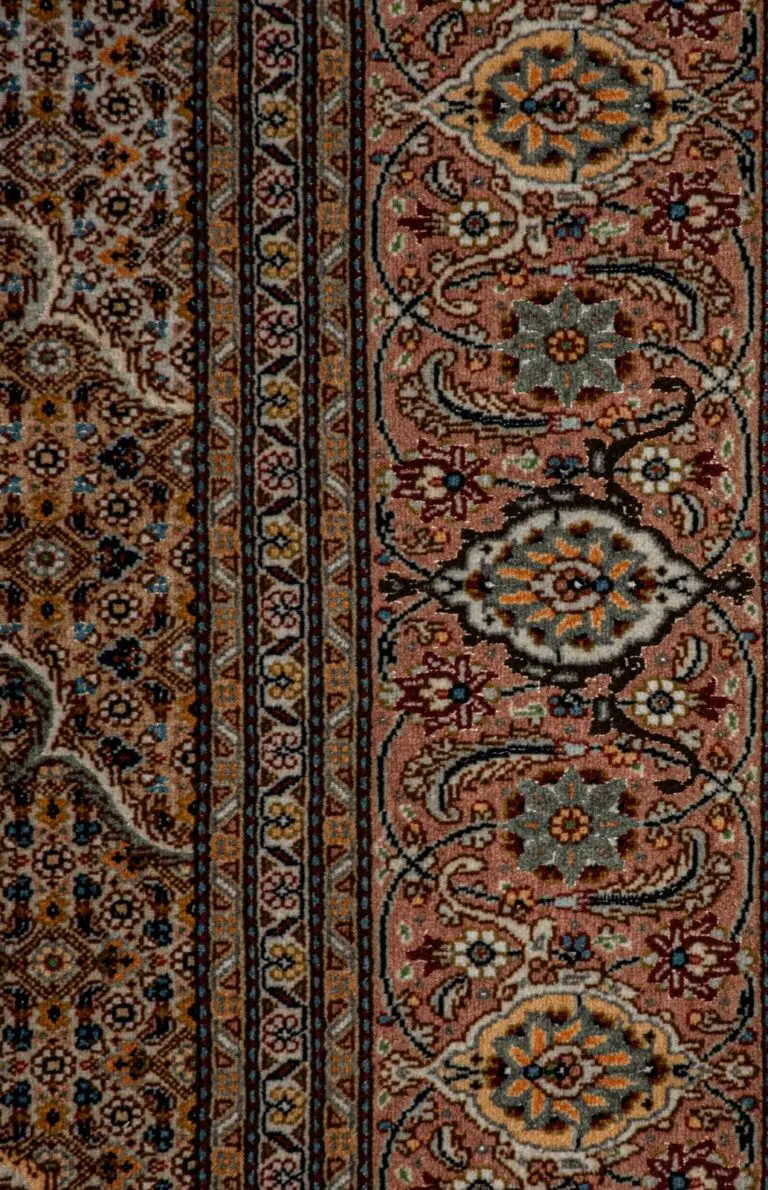
The main border is a dusty rose, with gold and cream palmette cartouches spaced along it and grey blue star flowers between them. A cream fringe finishes both ends of the rug.
About Tabriz rugs
Tabriz, in north-west Iran, has been a centre of rug weaving for centuries, and its workshops are known for fine knotting and a wide range of designs, from central medallions to all-over floral patterns. Tabriz weavers have tied the symmetrical knot since the mid 19th century, which gives a firm, even surface. The pile is wool, sometimes with silk highlights in finer pieces.
How a sand Tabriz Mahi rug is made
Weavers tie each knot by hand on a loom, row after row, then trim the pile level. Wool and silk form the pile of this Persian rug. Silk catches the light differently from wool, so parts of the design can change in tone as you move around the rug. Because every knot is tied by hand, the rows carry small differences in spacing and tone that mark it as handwork.
Colour in your room
Sand, copper and dusty rose are warm and quiet colours that suit cream walls, pale timber floors and natural linen. The navy in the small pattern brings out blue cushions or a deep blue sofa.
Sizing it for your room
At 300 x 200 cm, this sand Tabriz Mahi rug covers about 6.0 square metres. In a living room, a three-seat sofa of about 2.2 m leaves 80 cm of rug to share between its two ends, so the sofa and a pair of armchairs can sit on it together around a coffee table.
Under a dining table of about 180 x 90 cm, which seats six, the rug leaves 60 cm at each end and 55 cm along each side. Chairs can slide back and stay on the rug.
Looking after your rug
Vacuum it on a suction-only setting, or with the beater bar switched off, so the brush does not pull at the knots. Turn it around every six to twelve months so sun and foot traffic wear it evenly. Blot spills with a clean white cloth and cold water rather than rubbing them in. When it needs a full clean, choose a cleaner who washes handmade rugs by hand. Rubbing spills can dull silk, so this rug needs a cleaner who handles silk by hand.
Put a good underlay beneath it. It stops the rug sliding on timber or tiles, adds cushioning and takes some of the wear off the pile. Moths like wool in dark, quiet spots, such as the part of a rug under a sofa, so vacuum those areas often and lift the furniture now and then.
See it before you buy
Visit our showroom at 307 Penshurst St, North Willoughby, open every day from 10 am to 4:30 pm, to see this sand Tabriz Mahi rug in person. If you would rather judge it in your own room, with your own light and furniture, book a home trial and we will bring a selection to you.
Browse more Traditional rugs, or ask about a custom made rug in your own size and colour. Read more about Tabriz rugs.