Sand Chobi Rug
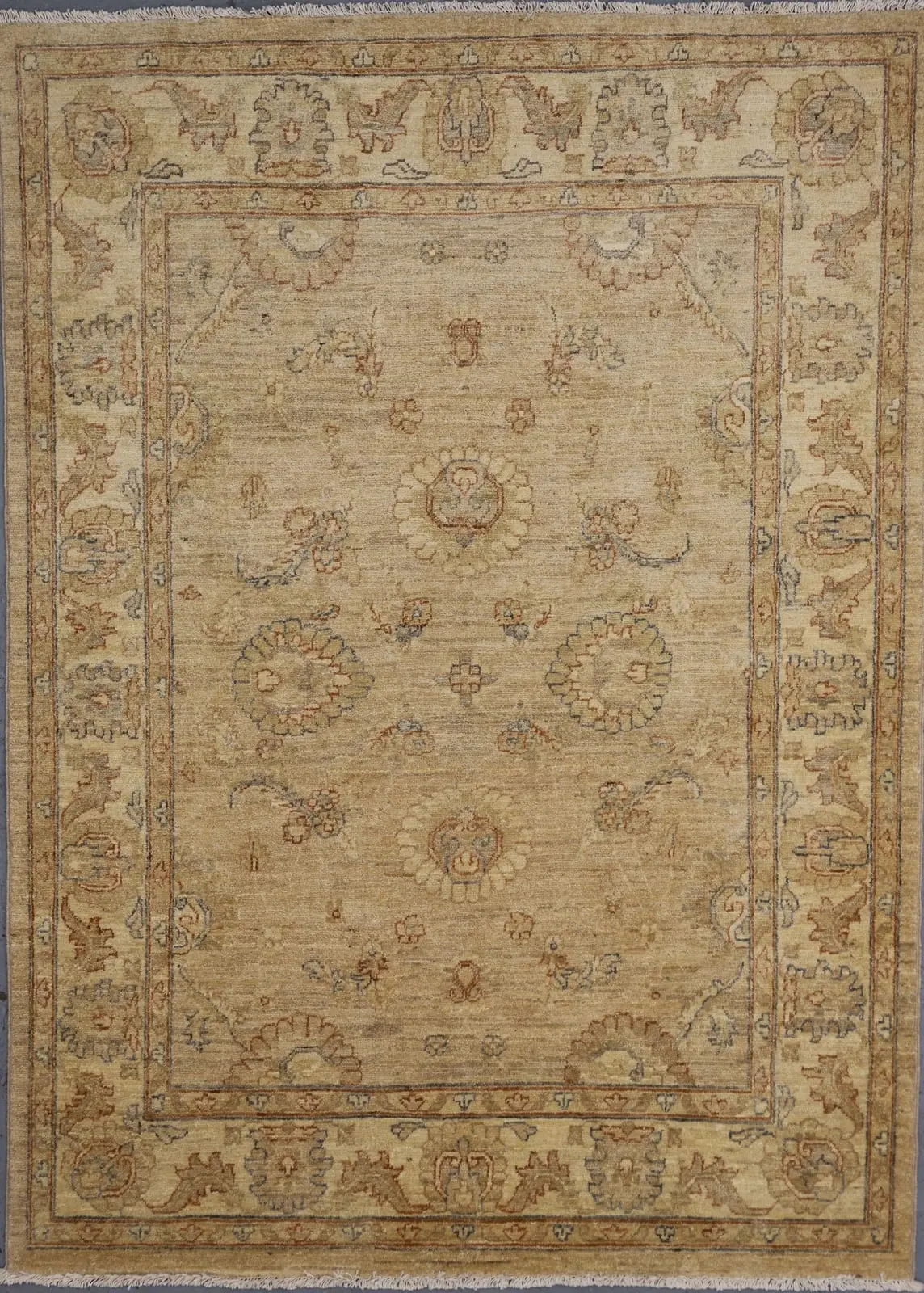
This sand Chobi rug is hand knotted in Afghanistan from wool, and it measures 209 x 150 cm, or about 3.1 square metres. A soft sand field with faint flowers sits inside a cream border, in a calm palette of tan, olive and rust.
The design up close
The field is an open sand colour with round flower heads in cream rings, small leafy sprays and thin curling stems in rust, olive and grey-blue. The pattern is low in contrast, so it reads as a gentle texture from across the room.
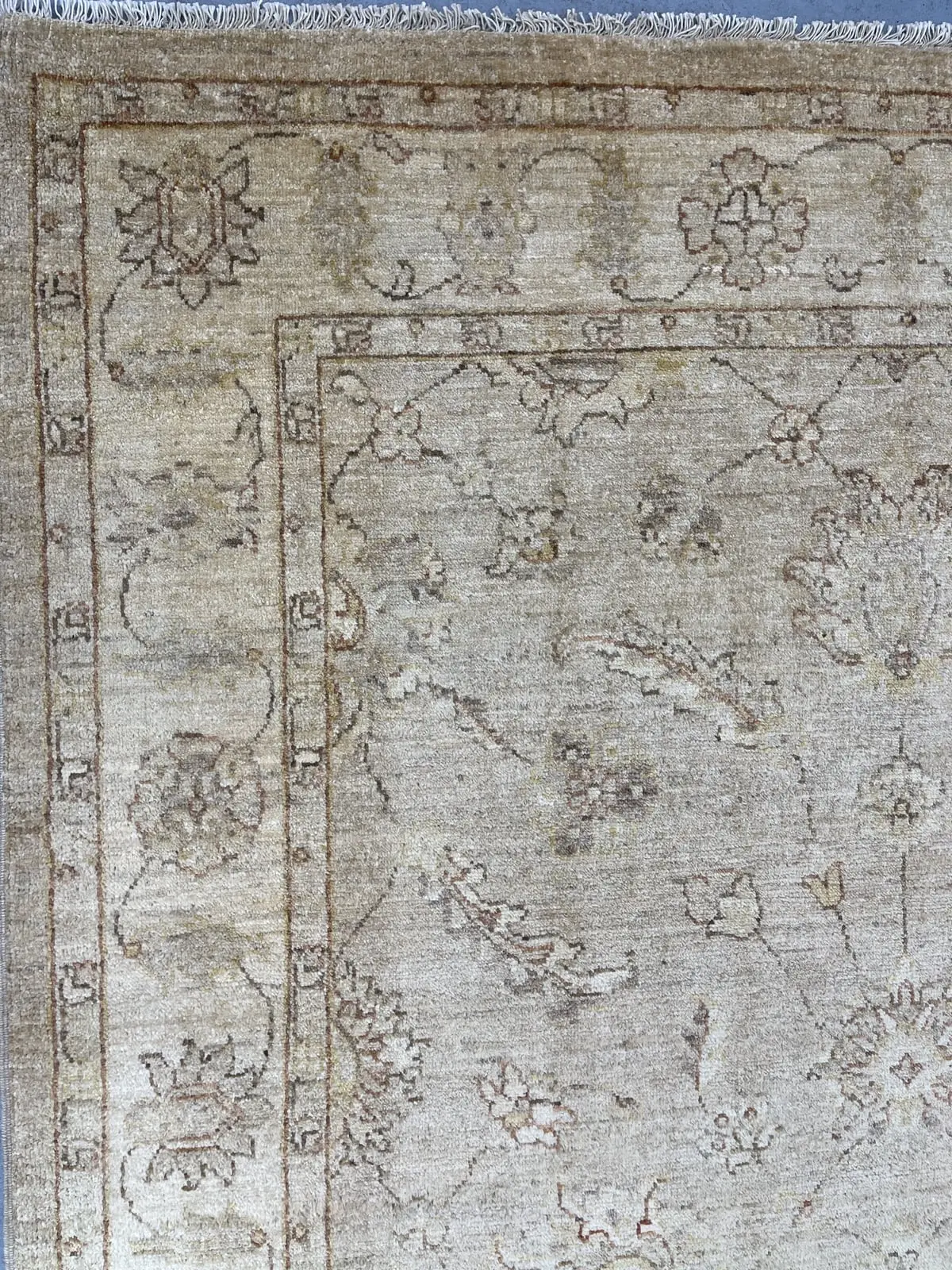
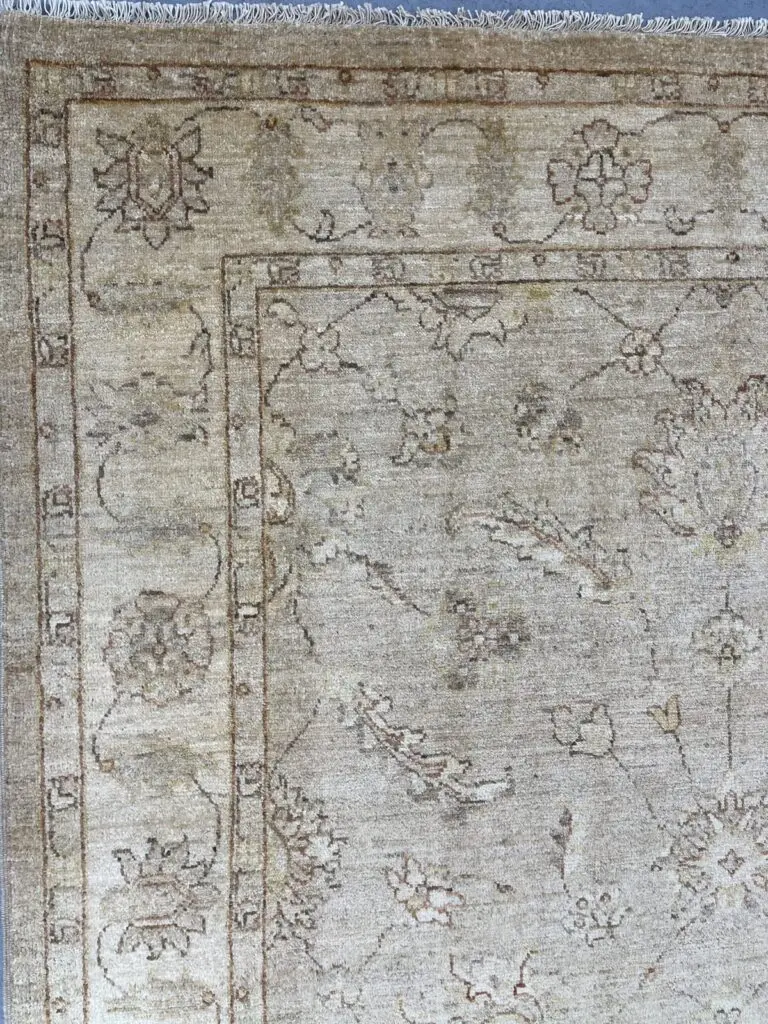
In the corners of this sand Chobi rug, the cream border turns around the field, carrying larger leaves and rosettes in tan, olive and soft grey. A thin rust line runs along its inner edge, and a row of small squares sits in the narrow stripe just inside it.
Close up, the pile has a gentle sheen, and the outlines of the flowers are fine and slightly soft. Pale grey-green and gold sit among the sand tones, and a cream fringe finishes each end.
About Chobi rugs
Chobi means wood, a nod to the soft, natural tones these rugs are known for. Chobi rugs are hand knotted in Afghanistan, and their gentle palette sits easily in both classic and contemporary homes.
Many Chobi rugs follow Ziegler designs: soft-toned, large-scale designs first made in the Sultanabad (Arak) district of Persia from the 1880s for European and American buyers. Chobi rugs often come in ivory, sand, soft green, rust and blue, and are often washed after weaving to soften the colours further.
How a sand Chobi rug is made
Weavers tie each knot by hand on a loom, row after row, then trim the pile level. The pile of this sand Chobi rug is wool, which is soft and resilient underfoot.
Because every knot is tied by hand, the rows carry small differences in spacing and tone, and the back of the rug shows the design knot by knot.
Colour in your room
Sand and cream are quiet colours, which makes this rug easy to place. It suits pale timber floors, white or warm grey walls and furniture in linen, oatmeal or soft green.
A sand Chobi rug like this one also works under darker furniture, where the light field lifts the floor without competing with the room.
Sizing it for your room
At 209 x 150 cm, this sand Chobi rug covers about 3.1 square metres. In a living room, a sofa and two armchairs can rest their front legs on it, which ties the seating into one group.
Laid across the foot of a queen bed, which is about 153 cm wide, a rug 209 cm long reaches roughly 28 cm past each side. Under a king bed, about 183 cm wide, it reaches roughly 13 cm past each side.
Looking after your rug
Vacuum it on a suction-only setting, or with the beater bar switched off, so the brush does not pull at the knots. Turn it around every six to twelve months so sun and foot traffic wear it evenly. Blot spills with a clean white cloth and cold water rather than rubbing them in. When it needs a full clean, choose a cleaner who washes handmade rugs by hand.
Put a good underlay beneath it. It stops the rug sliding on timber or tiles, adds cushioning and takes some of the wear off the pile. Moths like wool in dark, quiet spots, such as the part of a rug under a sofa, so vacuum those areas often and lift the furniture now and then.
See it before you buy
Visit our showroom at 307 Penshurst St, North Willoughby, open every day from 10 am to 4:30 pm, to see this sand Chobi rug in person. If you would rather judge it in your own room, with your own light and furniture, book a home trial and we will bring a selection to you.
Browse more Traditional rugs, or ask about a custom made rug in your own size and colour.