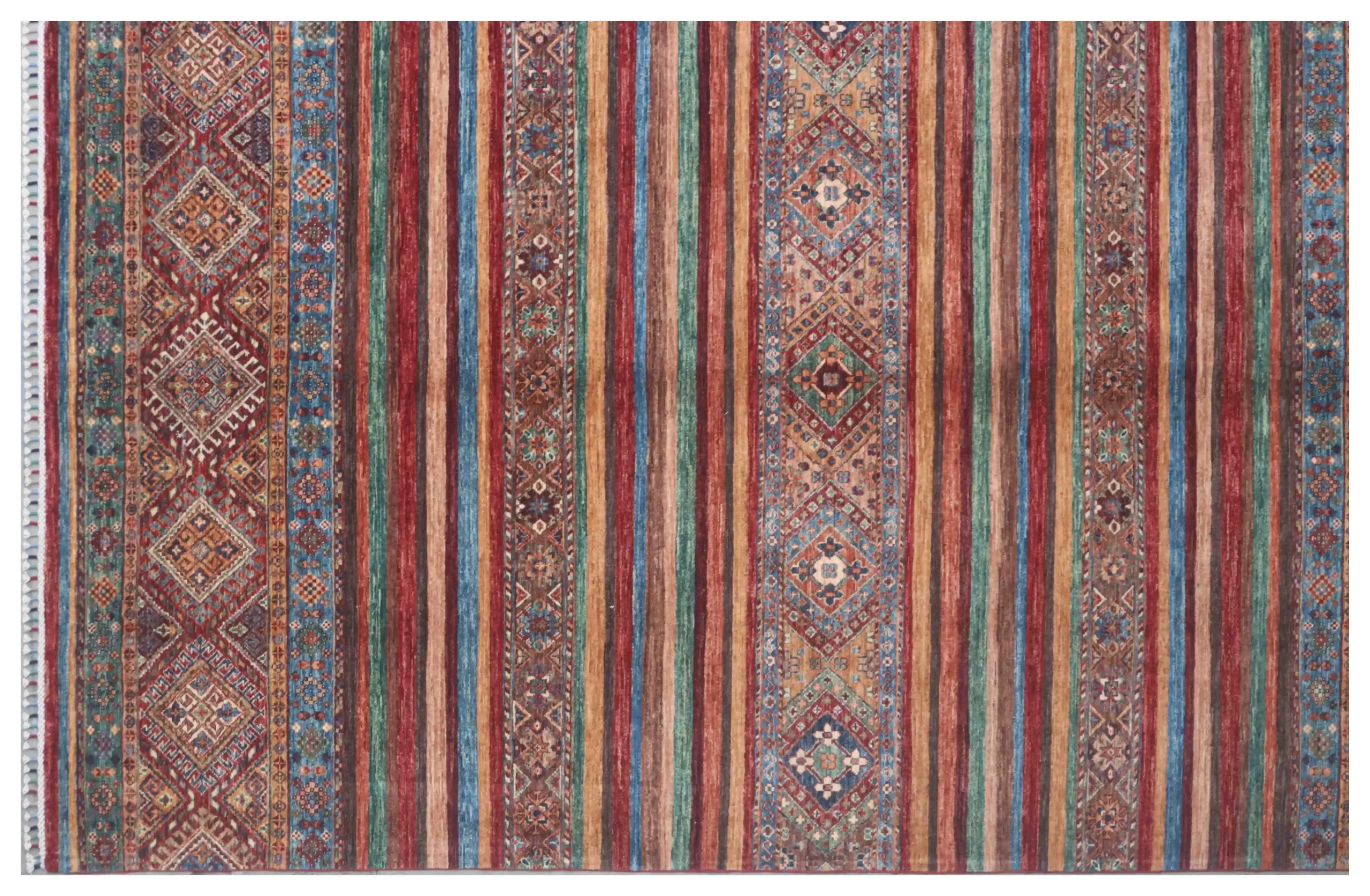
Red Antique Khorjin Rug
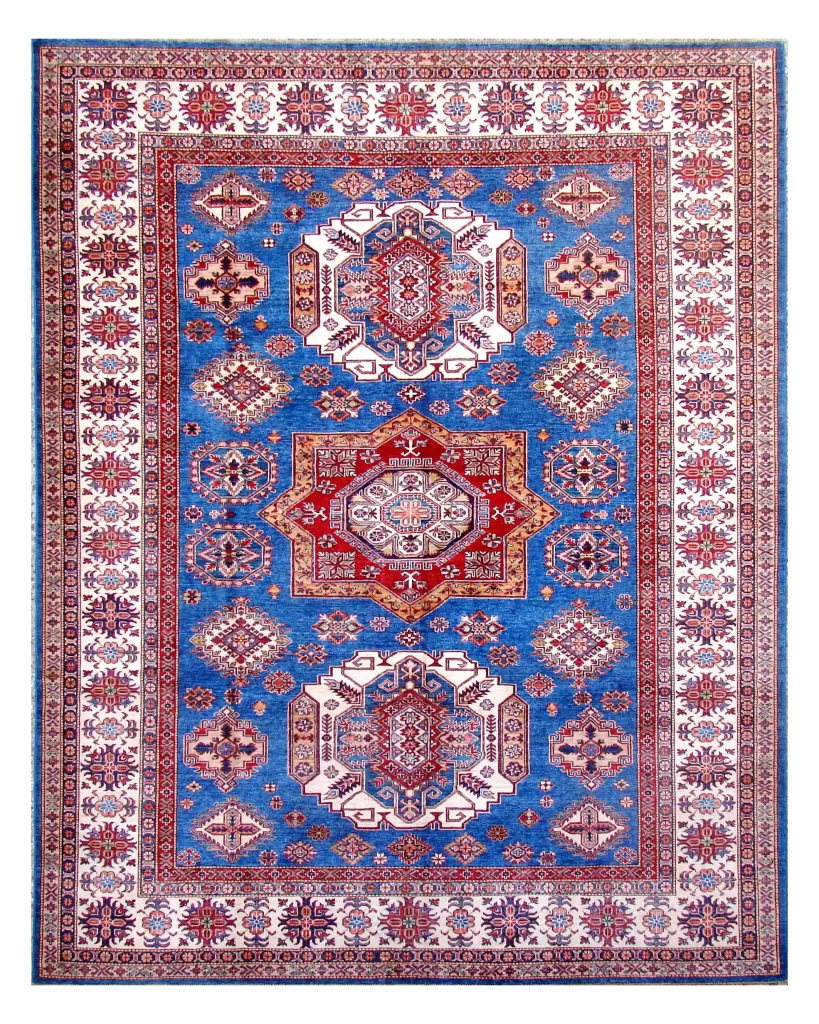
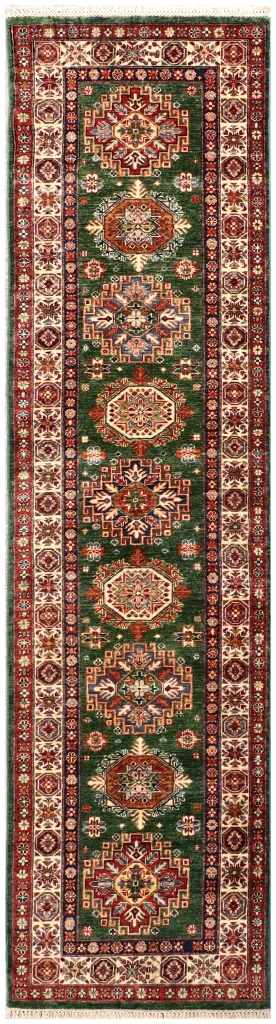
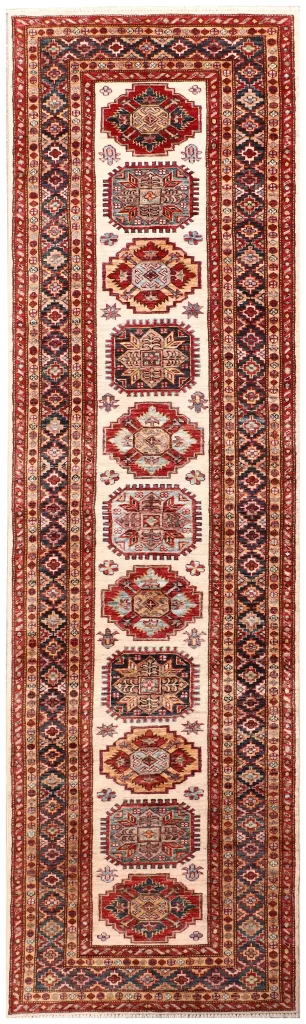
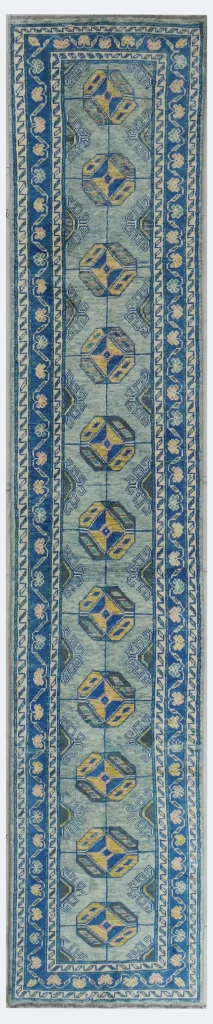
This red antique Khorjin rug is hand knotted in Afghanistan in lamb wool and measures 325 x 200 cm. Stripes of red, orange, green and blue run the length of the rug, with bands of small diamond motifs. It covers about 6.5 square metres.
The design up close
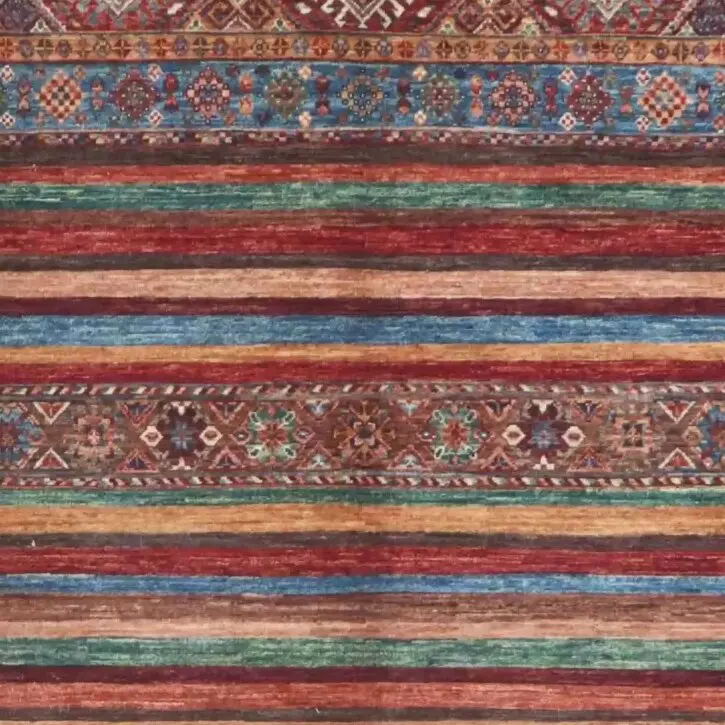
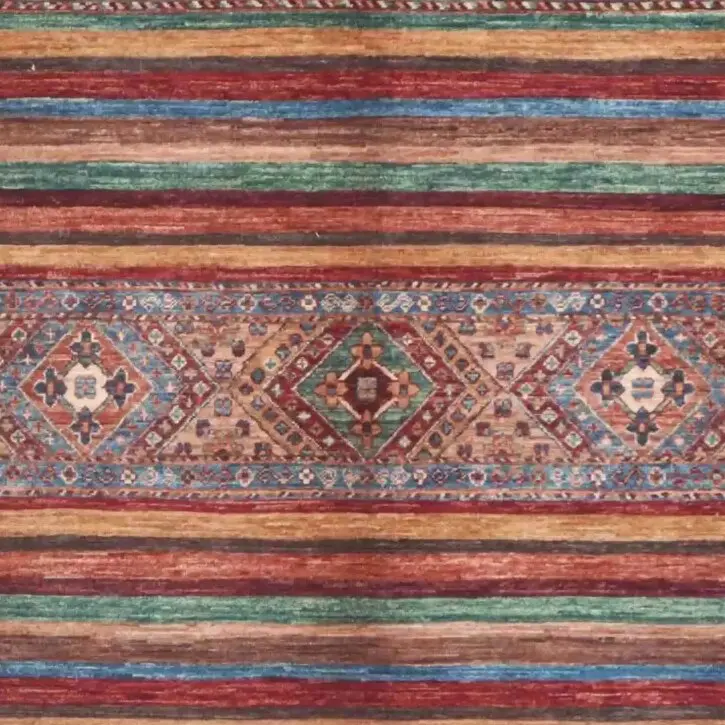
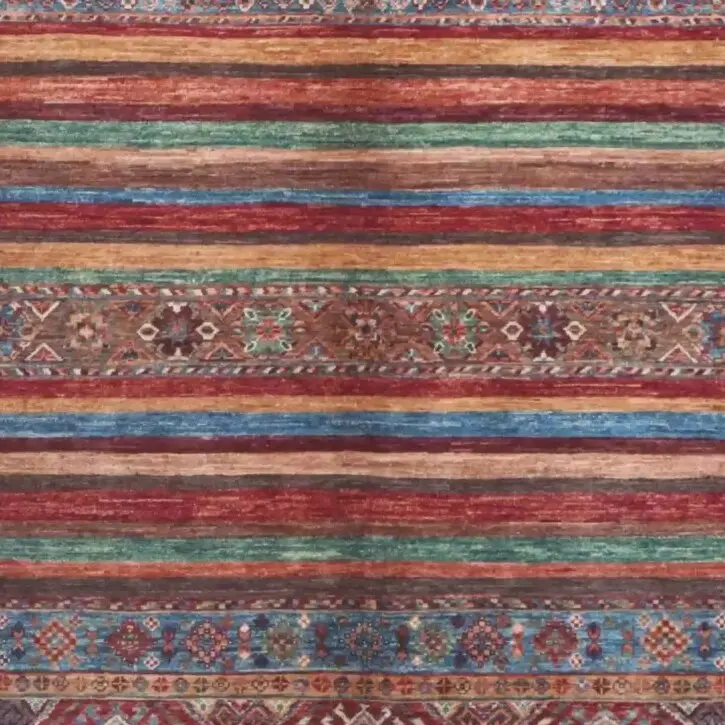
This red antique Khorjin rug has no central medallion. Its field is made of stripes of different widths in red, rust, orange, green, blue and cream, and the colour changes from one band to the next. Diamond medallions in blue, cream, green and red sit in bands near the top, through the middle and near the bottom, with small lozenges in the bands between. The bands of diamonds are the most detailed part of the rug.
Our records note a higher knot density. Because the bands alternate between warm and cool colours, the rug stays lively from a distance and reads as separate stripes up close. A short fringe finishes the top and bottom ends, and the stripes run to the edges with no separate border.
Khorjin rugs and where they come from
Khorjin rugs take their name from the Khorjin, a woven saddlebag. A Khorjin is a pair of woven bags joined together and carried over a horse or donkey, traditionally decorated with geometric patterns. Today’s Khorjin rugs take up that look across the whole field, often in many colours.
Our Khorjin rugs are hand knotted in Afghanistan, and this red antique Khorjin rug keeps that geometric character in its diamond bands.
How this red antique Khorjin rug is made
Weavers tie every knot by hand on a loom, row after row, then shear the pile level. The stripes are knotted into the pile rather than printed on the surface, and each band is built row by row from lamb wool, so the change from one colour to the next is set by hand.
Sizing it for your room
A 325 x 200 rug covers about 6.5 square metres, large enough for a sofa and a coffee table to sit on together in a living room. A three-seat sofa of around 2.2 m leaves about 52 cm of rug showing past each end. Under a dining table of about 180 x 90 cm it leaves roughly 72 cm at each end and 55 cm along each side.
The stripes suit timber floors and cream or grey walls, and a red antique Khorjin rug of this length fits a large living room.
Looking after your rug
Vacuum it on a suction-only setting, or with the beater bar switched off, so the brush does not pull at the knots. Turn it around every six to twelve months so sun and foot traffic wear it evenly. Blot spills with a clean white cloth and cold water rather than rubbing them in. When it needs a full clean, choose a cleaner who washes handmade rugs by hand.
Put a good underlay beneath it. It stops the rug sliding on timber or tiles, adds cushioning and takes some of the wear off the pile. Moths like wool in dark, quiet spots, such as the part of a rug under a sofa, so vacuum those areas often and lift the furniture now and then.
See it before you buy
This particular rug may already be our showroom at 307 Penshurst St, North Willoughby, open every day from 10 am to 4:30 pm, is the best place to see similar red antique Khorjin rugs in person. If you would rather judge one in your own room, with your own light and furniture, book a home trial and we will bring a selection to you.
Browse more Khorjin Rugs, or ask about a custom made rug in your own size and colour. Read more about Afghan rugs.