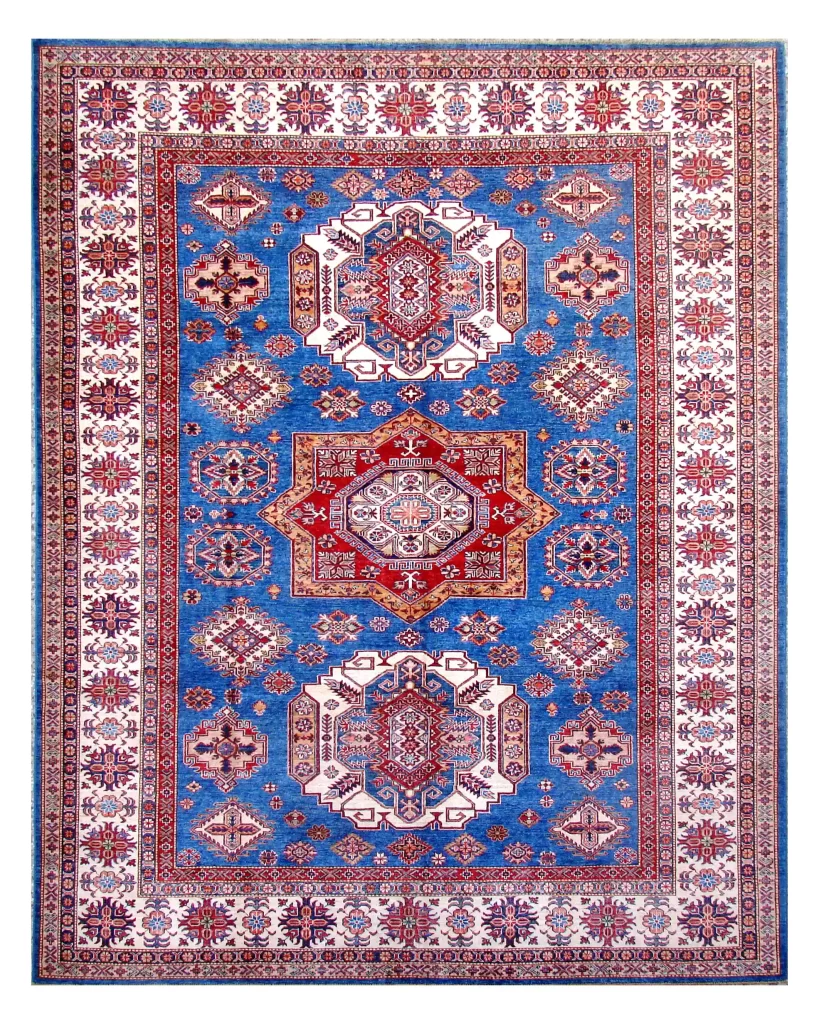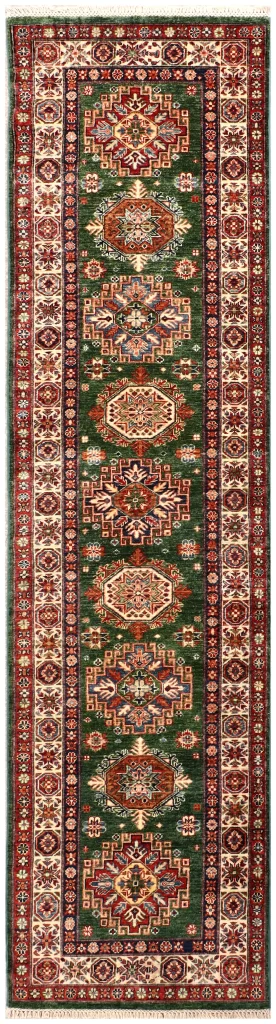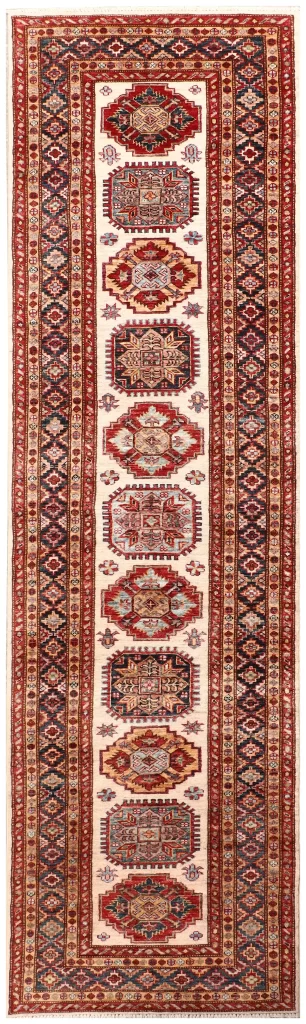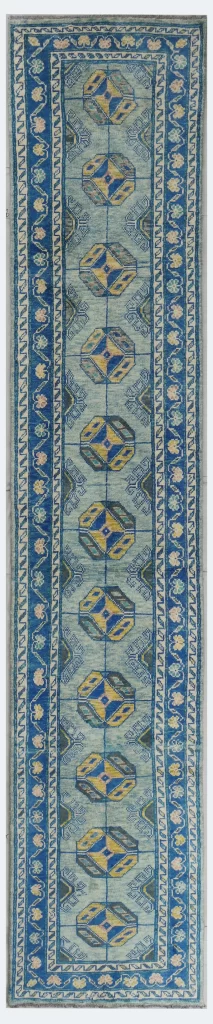
Red and Cream Gabbeh Rug
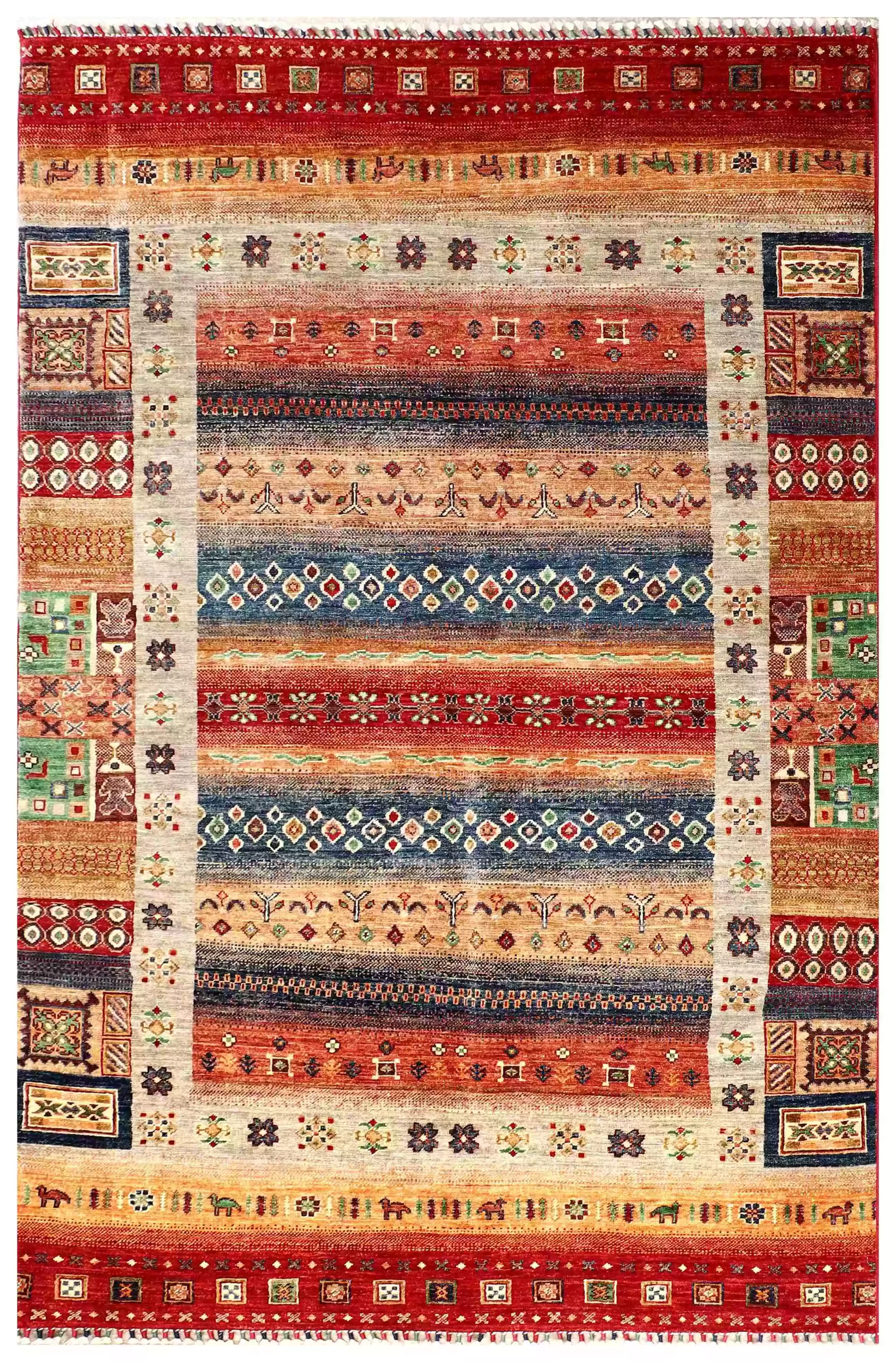
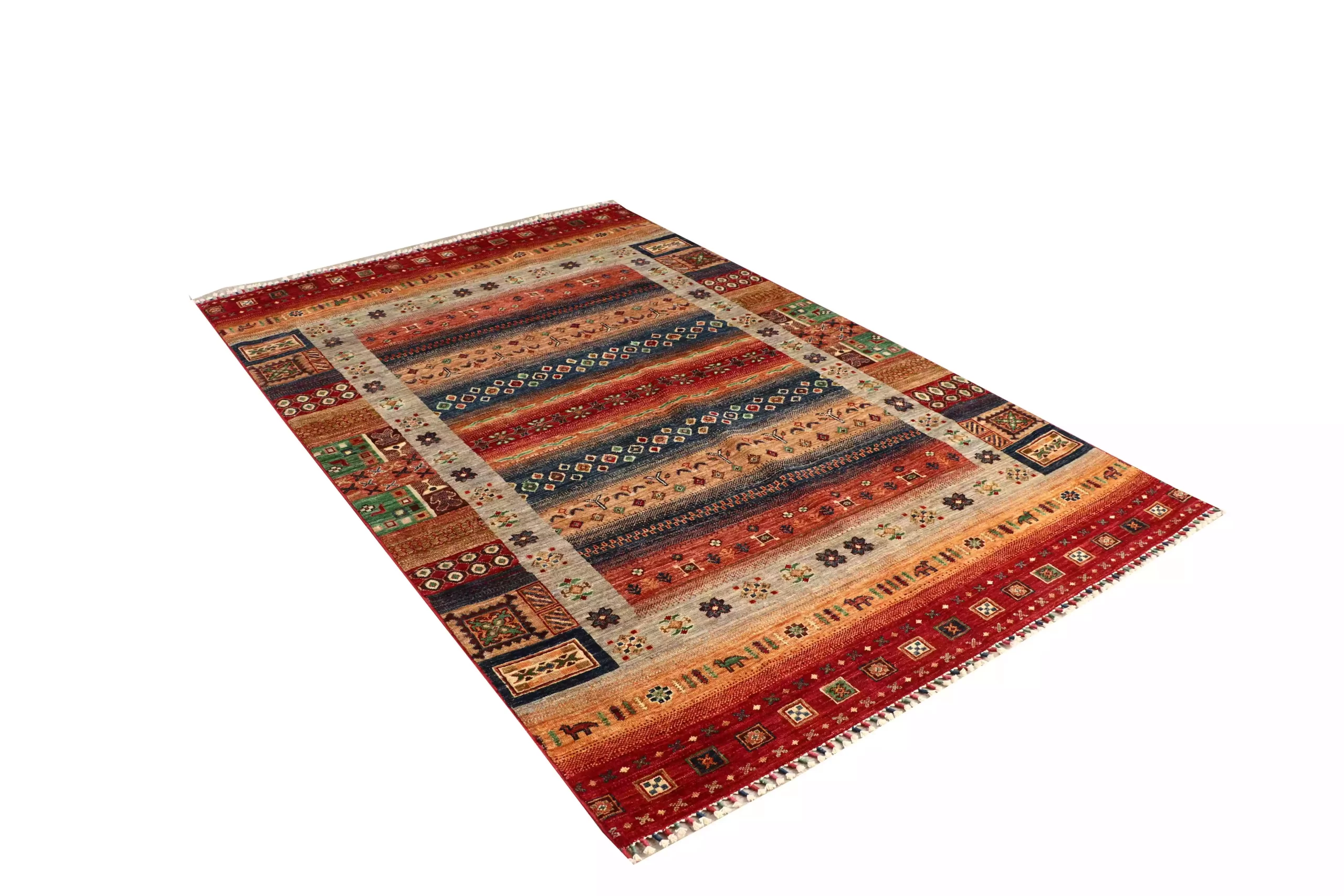
This red and cream Gabbeh rug was hand knotted in Afghanistan in lamb’s wool and measures 228 x 148 cm. Our records note German dyes. Its central field is a run of striped bands inside a wide cream frame.
The design of this red and cream Gabbeh rug
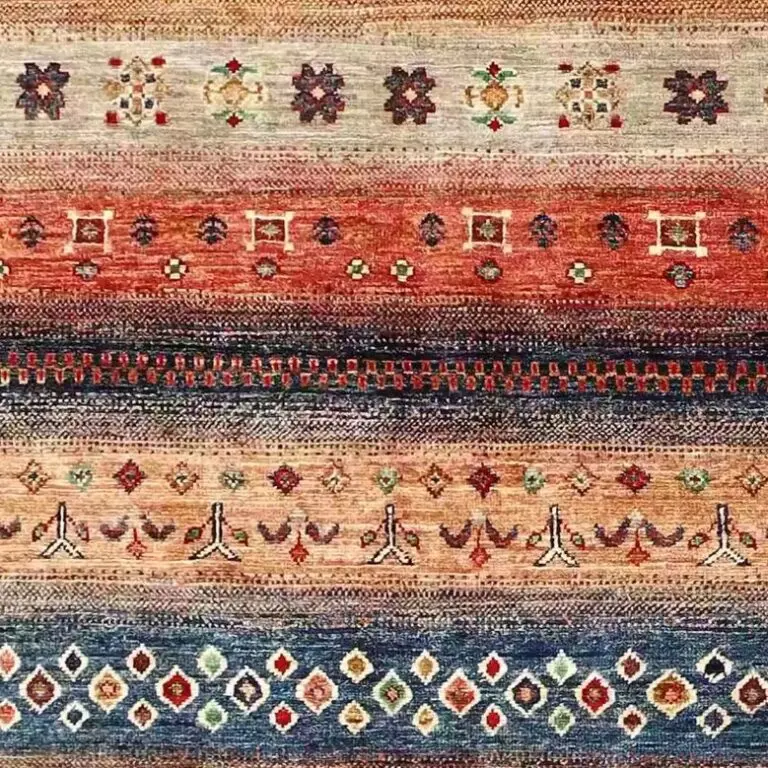
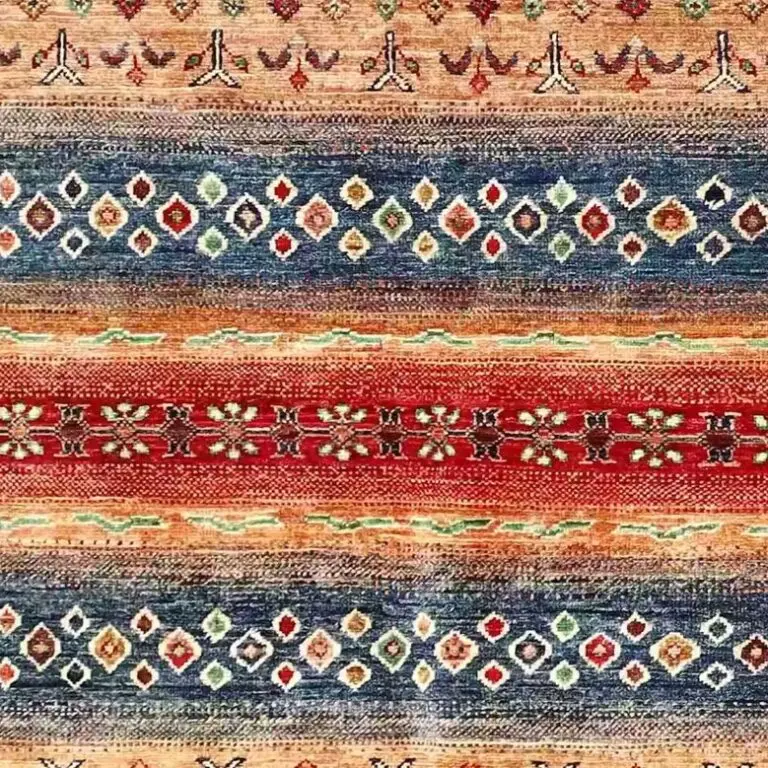
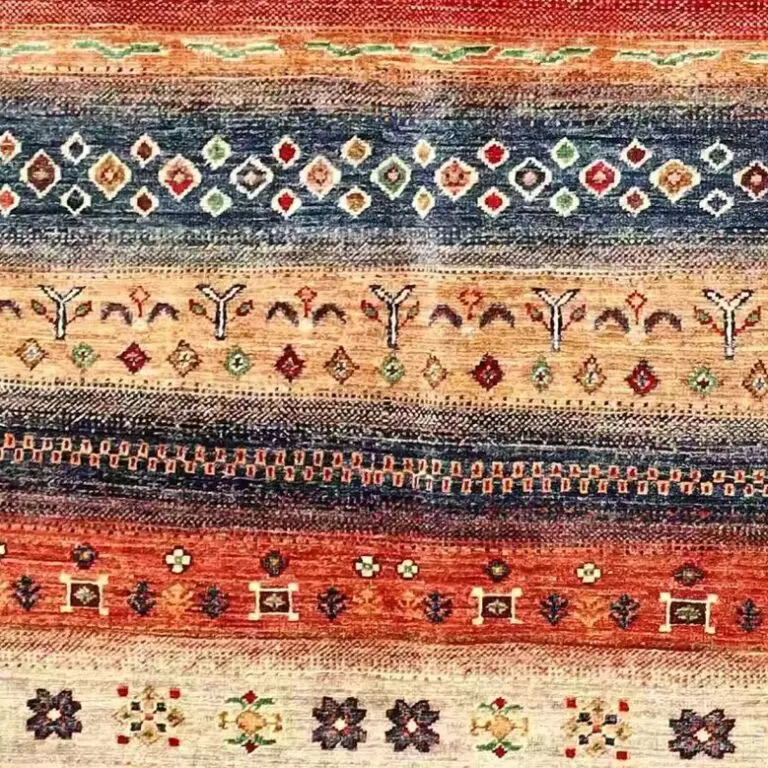
The central panel is built from stripes, each with a narrow motif. A top red band carries a line of small squares and crosses, a middle band is navy with a diamond pattern, and others show tiny figures in a row. Orange and red bands alternate across the panel. The bands at the top and bottom are narrower than the centre stripes, so the frame reads as a band within a band.
On this red and cream Gabbeh rug, the outer frame is cream, with side panels of boxed motifs in red, navy, green and gold. A top band of small squares and a bottom band of small animals and squares finish the design. Between the bands, thin lines of dots and small crosses in cream and orange keep the transitions crisp.
The cream frame sets the bright bands apart from the rest of the room. The stripes keep their rhythm from top to bottom, and the navy band in the middle is the darkest tone in the centre panel.
Where Gabbeh rugs come from
The Gabbeh is a rug of the tribes of the Zagros mountains in Iran, including the Lori and Qashqai, who wove thick, simple rugs mainly for their own households. The name is often translated as raw or natural, which suits the look: deep pile, open fields of colour and only a few motifs. Weavers in Afghanistan now make rugs of this kind in the same spirit, and this red and cream Gabbeh rug follows that tradition.
How it is made
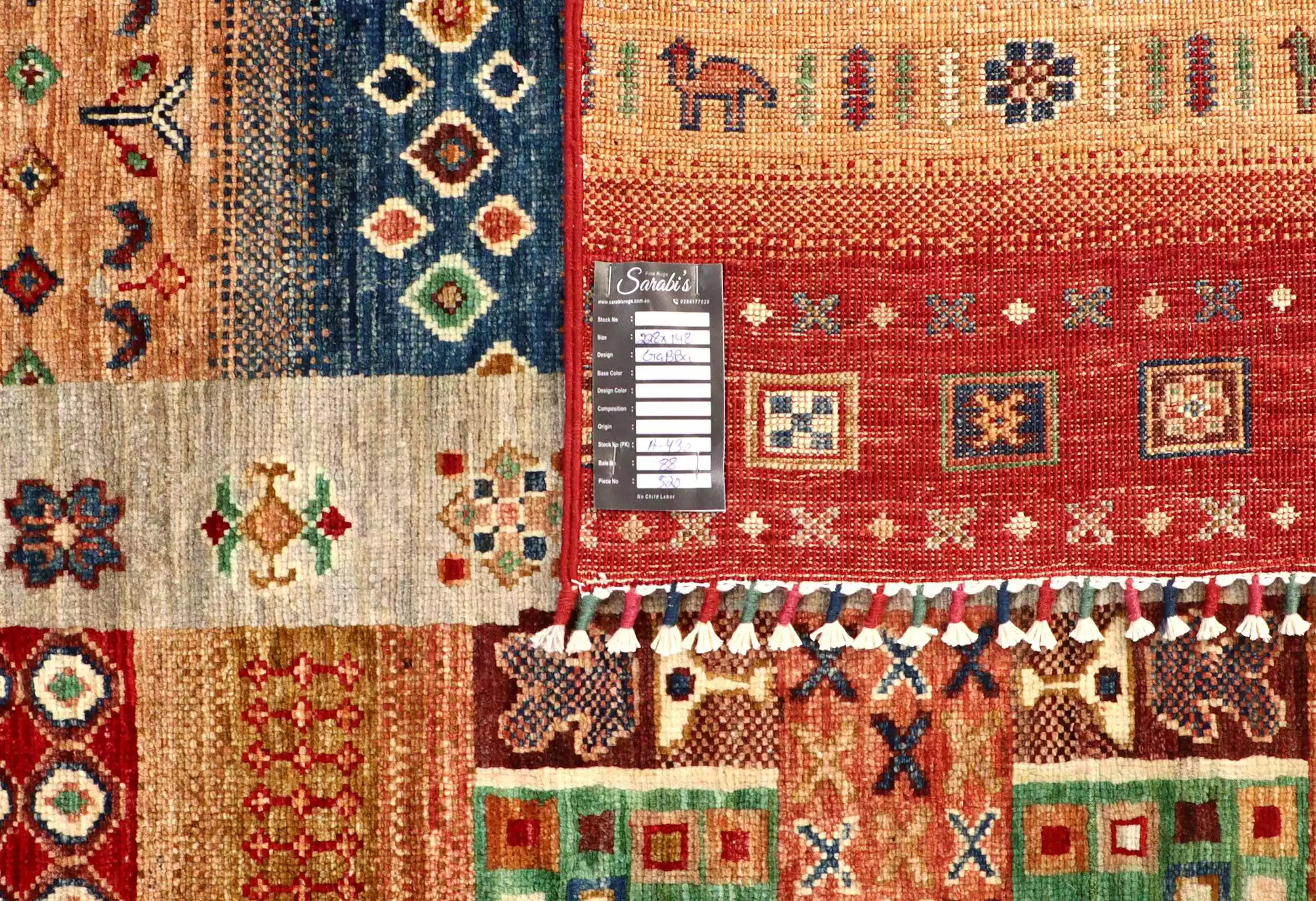
This red and cream Gabbeh rug is hand knotted in Afghanistan from lamb’s wool, and our records note German dyes. Hand knotting leaves small variations in the field. The colours are most visible in the side panels and the centre stripes.
Sizing it for your room
At 228 x 148 cm this red and cream Gabbeh rug covers about 3.4 square metres. It suits a seating group, with the front legs of a sofa and two armchairs resting on it around a coffee table. Plain walls and simple furniture let the stripes lead. The cream frame and side panels are the lightest parts of the rug.
Looking after your rug
Vacuum it on a suction-only setting, or with the beater bar switched off, so the brush does not pull at the knots. Turn it around every six to twelve months so sun and foot traffic wear it evenly. Blot spills with a clean white cloth and cold water rather than rubbing them in. When it needs a full clean, choose a cleaner who washes handmade rugs by hand.
Put a good underlay beneath it. It stops the rug sliding on timber or tiles, adds cushioning and takes some of the wear off the pile. Moths like wool in dark, quiet spots, such as the part of a rug under a sofa, so vacuum those areas often and lift the furniture now and then.
See it before you buy
Visit our showroom at 307 Penshurst St, North Willoughby, open every day from 11 am to 4:30 pm, to see this red and cream Gabbeh rug in person. If you would rather judge it in your own room, with your own light and furniture, book an in-home viewing and we will bring a selection to you.
Browse more Gabbeh Rugs, or ask about a custom made rug in your own size and colour. Read more about Gabbeh rugs.