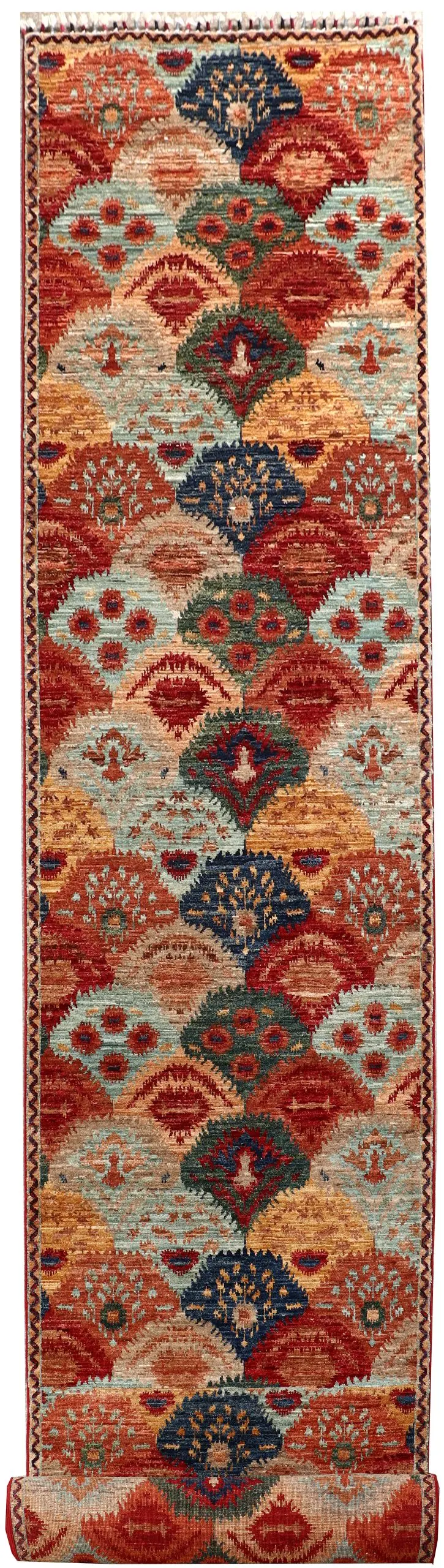
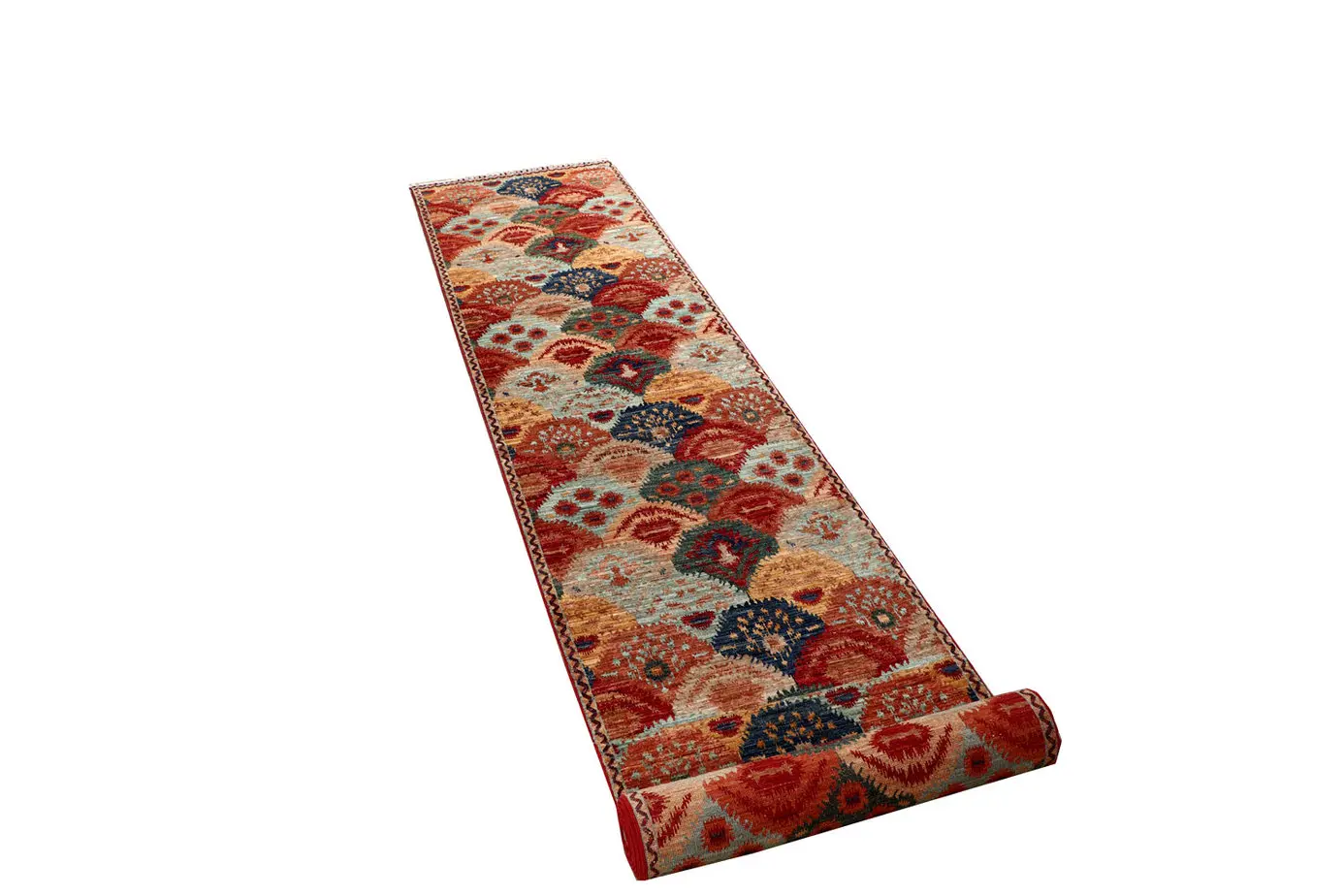
Peacock Khorjin Runner
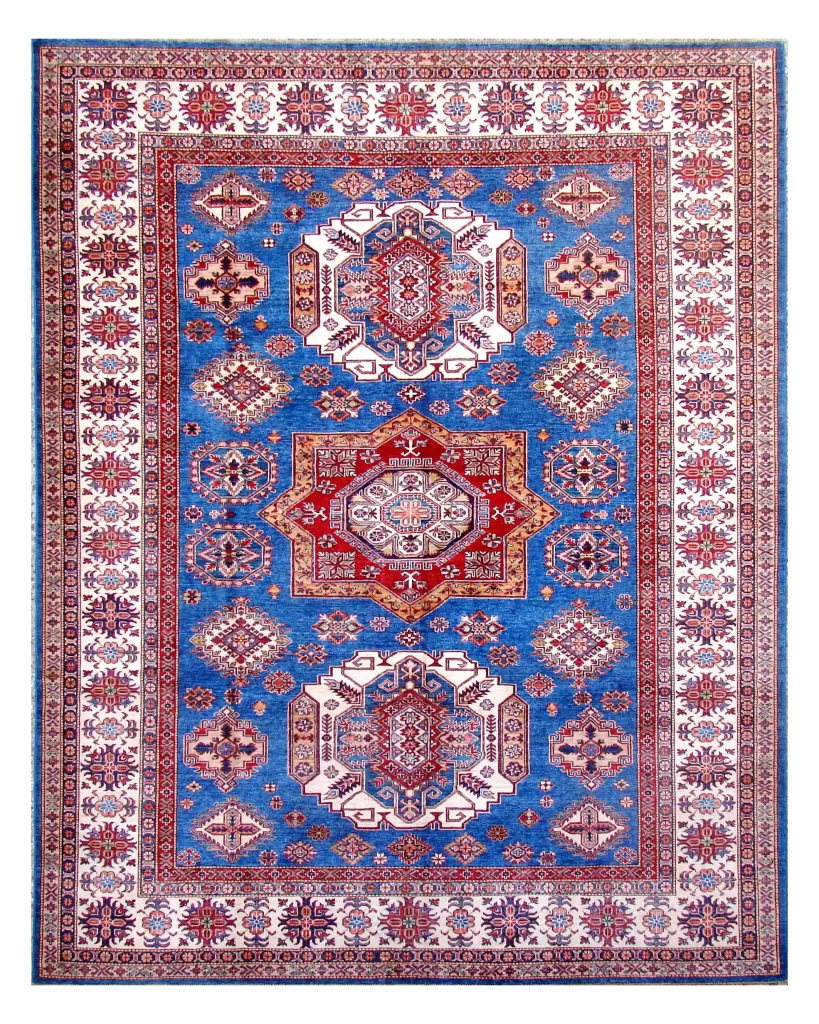
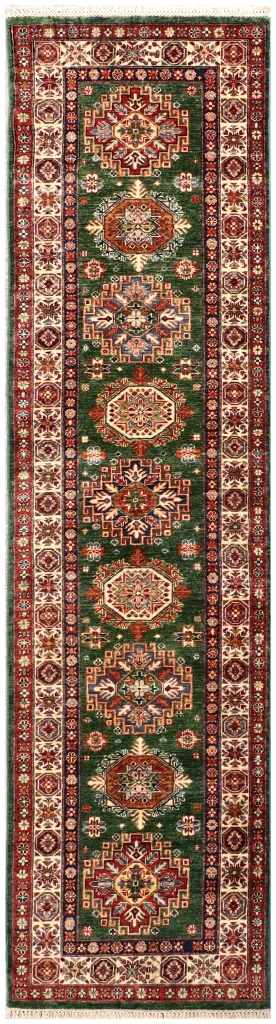
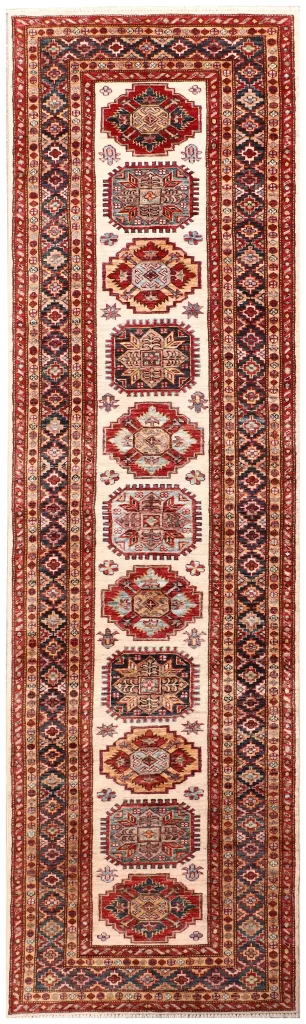
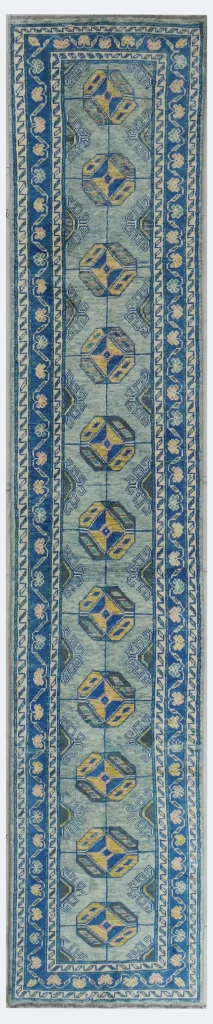
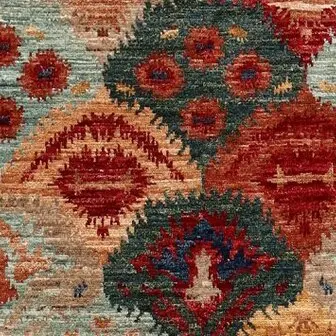
This peacock Khorjin runner was double hand knotted in Afghanistan in fine lamb’s wool and measures 609 x 89 cm. Rows of fan shapes stack down its full length in red, rust, navy, green and pale blue grey, with small rosettes set into the paler fans, so the runner reads as one long, continuous pattern.
The design up close
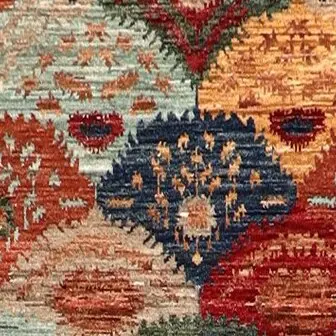
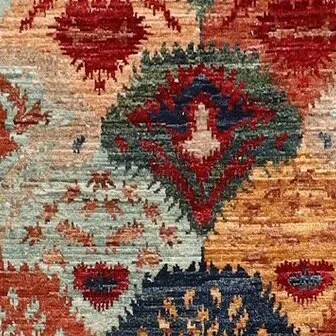
Each fan on this peacock Khorjin runner is a scallop with a jagged, feathered edge, and its tip holds a small motif. The navy and green fans carry a cream centre, while the red and orange fans hold rosettes of their own. The fans sit in staggered rows, so each one nests under the fan above it, and the eye travels down the runner as much as along it.
The fan shapes of this peacock Khorjin runner take their inspiration from peacock feathers, and the design keeps that link in every row. Near both ends, the pattern of this peacock Khorjin runner runs on without a break. A narrow border of cream and dark red zigzag lines frames the whole runner, and a fringe finishes the top end.
Where Khorjin rugs come from
Khorjin rugs take their name from the Khorjin, the woven saddlebag of the region. A Khorjin is a pair of woven bags joined together and carried over a horse or donkey, traditionally decorated with geometric patterns. Today’s Khorjin rugs take up that look across the whole field, and ours are hand knotted in Afghanistan.
Their busy, colourful patterns hide everyday wear and bring energy to a room, which is why Khorjin rugs suit hallways, family rooms and runners for stairs and corridors.
How this peacock Khorjin runner is made
This runner is double hand knotted, so each knot was tied by hand on a loom. Turn it over and the design shows on the back, with the slight irregularities that only hand knotting leaves. Khorjin rugs use thick, hard-wearing wool, and this runner is made from fine lamb’s wool. Our records note vegetable dyes for this piece.
Hand knotting is slow, one knot at a time, and a runner of this length takes a weaver a long stretch of patient work.
Sizing it for your room
At just over six metres long, this peacock Khorjin runner covers about 5.4 square metres at 609 x 89 cm. Its length suits a long hallway or corridor, where it can run from the front door toward the back of the house. Allow the runner width plus about 10 to 20 cm of floor on each side, so a hallway about 109 to 129 cm wide suits it.
The runner is narrow, so keep it where people walk, such as in front of a kitchen bench or along a landing.
Looking after your rug
Vacuum this peacock Khorjin runner on a suction-only setting, or with the beater bar switched off, so the brush does not pull at the knots. Turn it around every six to twelve months so sun and foot traffic wear it evenly. Blot spills with a clean white cloth and cold water rather than rubbing them in. When it needs a full clean, choose a cleaner who washes handmade rugs by hand.
Put a good underlay beneath it. It stops the rug sliding on timber or tiles, adds cushioning and takes some of the wear off the pile. Moths like wool in dark, quiet spots, such as the part of a rug under a sofa, so vacuum those areas often and lift the furniture now and then.
See it before you buy
This piece may already have found a home, but if a runner like this suits your hallway, you are welcome to see similar Khorjin runners at our showroom at 307 Penshurst St, North Willoughby, open every day from 10 am to 4:30 pm. If you would rather judge a runner in your own hallway, with your own light, book a home trial and we will bring a selection to you.
Browse more Khorjin Rugs, or ask about a custom made rug in your own size and colour. Read more about Afghan rugs.