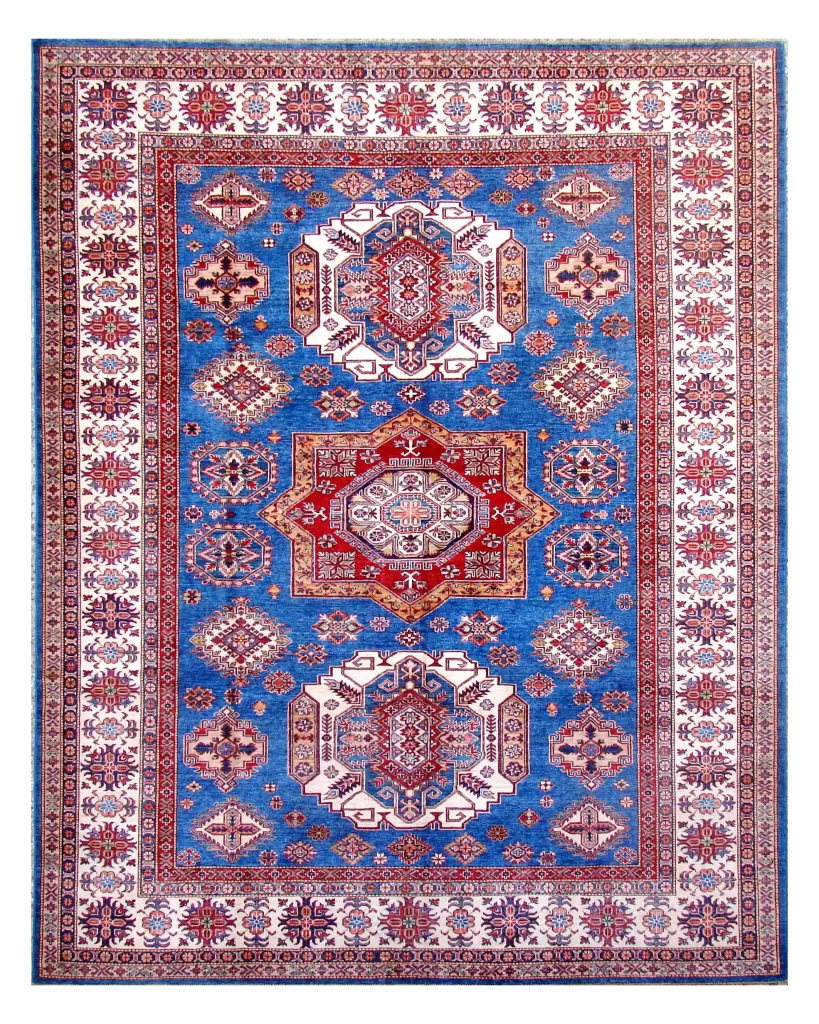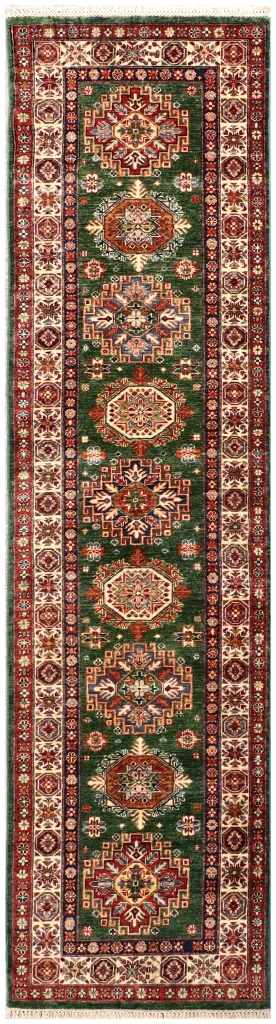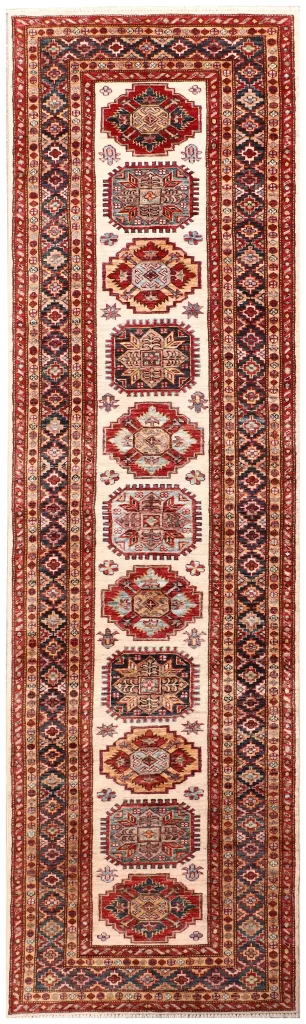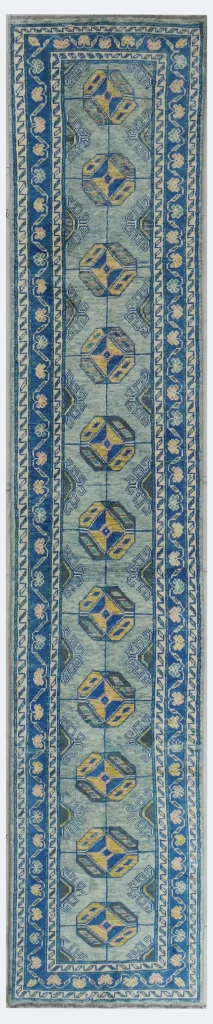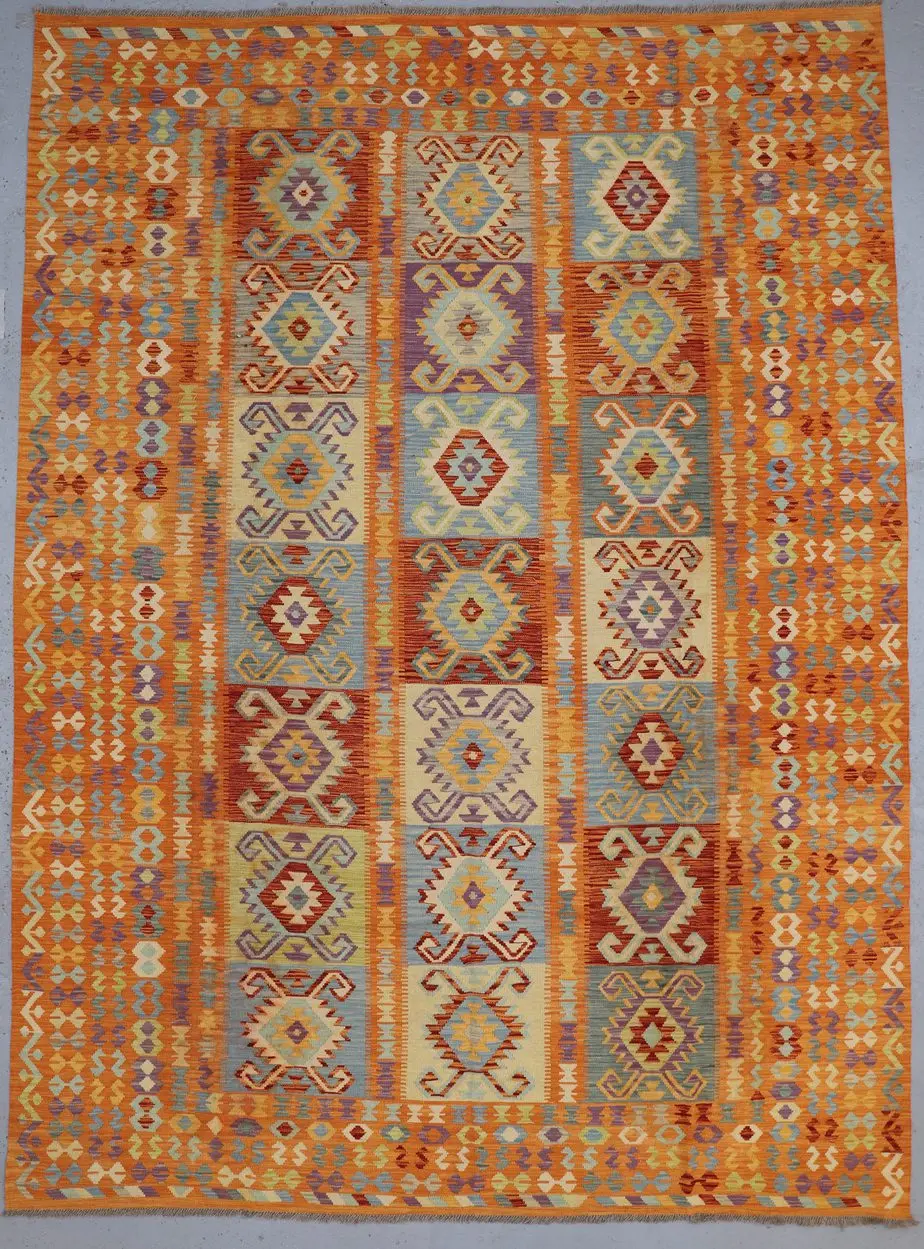
Geometric Tribal Chobi Rug
This geometric tribal Chobi rug is a flat woven Kilim made in Afghanistan in pure wool. Three columns of framed panels run the length of the field, each holding a diamond medallion with hooked arms, on an orange ground bordered with small geometric motifs. The palette runs from orange to smoky indigo, with red, cream, mustard and purple between them. Its size can be confirmed in the showroom.
The design up close
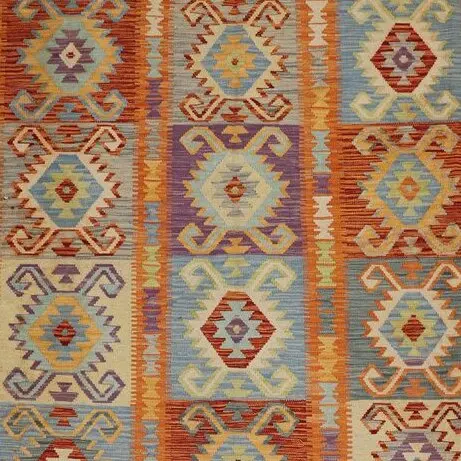
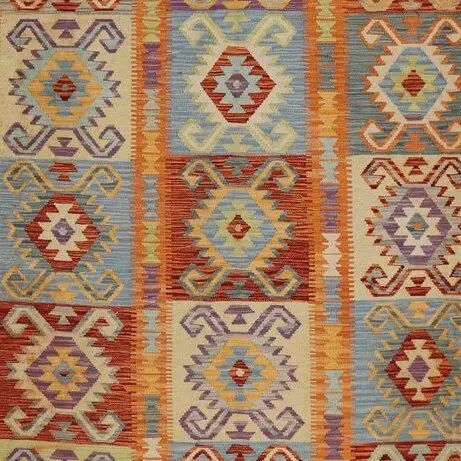
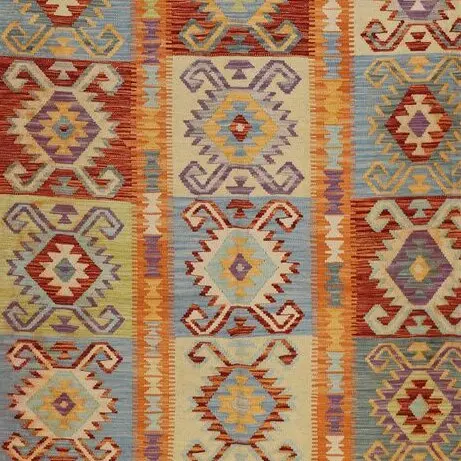
Each panel has a diamond medallion in the middle, with hooked arms curling out from either side. The panel grounds change from indigo to red, cream and mustard, so neighbouring panels mostly differ and the columns look lively rather than repeated.
On this geometric tribal Chobi rug the border is busier than the field. Narrow bands of small diamonds, crosses and zigzags in blue, cream, green and pink sit on the orange ground. Thin strips of cream and orange carry small motifs between the columns too.
The panels in the three columns line up across the rug, so the rows read clearly from one side of the room.
Chobi and Afghan weaving
Afghanistan has a long weaving tradition. Chobi rugs are known for soft, natural tones, and many follow Ziegler designs, large-scale patterns first made in the Sultanabad (Arak) district from the 1880s for European and American buyers. This geometric tribal Chobi rug is built on small tribal motifs instead, and its bold orange and indigo set it apart from the softer Chobi look.
The bright orange ground carries the eye across the whole field, so the rug works as a focal point in a room with neutral furniture.
What makes a Kilim different
A Kilim is flat woven. The weaver passes coloured weft threads over and under the warp threads to build the pattern, with no knots and no pile. This geometric tribal Chobi rug is flatweave, so it is light and easy to handle. Both faces carry the same design, so you can turn it over to share the wear.
Flat weaves like this one also need prompt care with spills, because the threads sit close to the surface, so blot them at once.
Sizing this geometric tribal Chobi rug
The size of this rug can be confirmed in the showroom, where we can lay it out so you can judge its proportions against your own furniture. It is longer than it is wide, so it suits a room where the furniture runs along its length.
Its busy field works best with plain walls and furniture in neutral tones, so the pattern has room to lead.
Because the pattern is strong, plain upholstery and quiet curtains let the rug stand out in the room.
Looking after this geometric tribal Chobi rug
Lay the rug flat for a day after it arrives, so any folds from packing can ease out before it takes its place in the room.
Vacuum both sides on a suction-only setting, or with the beater bar switched off. Use a non-slip underlay, because a light flat weave can creep on timber or tiles. Turn it around every six to twelve months so foot traffic wears it evenly, and blot spills with cold water and a clean white cloth. For a full clean, choose a cleaner who washes handmade rugs by hand.
Moths like wool in dark, quiet spots, so vacuum under furniture often and lift the rug now and then.
See it before you buy
Visit our showroom at 307 Penshurst St, North Willoughby, open every day from 10 am to 4:30 pm, to see this geometric tribal Chobi rug in person. If you would rather judge it in your own room, with your own light and furniture, book a home trial and we will bring a selection to you.
Browse more Chobi Rugs, or ask about a custom made rug in your own size and colour. Read more about kilims.